Is 7Gold Casino Safe? Licence, Reputation and UK Player Protection
 Available in GB
Trust and protection audit
7Gold is operated by ChapChap Technologies and is associated with an Anjouan licensing framework, but no UK Gambling Commission licence has been verified for 7Gold, ChapChap Technologies or 7goldcasino.com. That matters for players in Great Britain because remote casino operators serving consumers there require a UKGC licence, and GAMSTOP coverage applies to gambling websites and apps licensed in Great Britain. Reputation signals are also weak: Casino Guru currently gives 7Gold a Very low Safety Index of 2.6, while Trustpilot displays a poor score and multiple user complaints. Those ratings are third-party assessments, not regulator findings.
Table of Contents
- A 7Gold trust assessment in four separate questions
- Who operates 7Gold and what licence is visible?
- What the UKGC check means for a Great Britain player
- GAMSTOP coverage follows Great Britain licensing
- Great Britain and Northern Ireland are not identical regulatory cases
- Current reputation signals are materially negative
- Why withdrawal risk deserves extra weight
- What the absence of a UKGC licence does not tell you
- A practical protection-gap checklist
- How 7Gold compares with a UKGC-licensed decision baseline
- Sources and freshness
- What protection a UK player actually has at 7Gold
- Is 7Gold Casino Safe? Licence, Reputation and UK Player Protection
A 7Gold trust assessment in four separate questions
Calling a casino simply “legit” or “a scam” can hide the information a player actually needs. 7Gold has an identified operator and an offshore licensing jurisdiction. The dedicated licence analysis covers the Great Britain register position, while current complaint and review data provide a separate reputation signal that deserves its own weight.
| Trust factor | Current finding | Why it matters |
|---|---|---|
| Operator identity | ChapChap Technologies Ltd / Limited | Provides an identified business behind the brand |
| Licence jurisdiction | Anjouan, Union of Comoros | Shows the offshore licensing framework identified for the brand |
| Great Britain licence check | See the dedicated licence analysis | Separates the regulator-register question from product and reputation evidence |
| External reputation | Casino Guru: Very low Safety Index, 2.6; Trustpilot: poor current user score | Creates a separate warning signal around terms, complaints and payouts |
The point is not that one row proves all the others. An offshore licence does not determine whether a bonus exists, whether games load or which payment methods appear. Equally, a wide game library does not answer questions about local regulatory protection. Each dimension should be judged on its own evidence. For the broader product assessment, return to the 7Gold review.
Who operates 7Gold and what licence is visible?
Current source material identifies ChapChap Technologies as the operator of 7Gold Casino. The brand is linked to an Anjouan licensing framework in the Union of Comoros, and a current registry mirror maps the exact 7goldcasino.com domain to ChapChap Technologies under an active Anjouan record.
There is, however, a licence-number discrepancy in the evidence collected for this site. The 7Gold footer previously displayed a number ending in FI12, while independent register cross-checks show a corresponding number ending in FI2. Because that detail is conflicting, this page does not publish one licence number as definitive. The jurisdiction and operator can be stated without pretending the number conflict has been resolved.
For a focused breakdown of the operator, jurisdiction and register evidence, see the 7Gold licence.
What the UKGC check means for a Great Britain player
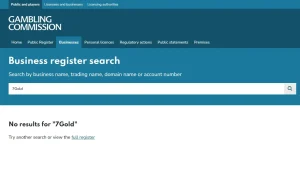
The UK Gambling Commission states that, regardless of where a business is based, it needs a UKGC licence when it provides remote gambling facilities to consumers in Great Britain. The Commission’s public business register was updated on 12 September 2026 and supports searches by business name, trading name and domain name. The dedicated licence page records the current register result and explains how it affects the Great Britain comparison.
Licensing and operational access are different dimensions. The separate licence page records the register evidence, while this page focuses on how regulatory context, complaints and product evidence combine in a trust assessment.
For readers in England, Scotland and Wales, the regulatory gap is still material because Great Britain remote casino activity is built around UKGC licensing. A reader should not assume that the same complaints process, licence conditions or UK-specific protection regime applies to an offshore site merely because the site can be opened or an account can be created.
GAMSTOP coverage follows Great Britain licensing
GAMSTOP states that it blocks access to gambling websites and apps licensed in Great Britain, and that all online gambling companies licensed in Great Britain must participate. Whether that framework applies to 7Gold is addressed on the dedicated licence page; this trust overview does not infer participation from product access or branding.
This is an important protection difference, not a general judgement about every feature on the casino. 7Gold can still have games, payment methods, support and KYC processes regardless of which regulator licenses it. Licensing affects regulatory safeguards, not the factual existence of unrelated product features.
If self-exclusion is important to your decision, verify which tools operate at the site itself and do not assume that a Great Britain-wide system covers an operator without evidence of UKGC participation.
Great Britain and Northern Ireland are not identical regulatory cases
The phrase “UK player” can conceal a legal distinction. The UK Gambling Commission regulates gambling in Great Britain, meaning England, Wales and Scotland. UKGC guidance also states that it does not regulate the provision of remote gambling activity in Northern Ireland, although remote gambling advertising into Northern Ireland is linked to a Gambling Commission licence.
Northern Ireland operates under a different gambling-law framework. That does not make a casino automatically approved there, and this page does not make a blanket legality claim for 7Gold in Northern Ireland. It means that a UK-wide sentence such as “the UKGC licenses all online gambling across the United Kingdom” would be inaccurate.
For practical use, Great Britain readers should treat the absent verified UKGC licence as a direct regulatory warning. Northern Ireland readers need to evaluate the separate local framework rather than assuming that the Great Britain licensing model maps across unchanged.
Current reputation signals are materially negative
Casino Guru currently gives 7GOLD Casino a Safety Index of 2.6, labelled Very low. Its review says it found issues in the terms and records player complaints, including unresolved cases. The same page lists complaints involving delayed withdrawals and verification. This is Casino Guru’s own methodology and assessment, not a regulator score, but it is a current external risk signal.
Trustpilot currently displays 31 reviews and a TrustScore of 2.0 out of 5 for 7goldcasino.com. The review mix is heavily negative, and several Great Britain reviewers describe withdrawal, support or account-closure problems. Trustpilot is user-generated content, so those statements are allegations from reviewers rather than verified findings about every case.
The useful conclusion is not to convert reviews into proof of misconduct. It is to recognise a repeated friction pattern. When a brand has negative complaint signals alongside an unverified Great Britain licence, a cautious player has less independent protection to fall back on if a payment or account dispute becomes difficult.
The dedicated 7Gold complaints separates the individual complaint records from the broader trust conclusion.
Why withdrawal risk deserves extra weight
Payments are where trust becomes concrete. A casino can look polished, offer familiar game studios and accept familiar funding methods, yet the player’s real exposure appears when money needs to move back out of the account. Current complaint sources contain 7Gold cases involving delayed or disputed withdrawals and verification.
This page does not publish a fixed withdrawal time, fee or limit because those exact details are high-risk and current evidence does not establish one safe universal value. Instead, treat the pattern of payout complaints as a reason to reduce exposure, document transactions and verify the current withdrawal conditions before depositing a sum you would be uncomfortable leaving unresolved.
For the step-by-step cash-out process and evidence checklist, use the withdrawal risks. That page keeps complaint allegations attributed and avoids turning third-party limits into guaranteed account terms.
What the absence of a UKGC licence does not tell you
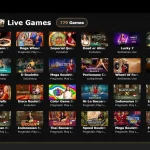
Licence status should not contaminate unrelated facts. It does not mean that a reported bonus is imaginary, that the game catalogue does not exist, that mobile browser play cannot work or that payment methods are automatically unavailable. Those claims have their own sources and should be evaluated independently.
Regulatory status also does not prove a strict technical hard stop for every UK visitor. Operational access and licensing should be assessed as separate questions rather than inferred from one another.
This separation is useful for decision-making. You can acknowledge that the casino has real product features while still deciding that the regulatory and complaint profile falls short of the level of protection you want.
A practical protection-gap checklist
- Check the local regulator first. For Great Britain, verify the operator or domain in the current UKGC public register rather than relying on a casino footer or affiliate badge.
- Identify the actual offshore jurisdiction. 7Gold is tied to Anjouan, but avoid relying on a definitive licence number until the FI12 versus FI2 discrepancy is reconciled.
- Check self-exclusion coverage. GAMSTOP applies to Great Britain-licensed gambling websites and apps. Do not assume coverage where a UKGC licence has not been verified.
- Read reputation signals with attribution. Casino Guru’s Safety Index and Trustpilot reviews are external assessments and user reports, not regulator rulings.
- Minimise payment exposure. If you choose to use a higher-risk operator, avoid leaving more money at the site than you are prepared to have tied up during a verification or withdrawal dispute.
- Keep records. Save deposit confirmations, KYC requests, withdrawal timestamps and support messages so you can explain the sequence if a dispute occurs.
This checklist does not turn uncertainty into certainty. It gives each protection question a source and prevents a marketing badge, a game provider or a payment logo from standing in for regulatory evidence.
How 7Gold compares with a UKGC-licensed decision baseline
A UKGC-licensed online casino serving Great Britain sits inside a framework where the operator appears in the Commission register and participates in GAMSTOP. 7Gold’s current evidence profile combines an identified ChapChap operator, an Anjouan framework and materially negative third-party reputation signals; the separate licence page covers the Great Britain register check.
That does not require an absolute label such as “safe” or “scam”. It supports a relative conclusion. A player who values Great Britain-specific regulatory protection, recognised self-exclusion coverage and a stronger independent complaint profile has reasons to prefer an operator that can demonstrate those elements directly.
Conversely, a reader who is still considering 7Gold should make that choice with the protection gap visible, not because the site design or game list creates the impression of local regulation.
Sources and freshness
Current UKGC guidance states that operators providing remote gambling to consumers in Great Britain require a Commission licence. The dedicated licence page contains the register-check result for 7Gold. GAMSTOP’s current guidance states that it covers gambling websites and apps licensed in Great Britain.
Casino Guru was rechecked on 13 September 2026 and currently shows a Very low Safety Index of 2.6 for 7GOLD Casino, plus complaint records involving withdrawals and verification. Trustpilot was also rechecked and currently displays a 2.0 out of 5 TrustScore from 31 reviews. An iGregulator record rechecked in the same session maps ChapChap Technologies and 7goldcasino.com to an active Anjouan record ending in FI2, while the source comparison records a conflicting FI12 number on the brand footer. The licence number therefore remains intentionally unresolved in public wording.
What protection a UK player actually has at 7Gold
7Gold has an identified operator and an Anjouan licensing framework, while the dedicated licence page handles the separate Great Britain regulatory check. Current Casino Guru and Trustpilot signals provide an independent reason for caution around complaints and withdrawals. The strongest decision is to judge the product, regulatory context and reputation evidence separately rather than rely on a binary label or a polished casino interface.