Deal or No Deal Casino UK: Game Guide
 Available in GB

The format turns each Banker’s offer into a choice between a known amount and the uncertainty of the remaining case.
Table of Contents
- The Briefcase Show Behind the Slot
- How the Online Game Plays Out
- Playing Deal or No Deal Online in the UK
- Free Play and the Demo Question
- Bonus Stages, Top Up and the Banker’s Offers
- Free Spins and Box Clever: What You Can Verify
- What’s in Your Box? The Return Figure
- A Short Review of the Game’s Deal-or-Continue Choice
- Can You Play the Final Briefcases Perfectly?
- Free Online Play: Don’t Mistake RTP for Availability
The Briefcase Show Behind the Slot
The name Deal or No Deal comes from a simple contest of nerve: a contestant faces a set of briefcases, while a Banker makes offers as the game unfolds. The central question is not just what might be inside a case. It is whether the contestant trusts the offer more than their own estimate of what remains.
In the main game show, there are 16 briefcases to be opened. The contestant’s prediction concerns the last one: will the amount of money in that final briefcase be higher than the Banker’s offer? That question gives the format its particular tension. The offer is a number to weigh against an unknown, and the contestant must decide whether to accept certainty or keep going with the possibility that the final case contains more.
Before that final comparison, the Banker makes three offers. Each one brings the same question from the live host: “Deal or No Deal?” It is a short line, but it carries the whole premise. “Deal” means taking the amount offered; “No Deal” means refusing it and staying with the game. The contestant is not simply guessing what is in a case. They are deciding how much uncertainty they are willing to carry.
That is the show-style idea behind a Deal or No Deal slot. The title evokes a familiar kind of choice: an offer arrives, and you have to judge it without knowing the full answer. The show’s premise can help explain why a casino game uses the Banker and the deal question as its framing. It does not, by itself, tell you that every slot bearing the name follows the television format in exactly the same way. That distinction matters. The show supplies the reference point; the game’s own rules determine what happens on screen.
7Gold Live Casino: Games, Studios and Mobile Play
I find the format easy to understand and oddly hard to settle into. A Banker’s offer can feel persuasive because it gives the contestant something definite to compare with an unknown amount. But the offer cannot reveal what is in the final briefcase. It is a decision point, not a clue that guarantees the contestant’s prediction will be right. That push and pull is what makes the phrase “Deal or No Deal?” work: both choices have a cost, even when only one is made.
The briefcases make the uncertainty concrete. There is a final case, and the contestant has to think about the amount it might contain in relation to the Banker’s offer. The final prediction is therefore a comparison, not a claim that the contestant knows the hidden amount. The premise asks whether the possible result in that last case would beat the offer. It leaves room for confidence, doubt and second thoughts without needing a complicated explanation.
When people look for Deal or No Deal slots, they may be carrying that television-show expectation with them. The name can suggest a Banker, briefcases and a decisive offer, but a title alone is not a complete description of a particular casino game. A slot can draw on the show’s idea while using its own rules and sequence. I would treat the familiar premise as context, then read the specific game’s help information before assuming that its play matches the show beat for beat.
That is also why it helps to separate the show’s question from the practical details of any online version. Here, the reference is the contestant’s choice between accepting an offer and continuing towards the final briefcase prediction. It is not a promise about how a particular slot presents its rounds, what features it includes or what outcomes it can produce. Those details belong to the game itself, not to the name.
French Roulette Online Casinos in the UK: Zero Rules
The premise remains memorable because the decision is plain even when the answer is hidden. The Banker puts an offer on the table; the contestant has to decide whether it is enough, knowing the final case may contain more or less. You do not need a complicated rulebook to grasp the drama. You need only understand what is being compared: a known offer against an unknown final amount.
That is the story carried by the title. The slot name points back to a show built around briefcases, offers and one repeated question. It gives the game a recognisable frame, but the important thing is still the choice at the heart of it. Take the deal, or stay with the uncertainty.
How the Online Game Plays Out
A Deal or No Deal slot machine game borrows its central tension from the briefcase format: you uncover cases, receive an offer from the Banker, then decide whether to take it or carry on. The online version is not simply a filmed show in miniature. It turns that choice into a sequence of game steps, and the exact presentation can vary between versions. I find it helps to focus on the decisions the game actually gives you, rather than expecting every screen to work like a particular television episode.
The described game begins with sixteen briefcases. In the opening round, you choose and open three. After those cases are revealed, the Banker makes an offer and the game presents the familiar Deal or No Deal decision. You can accept the offer or reject it and continue. That pattern is the basic rhythm: reveal cases, pause for an offer, choose whether to stop.
The first set of openings matters because it leads directly to the first decision point. But it does not tell you what the next offer will be, or whether continuing will suit you. The game presents an offer; you decide what to do with it. I used to treat the word “offer” as if it meant a sensible exit. It doesn’t. It is simply the amount presented at that point in the game.
Monopoly Live Casino UK: How the Live Table Works
If you accept an offer, that game ends and you collect the amount offered. Rejecting it keeps the game moving instead. That is the practical difference between the two buttons: one closes the current run with the offer, while the other leaves you to continue through the remaining sequence. It is worth reading the on-screen choice before confirming, particularly if the game uses button labels or animations that make the decision feel like part of a show.
The number of cases opened in the opening round does not establish that every later round follows the same pattern. In the bonus game, offers are made after batches of briefcases are opened, and the player can accept an offer or continue. The sequence is therefore built around repeated decision points, but the precise arrangement of batches should be read from the version in front of you rather than guessed from the opening round. Same idea, different presentation.
Live Casino Lightning Roulette in the UK: How It Works
That distinction matters when you play Deal or No Deal online. A branded title can make two games sound interchangeable, but the name alone does not tell you every detail of the round structure. Check the game’s own instructions and follow the choices it displays. If you expect a particular number of cases to open before each offer, you may be carrying assumptions from another edition into the one you are actually playing.
As the game progresses, the Banker’s offers become points at which you can stop or continue. There is no need to treat the offer as a prediction you have to beat. It is a choice offered within the game. Accepting means ending that run with the offered amount; continuing means keeping the game in progress and reaching the next stage or decision shown by that version. I have found that distinction clearer than trying to guess what the Banker “must” be thinking.
Do
- Read on-screen choices before confirming
- Check the specific game’s instructions
- Follow the choices displayed by the version you are playing
Don’t
- Assume every edition follows the same round structure
- Guess the number of cases to open based on other versions
- Rely on the branded title to provide all game details
At the final stage, the choice is more specific. You may accept the Banker’s offer, reject it and take the prize in your own briefcase, or switch to the last unopened briefcase. Those are different routes to finishing the game, not extra chances to reopen earlier choices. If you reject the offer, you are choosing the briefcase prize; if you switch, you are choosing the other unopened case instead. Neither option guarantees a better result.
That makes the end of a Deal or No Deal online slot game less about finding a perfect answer and more about understanding what each option does. Taking the offer settles the run at the amount presented. Keeping your case leaves the outcome tied to its contents. Switching transfers your choice to the other remaining case. The game gives you these alternatives, but it does not turn them into a reliable method for predicting which prize is better.
When you play a Deal or No Deal slot online, watch for the transition between opening cases and making a decision. An animation can dress up the moment, but the useful question is plain: am I accepting the Banker’s offer, or continuing under the choice shown on screen? Once the offer is accepted, the game is over; once it is rejected, you proceed according to that version’s rules. No hidden strategy there. Just the choice.
Live Baccarat Online Casinos in the UK: How It Works
Playing Deal or No Deal Online in the UK
Before I consider a Deal or No Deal slot online, I check the operator as well as the game. A familiar title can make a casino page feel reassuring, but the name alone tells you nothing about who is offering it or what safeguards apply. In Great Britain, a remote gambling operator serving customers must hold the relevant UK Gambling Commission licence, wherever its key equipment is based. The Commission is the regulator for commercial gambling there.
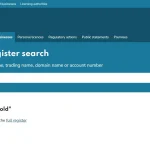
I would verify the operator’s licence on the Commission’s public register before depositing, rather than relying on a badge or a line of text on a game page. A licensed site should show its licence details and link to its register information. The register lets you check that the business named on the casino site is the one holding the licence. It is a dull check, admittedly. Still worth doing.
The legal framework is not identical across the whole UK: the Gambling Act 2005 covers England, Wales and Scotland, but not Northern Ireland. The Commission’s remote-gambling requirements concern operators serving consumers in Great Britain. If you are unsure which rules apply where you live, do not treat a general UK label on a page as a substitute for checking.
What the return figure tells you
A specialist review reproducing the game help files gives an expected return of 95.42%. That is a long-run theoretical measure of the proportion of stakes returned across play, not a promise about a particular session. It cannot tell you what your next spin or game will return, and it does not establish that one casino’s version is identical to another’s. Check the information attached to the specific game you are considering.
Attention: A return percentage is not a forecast of your own result, a guide to how long your money will last, or a reason to raise your stake.
I used to see an RTP figure and read it as a sort of quiet assurance. It isn’t one. A return percentage is not a forecast of your own result, a guide to how long your money will last, or a reason to raise your stake. Keep it in its proper place: useful context, not a personal prediction.
Safeguards that affect online slots
UK rules place practical limits on online slot play. Autoplay is banned, and at least two and a half seconds must pass from the start of one game cycle before the next can begin. The maximum stake per game cycle is £5 for players aged 25 or older and £2 for those aged 18 to 24. These are ceilings, not recommended amounts; a lower stake or not playing at all remains your choice.
A casino must verify your age before allowing you to deposit. Online gambling is legal for adults aged 18 and over when it is offered by an operator holding the appropriate UK licence. New customers must be prompted to set a financial limit before their first deposit, and account-level limit controls must remain accessible. I would look for those controls before playing, not after a session has gone further than planned.
Licensed operators cannot accept credit cards for gambling. That restriction also covers credit-card funding routed through a money service business, and a wallet cannot be used if it lets credit-card funds pay for gambling. If a payment option is unclear, check how it is funded rather than assuming that a wallet makes the restriction irrelevant.
A quick check before you play
I would make these checks in order:
- Confirm the operator’s licence on the UK Gambling Commission public register.
- Find the game’s own help or information panel and read its stated return and rules.
- Set an account limit before depositing, and make sure the controls are easy to find.
- Check that the payment method does not use credit-card funds for gambling.
UK-licensed casinos must also provide responsible gambling tools, including self-exclusion, and an internal complaints process with access to an approved Alternative Dispute Resolution service. Those options matter if you need to pause or raise a dispute; they are not a reason to assume that every outcome will feel fair.
The point is not to turn a slot into a paperwork exercise. It is to separate the show’s familiar framing from the less glamorous details that matter when money is involved: who operates the site, what the game information says, and which limits govern the session. I have skipped those checks before because the page looked familiar. Bad shortcut.
Free Play and the Demo Question
A free-play version can sound like the obvious first step: open the game, try a few rounds without risking money, and decide whether the format suits you. But a request for a Deal or No Deal demo is not proof that a demo is available. Access can depend on what a particular casino offers, and the return figure attached to the game does not answer that separate question.
I’ve learned not to treat a familiar title as a promise of a particular version. A page can use the Deal or No Deal name while leaving it unclear whether it offers a playable demo, a real-money game, or simply information about the title. Check what the page actually provides before assuming that “free play” means you can launch the game without depositing or staking money. The label is not the access.
An RTP figure is a long-run theoretical measure and does not confirm whether a casino provides a free-play demo or a Megaways version of the game.
The same caution applies to searches for a Megaways edition. A title containing those words does not, by itself, establish that a particular game uses that format or that a casino offers it. I would want to see the actual game information and its help screen rather than infer mechanics from a name. That is less exciting than taking the label at face value. It is also safer.
There is one return figure worth keeping in its proper place. A specialist review reports that the game’s help files state an expected return of 95.42%. That is a figure attributed to the help files, not a guarantee of what you will get in a session. It describes a long-run theoretical measure; it cannot predict the result of an individual play. More importantly here, it says nothing about whether you can access a free version.
Those are separate questions. The stated return concerns the game’s expected payback calculation. Demo availability concerns the specific version and the way a casino makes it accessible. One does not establish the other. I used to see a percentage and let it stand in for a lot of unanswered questions. It doesn’t.
If you find a page claiming to offer free play, look for a clear indication that the game itself can be opened in a non-real-money mode. Don’t assume a preview image, description, or promotional wording is the same thing as a working demo. If the page instead directs you to an account or a deposit, that is not the same experience as trying the game for free.
And if all you can confirm is the help-file return figure, keep your conclusion narrow: the game help files are reported to state 95.42%. That is useful context, but it neither confirms a demo nor proves that a Megaways version is available. The details of the actual game listing matter. Check before you click.
Bonus Stages, Top Up and the Banker’s Offers
If you’re looking for a Deal or No Deal casino in the UK in 2026, payout timing is one practical detail to check before choosing where to play. This list gives you a quick reference for the operators with a stated payout speed.
1. x3bet
Payout speed: 1-3 business days x3bet lists a payout speed of 1–3 business days. Check whether that timing fits your expectations before you play.
2. EvoSpin
Payout speed: 1-3 business days EvoSpin lists a payout speed of 1–3 business days. It’s a useful detail to keep in mind as you consider your options.
3. BeOnBet
Payout speed: 1-3 business days BeOnBet lists a payout speed of 1–3 business days. You can use that stated timing as one factor in your decision.
4. NightLuck
Payout speed: 1-3 business days NightLuck lists a payout speed of 1–3 business days. Consider whether this timeframe suits you.
5. Revery Play
Payout speed: 1-3 business days Revery Play lists a payout speed of 1–3 business days. That gives you a clear payout timeframe to consider.
6. Chanze
Payout speed: 1-3 business days Chanze lists a payout speed of 1–3 business days. Keep this stated timeframe in mind when weighing your options.
7. Britsino
Payout speed: 1-3 business days Britsino lists a payout speed of 1–3 business days. You can factor that timing into your choice.
8. SpinFormula
Payout speed: 1-3 business days SpinFormula lists a payout speed of 1–3 business days. Check that the stated timeframe works for you.
9. SlotoSport
Payout speed: 1-3 business days SlotoSport lists a payout speed of 1–3 business days. This is a practical detail to consider before choosing.
10. WinBeast
Payout speed: 1-3 business days WinBeast lists a payout speed of 1–3 business days. You can use that information when deciding whether it suits your needs.
The bonus sequence has a qualification step before the Deal or No Deal game itself. All three rings need to land on a gold slice to qualify. That requirement is the part to keep in mind: reaching the bonus is conditional, not something the game promises every time.
After qualifying, there is an optional Top Up stage. It can add to the prizes before the main Deal or No Deal game begins. Optional means you can choose whether to use it; it is not the same thing as qualifying, and it does not replace the game that follows. I’d keep those stages separate in my head, because “bonus” can make the whole sequence sound like one guaranteed reward. It isn’t.
Then the Banker’s offers come into play as suitcases are opened. At each offer, you can accept the amount on the table or carry on. Accepting ends that game, and you collect the amount offered. That is a firm stop, not a way to bank the offer while continuing to chase the prize in the cases. I’ve made the mistake of treating an offer as if it were a safety net. It isn’t.
Best Live Casino UK: Tables, Streams and Rules
That makes Top Up and a Banker offer two different decisions. Top Up happens before the Deal or No Deal game and may add to prizes. A Banker offer is made during the game; taking it closes that round at the offered amount. Neither label tells you what the eventual result will be, so I wouldn’t read “Top Up” as a guarantee that the game will become more valuable.
People looking for a Deal or No Deal casino no-deposit bonus may be asking about a casino promotion, rather than this in-game bonus sequence. The qualification and Top Up mechanics do not, by themselves, establish that a casino offers a no-deposit deal. I’d treat those as separate things and check the offer’s own terms before relying on a promotion.
Likewise, names attached to other Deal or No Deal slot searches do not tell you that those games share this exact bonus sequence. The mechanics described here are specific to the sequence with three rings, gold slices, Top Up and Banker offers. A familiar title is not enough to confirm that another edition works the same way.
Live blackjack online in the UK: how to choose
The practical takeaway is simple: first comes qualification; Top Up is optional; then the game begins. If you accept a Banker offer, that game is finished and the offer is what you collect. No hidden second chance.
Free Spins and Box Clever: What You Can Verify
I’d be wary of treating “free spins” as a built-in feature just because the game is being discussed alongside that phrase. The confirmed qualification detail is specific: all three rings must land on a gold slice. That tells you what is required to qualify; it does not say that free spins are awarded, or that a casino is running a promotion.
Those are separate things. A game mechanic describes what happens within the game. A promotion is an offer from an operator, and its availability and terms depend on that operator. I’ve learned not to read one as proof of the other. “Free” can sound generous, but the word alone does not tell you what is included.
Online American Roulette in the UK: Rules and Odds
The same caution applies to Box Clever. The name may appear in connection with Deal or No Deal, but the qualification detail does not identify a Box Clever edition or establish how one might differ from another version. I wouldn’t assume that a named variation has a particular feature just because its title turns up beside the game.
What you can take from the stated mechanic is modest but clear: qualification depends on the three rings landing on gold slices. That is the reliable detail to keep in mind if you are trying to understand how the bonus sequence begins. It does not settle whether a specific casino offers free spins, whether a particular promotion is active, or whether the game you see is a Box Clever version.
I used to see familiar game names and fill in the blanks myself. That is an easy way to mistake a promotional headline for a game rule. Check the actual game information and the operator’s offer separately, rather than assuming the title guarantees either one. If those details are not displayed clearly, don’t treat the phrase as a promise.
Gold slices qualify. The rest needs its own confirmation.
Bonus Qualification
- All three rings must land on a gold slice to qualify for the bonus
- The Top Up stage is optional and occurs before the main game
- Accepting a Banker’s offer ends the game immediately
- Game mechanics are separate from operator promotions like free spins
What’s in Your Box? The Return Figure
For the Deal or No Deal game associated with What’s in Your Box?, the figure to note is an expected return of 95.42%. A specialist affiliate review attributes that percentage to the game’s help files. That attribution matters: it identifies where the figure is reported, rather than presenting it as a universal return for every Deal or No Deal-branded slot or version.
Expected return, often shortened to RTP, is a theoretical measure across play, not a forecast of what you will get back from a particular session. It does not tell you what will be in a box, what a specific round will pay, or whether you will finish ahead. A short run can look very different from the stated percentage. I used to read a return figure as if it were a quiet promise about my own balance. It isn’t.
The number is useful only when it belongs to the exact game you are considering. A familiar title can appear in different versions, and a figure reported for one should not automatically be carried across to another. If you are looking at a game labelled What’s in Your Box?, check its own information panel or help files and compare that with the attributed figure. If the displayed return differs, the in-game information is the relevant detail for that version.
There is no special box-picking method hidden in the percentage. It describes an expected return, not a way to identify a valuable box or improve the result of an individual play. The figure can help you understand the game’s stated maths; it cannot remove uncertainty or make a session predictable.
So, read 95.42% as a reported technical figure, not as a payout promise. That distinction is easy to miss when a percentage looks precise. Precision isn’t certainty.
Live Dream Catcher Casino UK: How It Works
A Short Review of the Game’s Deal-or-Continue Choice
The appeal of a Deal or No Deal game is easy to understand: you watch cases disappear, then decide whether the Banker’s offer is worth taking or whether you want to carry on. That choice gives the round its tension. It also means there is no clever button that makes the decision painless.
The Banker makes offers as suitcases are opened. You can accept one and end the game there, collecting the amount offered. Or you can reject it and continue, with the possibility of seeing another offer later. The key point is that a deal is final for that game. It is not a pause or a promise of a second chance.
I find that makes the decision feel more substantial than a simple “keep going” prompt. An offer gives you a clear stopping point, but it does not tell you what is in the unopened cases. You have to weigh what is in front of you against the uncertainty of continuing. That can be engaging, though it can also make an accepted offer feel frustrating if you later imagine the case you might have kept was worth more.
The mechanic is straightforward; the hard part is living with the choice. If you accept, the offered amount is collected and the game ends. If you decline, you are choosing to stay in the round, not securing a better outcome. I would judge this feature by how clearly the game presents the offer and the consequence, rather than by labels such as “Double Action” or “What’s in Your Box”. Those phrases alone do not tell you how a particular edition works.
Before You Play
- Confirm the operator’s licence on the UK Gambling Commission register
- Read the game’s help panel for return rates and rules
- Set an account limit before depositing
- Ensure the payment method does not use credit-card funds
So the deal-or-continue decision is a neat source of suspense, not a strategy that guarantees a better result. You can make a choice you are comfortable with, but you cannot know the alternative outcome in advance. That’s the catch.
Can You Play the Final Briefcases Perfectly?
“Perfect play” sounds like there must be a move that guarantees the best result. At the final briefcases, there isn’t enough information in the choice itself to promise that. You can make a decision, but you cannot know what is inside an unopened case before choosing.
By the final stage, the game has presented four Banker offers. The remaining choice is between taking the latest offer, keeping the prize in your own briefcase, or switching to the other unopened one. Each route has a different kind of certainty: an offer gives you a stated amount, while keeping or switching leaves the outcome tied to a hidden prize.
European Roulette at UK Online Casinos: How It Works
That distinction matters. If you take the offer, the game ends and you collect that amount. If you turn it down, you keep the chance of your briefcase prize instead. Switching does not reveal the contents first; it simply makes the other remaining briefcase your choice. No clever timing can turn that uncertainty into knowledge.
I used to treat a switch as if it were a strategy in itself. It isn’t. It changes which case you take, not what is inside it. The same goes for rejecting the Banker: refusing an offer does not make the prize in your case more likely to be higher.
There is also a point before the final cases are opened when you can switch between the two remaining briefcases. That gives you a choice about which one to leave unopened, but it still does not expose either prize. The final decision is therefore less about solving a puzzle than deciding which uncertainty you are willing to accept.
Live Roulette UK with English-Speaking Dealers
My practical test is simple: would I be comfortable with the result if the case I rejected turned out to be better? If not, the offer may feel more appealing. If I would rather keep the chance of my own briefcase, I can decline. Neither answer is perfect. It is a choice, not a prediction.
Free Online Play: Don’t Mistake RTP for Availability
A return figure and a free-play option answer different questions. The game’s help files are reported in a specialist review as giving an expected return of 95.42%. That figure describes the game’s stated return calculation; it does not tell you whether a casino offers a version that can be played without staking money.
That distinction is easy to miss when you are trying to find a way to explore a Deal or No Deal slot for free. An RTP figure can look like a useful clue about the game, but it is not evidence of a demo, a practice mode or access without a deposit. It also says nothing about where such an option might appear or what conditions could apply.
Crazy Time Live Casino Game in the UK: What to Know
I’ve learned not to treat a number attached to a game as a promise about the way a casino makes it available. “Free” can sound straightforward, but the return figure alone cannot confirm what a particular site provides. Check the game and casino information directly before assuming that you can try it without real-money play.
The 95.42% figure should be read in that narrow way: it is the expected return stated in the game help files, as reported by a specialist review. It does not establish that the game is available to play for free online. Those are separate details.
So if you are looking for free online Deal or No Deal slots, keep the two questions apart: what return the help files state, and whether the casino actually offers a free version. One does not answer the other. No shortcut there.
7Gold Live Casino: Games, Studios and Mobile Play

Best Live Casino UK: Tables, Streams and Rules
A practical guide to live casino streams, table access, game rules and the small print...

Crazy Time Live Casino Game in the UK: What to Know
A practical guide to the live format, casino checks, free-play searches and the limits of...

French Roulette Online Casinos in the UK: Zero Rules
A practical guide to French roulette rules, live and RNG tables, limits, payouts and the...

Live Baccarat Online Casinos in the UK: How It Works
A practical look at the real-time dealer feed, table limits, core bet choices, mobile play...

Live blackjack online in the UK: how to choose
Live blackjack unfolds in real time, so pace, connection quality and table minimums all shape...

Live Dream Catcher Casino UK: How It Works
Dream Catcher is considered as part of a streamed live-casino format, with attention to offers,...

Live Casino Lightning Roulette in the UK: How It Works
A practical look at the live dealer stream, betting interface and table experience, including how...

Live Roulette UK with English-Speaking Dealers
A practical guide to the streamed table, roulette formats, betting controls, practice play and the...

Monopoly Live Casino UK: How the Live Table Works
A practical guide to live-table formats, casino checks, demo play, game odds and the limits...

Online American Roulette in the UK: Rules and Odds
American Roulette has separate zero and double-zero pockets, a detail that shapes its wheel, table...

European Roulette at UK Online Casinos: How It Works
European roulette has 37 pockets, and its single zero sets a 2.70% house edge without...