7Gold Casino Complaints and Player Reviews: What the Evidence Shows
 Available in GB
Complaint evidence
Current reputation signals for 7Gold are weak, but they need careful attribution. Trustpilot currently shows a TrustScore of 2.0 out of 5 from 31 reviews, with a heavily negative distribution. Casino Guru currently gives 7GOLD Casino a Very low Safety Index of 2.6 and records 10 complaints in its complaint history. Repeated themes include withdrawal delays or non-payment allegations, verification friction and slow or ineffective support. These are review-platform records and user allegations, not regulator findings that prove every complaint. The useful question is whether the pattern is strong enough to change how much money, personal data and time you are willing to expose.
Table of Contents
- Current 7Gold reputation signals at a glance
- Theme one: withdrawals dominate the risk discussion
- Theme two: KYC can become part of the payout dispute
- Theme three: support responsiveness shapes how serious a problem feels
- Why Trustpilot needs a source-quality label
- How Casino Guru’s evidence differs
- A complaint-theme taxonomy for 7Gold
- What to document if a dispute starts
- How much should the negative review pattern change your decision?
- Freshness and attribution
- How much weight to give 7Gold’s complaint record before depositing
- Is 7Gold Casino Safe? Licence, Reputation and UK Player Protection
Current 7Gold reputation signals at a glance
| Source | Fresh signal | How much weight to give it |
|---|---|---|
| Trustpilot | 2.0/5 TrustScore, 31 reviews; 84% of displayed ratings are 1-star. | User-generated signal. Useful for recurring themes, not proof that each allegation is true. |
| Casino Guru | Safety Index 2.6, labelled Very low. | Independent industry methodology based on terms, complaints and other factors, but not a regulator rating. |
| Casino Guru complaints | 10 complaints listed in the current record: 3 unresolved, 3 resolved and 4 rejected. | More structured than general reviews because case status is recorded, but still a third-party dispute process. |
These signals point in the same direction without being the same kind of evidence. A one-star Trustpilot post and a mediated Casino Guru complaint should not be treated as interchangeable. The 7Gold trust review combines these reputation signals with licensing and player-protection context.
Theme one: withdrawals dominate the risk discussion
The most consequential pattern in current complaint material concerns withdrawals. Trustpilot includes Great Britain reviewers alleging that requested payouts were delayed, not received or repeatedly tied up in support exchanges. Casino Guru’s complaint list also contains multiple cases labelled around delayed withdrawals or winnings not received.
That pattern is decision-relevant because a casino’s value is not measured only by deposits, games and bonuses. The moment a balance becomes withdrawable is where account verification, payment processing and support responsiveness intersect. Repeated reports of friction at that stage deserve more weight than complaints about interface preferences or game selection.
They still should not be rewritten as a universal claim that 7Gold never pays. Trustpilot also contains a recent positive report from a reviewer who said a larger withdrawal was eventually paid after email exchanges. Casino Guru’s complaint history includes resolved and rejected cases as well as unresolved ones. The evidence therefore supports a pattern of payout friction and dispute risk, not a claim that every withdrawal fails.
For the practical process, evidence checklist and limits on what can be stated safely, see the 7Gold withdrawal complaints.
Theme two: KYC can become part of the payout dispute
Verification appears repeatedly alongside withdrawal complaints. Some current review material describes ID checks or document verification as part of the reason a payout remained pending. Casino Guru’s complaint list also includes cases where withdrawal delays are tied to document verification and a separate case described as delayed verification.
This does not establish one universal 7Gold KYC checklist or a fixed verification time. Exact document requirements and processing times can vary by account and are high-risk details that should come from the current operator request. The safe conclusion is narrower: KYC exists, and verification can become operationally important when money is being withdrawn.
The 7Gold KYC explains how to prepare account and payment records without inventing a document list.
Theme three: support responsiveness shapes how serious a problem feels
Several Trustpilot reviewers describe live chat or email support as slow, vague or ineffective when they were trying to resolve a withdrawal, deposit or account issue. This is subjective user-generated evidence, but it becomes more meaningful when the same service theme appears across different complaints rather than in one isolated post.
Support quality is difficult to reduce to a single score. A chat can answer a simple product question quickly yet perform poorly during a dispute that requires escalation. For a risk decision, the important test is whether the operator gives a clear case reference, identifies what information is missing, and provides a traceable response path when money or verification is involved.
If you contact support, preserve the date, time, transcript or email thread and any ticket number. A documented sequence makes it easier to distinguish a simple waiting period from repeated non-resolution.
Why Trustpilot needs a source-quality label
Trustpilot is valuable because it captures direct user experiences at scale, but it is not an adjudication service. Reviews can be incomplete, emotional, mistaken, duplicated or written before a case is resolved. Trustpilot itself presents a company profile and review distribution; it does not verify the truth of every factual allegation in the way a court or regulator would.
For 7Gold, the current profile is still notable because the score is low and the negative share is high. The strongest use of that evidence is to identify recurring categories such as withdrawals, account closure, deposits and support. The weakest use would be to copy the most inflammatory accusation and present it as established fact.
Positive reviews also matter. A recent four-star reviewer described an eventual successful payout after exchanges with the casino. Including that signal prevents the review pattern from being turned into a false statement that no player receives money.
How Casino Guru’s evidence differs
Casino Guru publishes its own Safety Index methodology and a structured complaint centre. Its current 7GOLD review assigns a 2.6 Safety Index labelled Very low, says it found issues with the casino’s terms, and reports a very bad complaint ratio relative to its estimate of casino size. The complaint list currently contains 10 cases across unresolved, resolved and rejected outcomes.
That structure gives the source more analytical value than a raw stream of star ratings, but it remains an independent publisher rather than a gambling regulator. Its Safety Index is Casino Guru’s judgement, not an official legal status. Its complaint outcomes also reflect its mediation framework and available evidence, not a statutory ruling.
The two sources are therefore best read together. Trustpilot shows broad user sentiment and fresh first-person reports. Casino Guru adds a more formal taxonomy of complaints and terms. Their overlap around withdrawal and verification friction is more useful than either score viewed alone.
A complaint-theme taxonomy for 7Gold
| Theme | What appears in current sources | What you should not conclude |
|---|---|---|
| Withdrawal delays | Multiple user reports and complaint records mention delayed or missing payouts. | Do not claim that every withdrawal is delayed or unpaid. |
| KYC and verification | Some payout complaints involve document checks or delayed verification. | Do not publish a fixed document list or universal KYC time. |
| Support responsiveness | Reviewers describe slow, vague or ineffective responses in disputes. | Do not claim support always fails or never responds. |
| Account closure or self-exclusion | Some reviewers allege difficulty closing accounts; Casino Guru records a self-exclusion-related complaint. | Do not generalise one case into the site’s universal behaviour. |
| Successful resolution | Some complaint records are resolved and at least one recent Trustpilot reviewer reports eventual payment. | Do not use one success to erase the wider negative pattern. |
What to document if a dispute starts
- Save the transaction trail. Keep deposit references, withdrawal requests, timestamps and payment-method confirmations.
- Capture the account state. Record whether the withdrawal is pending, rejected, cancelled or waiting for verification.
- Keep KYC requests exactly as received. Do not rely on another player’s document list.
- Preserve support history. Save chat transcripts, email threads, ticket numbers and dates of promised follow-ups.
- Separate facts from interpretation. Write down what the account shows before describing motives or intent.
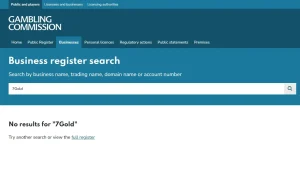
- Check the operator’s licence context. The 7Gold licence explains why the available regulatory route differs from a verified UKGC-licensed operator.
How much should the negative review pattern change your decision?
A low rating alone should not decide where you gamble. Small review samples can swing sharply, and unhappy customers are often more motivated to post. But the current 7Gold evidence is not just one low number. Trustpilot’s profile is materially negative, Casino Guru gives a very low Safety Index, and both sources contain recurring withdrawal or verification concerns.
That combination supports a conservative risk posture. Before depositing, decide the maximum amount you would be comfortable having delayed while a payment or KYC issue is investigated. Avoid assuming that a successful deposit proves a future withdrawal will be equally simple. Read current terms and keep records from the start rather than only after a problem appears.
Complaint risk and licensing are different facts. Use the dedicated licence analysis for the regulatory position, and treat the complaint evidence here as a separate signal about dispute friction.
Freshness and attribution
Trustpilot was rechecked on 13 September 2026 and displayed a TrustScore of 2.0 out of 5 from 31 reviews, with 84% of displayed ratings at one star. These are user-generated reviews and are used only as attributed reputation evidence.
Casino Guru was rechecked in the same session and displayed a Very low Safety Index of 2.6. Its current record lists 10 complaints in total, including 3 unresolved, 3 resolved and 4 rejected. Casino Guru’s ratings and complaint outcomes are its own editorial and mediation assessments, not findings by the UK Gambling Commission or another regulator.
How much weight to give 7Gold’s complaint record before depositing
The complaint evidence is strong enough to affect a cautious player’s decision, but not strong enough to justify turning every allegation into fact. For wider product context, return to the 7Gold review. Two different platforms currently show materially negative signals, with withdrawals, verification and support appearing repeatedly. At the same time, there are resolved cases and at least some positive payment reports. The practical response is to treat 7Gold as a higher-friction choice: keep exposure small, document every payment and verification step, and weigh the weak reputation pattern together with the separate licence analysis before deciding whether the casino matches the level of protection you want.