Non-GamStop European Casinos: UK Rules Explained
 Available in GB

A casino’s European base does not establish that it can legally serve customers in Britain; UK authorisation is the key distinction.
Table of Contents
- European Online Casinos: What UK Rules Mean in Practice
- Roulette Abroad, with UK Safeguards Still in Place
- European Casino Sites and the Self-Exclusion Check
- No-Deposit Bonus Offers: Check Your Exclusion First
- Non-GAMSTOP Casinos: The Risk That Matters Most
- Choosing a Casino Without Turning It into a ‘Best Of’ List
- For UK Players: Where to Set a Gambling Limit
- Crypto Casinos and the UK Payment Line
- Real-Money Play: What Happens When You Self-Exclude
- Not on GAMSTOP? Know What the Scheme Covers
European Online Casinos: What UK Rules Mean in Practice
“European” can describe where a casino is based, the audience it markets to, or simply the look of its website. It does not tell you whether it is permitted to serve customers in Britain. If you are in England, Scotland or Wales and want to gamble online for real money, the operator needs the relevant licence from the UK Gambling Commission. Its address elsewhere in Europe does not replace that requirement.
That distinction is easy to miss when a site uses familiar language, displays prices in pounds or has a polished English version. I’ve learned not to treat those details as proof of anything important. For a UK player, the practical question is whether the business is authorised to provide gambling here, not whether its brand feels European or its servers might be somewhere nearby.
The main legal framework in England, Wales and Scotland is the Gambling Act 2005. Under it, operators offering real-money gambling to customers in those parts of the UK must hold a UK Gambling Commission licence. Online gambling is legal for adults aged 18 or over when it takes place through a properly licensed operator. Northern Ireland is not covered by the same Act, so the legal framework is not identical across every part of the UK.
If you’re looking at non-GamStop European casinos in 2026, payout timing is one practical detail to consider. Use this list as a starting point and check the terms that matter to you before signing up.
1. x3bet
Payout speed: 1-3 business days x3bet lists a payout speed of 1–3 business days. You can use that as a stated timing guide when considering it.
2. EvoSpin
Payout speed: 1-3 business days EvoSpin lists a payout speed of 1–3 business days. You have a stated timeframe to refer to when assessing it.
3. BeOnBet
Payout speed: 1-3 business days BeOnBet lists a payout speed of 1–3 business days. You can factor this stated timing into your review.
4. NightLuck
Payout speed: 1-3 business days NightLuck lists a payout speed of 1–3 business days. You have this timeframe as a practical point to consider.
5. Revery Play
Payout speed: 1-3 business days Revery Play lists a payout speed of 1–3 business days. You can refer to this stated timing when deciding whether it suits you.
6. Chanze
Payout speed: 1-3 business days Chanze lists a payout speed of 1–3 business days. You have a stated payout timeframe to take into account.
7. Britsino
Payout speed: 1-3 business days Britsino lists a payout speed of 1–3 business days. You can consider this timing as part of your assessment.
8. SpinFormula
Payout speed: 1-3 business days SpinFormula lists a payout speed of 1–3 business days. You can use the stated timeframe as one point of reference.
9. SlotoSport
Payout speed: 1-3 business days SlotoSport lists a payout speed of 1–3 business days. You have this stated timing to consider when reviewing it.
10. WinBeast
Payout speed: 1-3 business days WinBeast lists a payout speed of 1–3 business days. You can factor that stated timeframe into your decision.
A foreign licence is not a substitute for a British one. A casino may refer to an overseas regulator or display a licence from another jurisdiction, but that does not make it a UK-licensed operator. Businesses operating outside the UK regulatory system sit outside the protections and requirements that apply to operators licensed here. For someone comparing European online casinos, that is more meaningful than a country flag, a “trusted” badge or a claim about international standards.
This is not a technicality reserved for the operator. It affects the rules under which the site is allowed to offer gambling to people in Britain and the protections a customer can expect from a UK-licensed business. It also means that “European casino” is not a useful verdict by itself. Europe is a broad label, not a single gambling licence, and a site’s location cannot answer the UK licensing question.
Where GAMSTOP fits
GAMSTOP is the national online self-exclusion scheme for Great Britain. It is separate from the question of where an operator is based: the scheme is part of the UK-facing system for online gambling, rather than a general European registration. The Gambling Commission made participation compulsory for online operators from 31 March 2020. Since the requirement took effect, every UK-regulated online casino has had to block people who are self-excluded through the scheme.
That requirement matters because a self-exclusion system only makes sense when participating businesses take it seriously. GAMSTOP applies across participating licensed online gambling websites and apps, and UK-licensed operators are required to take account of an active exclusion. It is not a badge that turns an overseas casino into a British-licensed one, nor should a casino’s European branding be mistaken for evidence that it is part of the UK system.
I used to read a site’s own confident claims as if they settled the hard questions. They don’t. A promotional promise can say plenty about how a business wants to be seen; it cannot by itself establish that the operator holds the licence required to serve Britain. Start with the regulatory status, then judge what the site actually offers. The order matters.
A practical way to read the label
When you come across a European casino online, separate three ideas that are often blurred together: where the business is based, which regulator has authorised it, and whether it is allowed to offer real-money gambling to customers in Britain. Only the last point answers the UK-facing question. A foreign location does not automatically make a business unlawful in its home country, but it does not give it permission to sell gambling to the British market without the required UK licence.
Do
- Check for UK Gambling Commission authorisation
- Identify the actual operator
- Prioritise regulatory status
Don’t
- Rely on a European theme or flag
- Assume a polished English version is proof of licensing
- Trust a “best” ranking without regulatory data
This is why a search for a “best” European casino can lead to the wrong starting point. A ranking or attractive design cannot establish that an operator is suitable for a UK customer, and the word “best” has no regulatory meaning. I would first look for clear information identifying the operator and its UK Gambling Commission authorisation. If the status is unclear, don’t fill in the gap with assumptions based on the site’s language, payment display or European theme.
The broad rule is straightforward: real-money online gambling for customers in Great Britain belongs within the UK licensing system. GAMSTOP is one part of that system, with participation required of online operators since 2020. These points do not make every site that looks European equivalent, and they do not turn an overseas licence into a UK licence. Familiar branding is not a safeguard. Check the UK position first.
Roulette Abroad, with UK Safeguards Still in Place
A European roulette table can look like a straightforward way to play: choose a number, place a stake, watch the wheel. But the word “European” tells you about the game format or the site’s branding; it does not tell you which rules apply when you gamble from the UK. I’d separate those questions before thinking about the table itself.
For real-money online gambling offered to customers in England, Scotland or Wales, the operator must hold a UK Gambling Commission licence. That applies even if the company is based elsewhere in Europe. A foreign address or European identity does not replace the licence required to serve the British market. Online gambling is legal in the UK at licensed and regulated sites, for adults aged 18 and over.
Non-UK-Regulated Casinos: Rules for UK Players
That distinction matters when you come across a polished page describing a “premium” roulette experience or a VIP room. Those are promotional labels, not proof of the protections available to you. I used to let presentation do too much of the talking. It doesn’t answer the practical questions: will the operator verify your age before you can deposit, can you set a financial limit, and can you fund play in a permitted way?
Age checks come before deposits
A gambling operator must verify a customer’s age before allowing them to deposit funds into an account. That is a requirement, not a courtesy offered by a particular roulette site. If a service lets you put money into a gambling account before checking that you are old enough, that should make you pause rather than reassure yourself that the check will happen later.
The rule is about deposits, not whether the site calls its table European roulette, advertises a VIP service or describes itself as a casino for UK players. Those details do not change the age-check requirement for a UK-licensed operator. Nor should a smooth sign-up screen be mistaken for evidence that the operator is properly authorised.
I’d treat age verification as a basic part of the process, not an annoying hurdle to rush through. It is one of the first signs that the operator is applying the rules that govern UK gambling. If you are comparing online roulette options, keep that check ahead of attractive wording about tables or service.
A gambling operator must verify your age before you are allowed to deposit funds into an account.
Limits are there before play gets going
There is another safeguard at the point when a new customer is getting started. Remote gambling operators must prompt new customers to set a financial limit before the first deposit. They must also make account-level limit controls accessible, so customers can manage their spending settings through the account.
That prompt is worth taking seriously, even if you arrived to play one roulette session and believe you have everything under control. A limit is a spending tool; it helps define a boundary for your account. It is not a prediction of what you will spend, and it does not make gambling risk-free. I’ve learned that the moment when a limit feels unnecessary can be exactly when it is easiest to skip setting one.
The requirement applies to remote gambling operators serving the UK, rather than only to sites with a particular style of roulette or a particular European theme. If a site is offering real-money gambling to customers in Great Britain, the UK licensing rules are the relevant framework. A “best” or “premium” label cannot substitute for the required prompt and controls.
Keep the distinction simple: a financial limit is a way to manage spending. It is not the same thing as a formal self-exclusion, and it should not be treated as a guarantee that you will stay within your plans. Set a boundary you can live with before depositing, and make sure you know where the account controls are.
Anjouan Casino Licence UK: Legal Status and Limits
Check the payment route, not just the table
Credit-card restrictions also apply to online gambling in the UK. Remote gambling operators cannot accept credit-card payments for gambling, including payments routed through a money service business. They also cannot accept a wallet payment for gambling where that wallet allows funds from a credit card to be used.
That means the payment route matters as well as the name of the payment method shown at checkout. A wallet is not automatically acceptable just because it is a wallet; the relevant issue is whether credit-card funds can be used for gambling through it. If a payment option is unclear, don’t assume that a European brand or a familiar logo settles the question.
These restrictions concern credit-card funding. They are not a blanket statement that every other payment method is approved or prohibited. I wouldn’t infer more than the rule says from a payment menu or from the site’s marketing.
When a roulette site is presented as European, UK safeguards still depend on the operator’s status and the rules for serving British customers—not on the table’s name. Check that the business is operating under the required UK licence, look for age verification before deposits, take the financial-limit prompt seriously, and avoid credit-card funding routes. Less glamour. More useful.
European Casino Sites and the Self-Exclusion Check
A European name, an English-language site or a flag in the footer tells you little about whether a casino is covered by GAMSTOP. Branding describes how a business presents itself; it does not establish which self-exclusion arrangements apply to a particular account. I would not treat a site’s name or apparent location as proof either way.
European branding and English language do not prove that a casino is covered by GAMSTOP.
The useful distinction is whether the operator is part of the UK-facing system, not whether its games look European. GAMSTOP works across participating licensed online gambling websites and apps. That means the scheme is not simply a filter for every casino with a European connection. Its reach depends on participation in the scheme.
If you are checking a European casino site, look for clear information about the business operating it and its position in the UK market. A statement that a casino is “international” or “available in Britain” is not the same as confirmation that it is covered by GAMSTOP. Nor does a European address, a familiar currency or a page written for UK customers settle the question. Promotional language is not a safeguard.
I would make the check directly rather than infer it from design. Read the operator’s responsible-gambling information and, if the position is unclear, ask the business whether it participates in GAMSTOP. Keep the question specific: does the self-exclusion scheme apply to this operator’s online casino accounts? A generic answer about responsible gambling does not answer that.
This matters when people compare European slot sites, casino games or bonus pages. A polished offer can pull attention towards game choice and promotional terms, but neither tells you whether an existing exclusion will be recognised there. A new site may be new to you, not necessarily outside the scheme; equally, European branding does not prove that the scheme covers it. Confirm the operator, not the advertising.
Non-UKGC Licensed Casinos: What UK Players Should Know
There is a limit to what a player can establish from a page that uses broad wording. If the business will not give a clear answer, do not fill the gap with an assumption that it is included—or that it is safely outside the system. I would treat uncertainty as a reason to pause, not as permission to try an account and see what happens. That is a poor test.
If you have self-excluded, do not open another account elsewhere to get around the decision. Gambling at a non-GAMSTOP casino could breach the terms of your self-exclusion. The safer step is to exclude yourself from every place where you might be tempted to gamble, rather than relying on a brand label to keep you away.
The practical point is simple: site identity and scheme participation are different things. A European casino may use language and imagery that feel familiar, but only a clear check of the operator’s status can tell you whether GAMSTOP applies. If you cannot confirm it, do not assume the protection is there.
No-Deposit Bonus Offers: Check Your Exclusion First
A “free” offer can look harmless: no deposit, no money going in, nothing to lose. But if you have self-excluded, the offer is not the important part. The important part is the decision you already made not to gamble.
Self-exclusion is a formal agreement not to gamble, and sticking to it is your responsibility. That can be hard when a promotion promises a way back in without an initial payment. I know how quickly “just having a look” can turn into a reason to open an account. The label on the offer does not change what gambling is.
If you have self-excluded, do not open another account to claim a no-deposit bonus; this could breach the terms of your self-exclusion.
That applies whether the promotion is described as a European casino free bonus, a no-deposit offer, or a bonus for new customers. A bonus may still involve gambling, and trying to access it through another account is not a safe workaround. If you have excluded yourself, don’t sign up elsewhere to claim an offer.
“No deposit” does not mean no risk
The wording draws attention to what you do not have to pay at the start. It can distract from the more relevant question: are you currently trying to avoid gambling? If the answer is yes, a bonus is not a good reason to test that boundary.
I would treat claims of the “best” no-deposit bonus with the same caution. They are promotional language, not a reason to set aside an exclusion. The offer might sound separate from your usual gambling, but following it can still bring you into a gambling account and make it easier to continue.
Gambling businesses must take reasonable steps to prevent self-excluded customers from gambling. That safeguard matters, but it is not a reason to try your luck by applying somewhere else. A non-GAMSTOP casino may not be covered by the same exclusion arrangements, and playing there could breach the terms of your self-exclusion. Don’t open an account elsewhere to get around it.
That is the point I would keep in front of me when a no-deposit promotion starts to look tempting: the absence of an upfront payment does not cancel the agreement. It also does not make a new account a harmless exception. The offer can wait. Your exclusion should not be treated as something to negotiate with.
If you have excluded yourself, step away from the promotion rather than checking whether it will let you register. Remove the immediate temptation where you can, and keep your decision consistent across the places where you might be tempted to gamble. It is easy to convince yourself that one offer is different. It isn’t.
Non-GAMSTOP Casinos: The Risk That Matters Most
When you have self-excluded, a casino that does not use GamStop can look like a way back in. I understand the temptation: I used to focus on whether I could open an account, not on why I had chosen to exclude myself in the first place. That was the wrong test.
British Casinos Not on GamStop: What to Know
Self-exclusion is an agreement not to gamble with the business or services you have excluded yourself from. If you try to play at a different site, that does not make the original decision disappear. Gambling at a non-GamStop European casino could breach the terms of your self-exclusion, depending on the agreement you made. An account that accepts your details is not proof that playing there is a safe or appropriate workaround.
The distinction matters because exclusions can cover different places. You can ask an individual gambling business to exclude you from its services, while GAMSTOP is designed to block access across participating UK online gambling operators. A site’s location or European branding does not, by itself, tell you what your own exclusion covers. Nor does the phrase “not on GamStop” answer whether the site is permitted to serve people in Britain. Remote operators serving the British market must hold a UK Gambling Commission licence.
I have learned not to treat a technical opening as permission. A website might let you reach its registration page or try to start an account; that does not change the commitment you made to stop. Self-excluded customers should be refused service by the venues and websites from which they excluded themselves. Still, looking for another account puts you in the position of trying to get around a safeguard rather than keeping it intact.
If you are tempted to gamble in more than one setting, think about the full range of places where that urge could take you: online sites, apps and physical venues. Excluding yourself from one business does not automatically mean you have excluded yourself everywhere. You can request self-exclusion from a single gambling business, but the practical question is whether your arrangements cover every place where you might be tempted.
So if you are considering European casinos not on GamStop, pause before treating access as the answer. Don’t open another account elsewhere to work around an exclusion. If the urge is strong, widen the protections rather than searching for a gap. That is less exciting than finding a site that will take your registration. It is also the point.
Casino Licensing & Safety for UK Players
A non-GamStop label is not a safety label, and a casino’s willingness to accept a customer does not cancel an existing self-exclusion. The risk that matters most is not whether a site looks European or whether its sign-up page works. It is whether playing there would go against the boundary you chose to set. Keep that boundary in view.
Choosing a Casino Without Turning It into a ‘Best Of’ List
A polished site, a familiar game lobby or a confident “best” label tells you little about what happens when you decide you need to stop. I used to read rankings as if someone had checked the things that mattered to me. That was a mistake. A recommendation is not a safeguard.
For a UK player, one basic expectation is not optional: gambling businesses must offer self-exclusion by law. Self-exclusion is a formal request for a company to stop you betting with it for a set period. It is not just a button that makes an account quieter, and it should not be treated as a casual promise to yourself.
The other part matters just as much. A gambling business must take reasonable steps to prevent a customer who has self-excluded from gambling with it. That puts responsibility on the business as well as on the person who chose to exclude. If the option is buried, unclear or presented as though it were merely a marketing preference, I would take that seriously rather than being distracted by the rest of the site.
When considering any casino, look for a clearly explained self-exclusion route and check that the business describes what the process does. You should be able to understand how to make the request and what it means for your ability to gamble there. If you cannot find the information, ask the business directly before opening an account. Evasive or confusing answers are useful information in themselves.
This is a more grounded way to assess a casino than judging it by a “best” badge. The badge is a claim; the safeguard is something you may need to rely on when gambling no longer feels manageable. Games, presentation and recommendations can all make a site look appealing, but they do not replace the company’s duty to act on an exclusion.
Non-UK-Registered Casinos: What UK Players Should Know
There is also a practical limit to what a single company’s process can do: an exclusion from one business concerns that business. If you have decided to stop, think about every place where you might be tempted to gamble rather than relying on one account setting to cover everything. And do not open an account somewhere else to get around an exclusion. That would undermine the decision you made, not solve the problem.
I know how easy it is to focus on what looks attractive now and leave the hard question for later. I would reverse that order. Check whether self-exclusion is offered, whether its terms are understandable, and whether the business says it will take reasonable steps to honour it. If those basics are hard to establish, a ranking cannot make the choice safer.
For UK Players: Where to Set a Gambling Limit
When comparing European casinos for UK players, I would start with the account controls, not the welcome banner. For a site serving people in Great Britain, the relevant question is whether it operates under a UK Gambling Commission licence. A European address or theme does not change the protections required of a UK-licensed gambling business.
One of those protections is a prompt for new customers to set a financial limit before making their first deposit. The operator must also make limit controls available within the account. That gives you a chance to decide what you can afford before money is in play, then adjust the controls through the account rather than relying on memory or willpower alone.
I used to treat a limit as something I could sort out later. That was the wrong order. Set it before depositing, and make the figure reflect money you can lose without affecting bills, food, or other essentials. If you find yourself repeatedly raising it to keep playing, take that as a reason to pause rather than a cue to find a different European online casino.
A limit and self-exclusion are not interchangeable. A financial limit is a spending control; it does not ban you from gambling. Self-exclusion is a formal agreement not to gamble, and sticking to that agreement is your responsibility. If you need a firm barrier rather than a way to manage spending, a limit may not be enough.
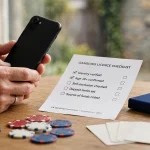
How to set a financial limit
Set the limit before making your first deposit. Ensure the figure reflects money you can afford to lose without affecting essentials like bills and food.
That distinction matters when a site advertises itself as the “best” casino for UK players. A polished account page is not proof that the protections apply. Before depositing, check that the business is licensed to serve the British market and that you can find its limit settings and responsible-gambling information. If those controls are absent or unclear, do not treat the site as a safe alternative.
The same applies when you are looking at European slots or casinos aimed at players across Europe: branding alone does not establish what rules govern your account. For UK play, the licence and the controls offered to you matter more than a broad claim about being international.
A limit can help keep spending within a boundary you choose. It cannot make gambling risk-free, and it cannot undo a decision to keep playing. Set the boundary first. Then leave it there.
Crypto Casinos and the UK Payment Line
A casino can put “crypto” front and centre and still leave the important question unanswered: how does the payment actually reach the gambling account? The label alone tells you little about whether the site follows UK rules or what funding routes it accepts. I’ve learned not to treat a shiny payment badge as an explanation. Look at the route, not the slogan.
For gambling with a UK-licensed remote operator, credit cards cannot be used to fund play. That remains true if the payment is routed through a money service business: adding an intermediary does not make credit-card-funded gambling acceptable. The same line applies to digital wallets. A gambling operator cannot accept a wallet payment when that wallet allows credit-card funds to be used for gambling.
That is the clear UK payment boundary. It is about credit-card money and the route it takes, not a blanket statement that cryptocurrency is permitted or forbidden. A crypto payment method does not, by itself, establish that a casino is authorised to serve people in Britain. Nor does the word “European” settle the matter. Remote gambling operators serving the British market must hold a UK Gambling Commission licence, wherever they are based.
Non-GamStop Curaçao Casino Sites: What to Check
If a site describes itself as a European crypto casino, separate three things before you act: the operator’s status for the UK market, the payment method being offered, and the source of the funds. A wallet is not automatically outside the rules just because it has its own app or address. If credit-card funds can be used for gambling through that wallet, a UK-licensed operator cannot accept that payment.
I would not read more into the rule than it says. It sets a restriction on credit-card funding, including certain wallet and intermediary routes; it does not certify a particular coin, wallet, or overseas casino. The practical point is plain: a payment option’s branding cannot turn a prohibited credit-card route into an acceptable one. Check the actual funding path before depositing. No clever label changes that.
Real-Money Play: What Happens When You Self-Exclude
Self-exclusion is more than a setting that hides a European casino from your account screen. Once you make a self-exclusion agreement with a gambling business, it must close your account, return the funds held there and remove your details from its marketing databases. Those are practical consequences, not a bonus or a favour the operator can choose to offer.
I used to think of an account balance as something I could sort out later, after deciding whether I wanted to stop. That gets the order backwards. If you’re ready to self-exclude, don’t keep gambling while you wait for the account to feel “finished”. The business should close it and return the funds; the point is to end access, not leave a route open for another session.
The marketing part matters too. Self-exclusion should mean your details are taken out of the business’s marketing databases, so promotional messages should not keep nudging you back. If you continue receiving marketing after making an agreement, contact the business and ask it to address the issue. Keep the confirmation of your exclusion and any messages about the account. A paper trail helps. Not glamorous, but useful.
Trusted casinos not on GamStop UK: what to check
A European real-money casino’s branding does not change what you should expect from a business that has accepted a self-exclusion agreement. The important detail is that the agreement is with that particular business. Closing one account does not automatically close accounts elsewhere, and an account closure is not a way to recover money already spent. The funds to be returned are the balance held in the account when the agreement is made.
If you were looking at free spins or another promotion when you decided to stop, let the decision stand. Chasing a final offer or trying to move the balance through more play cuts against the purpose of self-exclusion. I’ve learned that a tempting message can make a settled decision feel negotiable. It isn’t.
The same account consequences apply whether you arrived through a search for European casinos in 2026 or already had an account open. Once you self-exclude, expect closure, return of the remaining account funds and removal from marketing. Keep the confirmation. Then leave the account closed.
Not on GAMSTOP? Know What the Scheme Covers
GAMSTOP is a free self-exclusion scheme for online gambling in Great Britain. One registration tells participating UK online gambling operators to block your access to existing accounts and prevent you from opening new ones. You do not need to register separately with each operator covered by the scheme.
That scope matters when a site describes itself as European, or says it is not part of GAMSTOP. A country name, flag or “international” label does not tell you whether the operator participates. GAMSTOP is not a universal block on every gambling website in Europe; it applies across participating UK online operators. So a site that is not covered may not be blocked by your registration. That does not make it a safe place to gamble or a way to undo your decision to self-exclude.
Non-Gamban Casinos in the UK: What the Label Means
I’ve learned not to treat a gap in a system as permission. If you registered because gambling had become difficult to control, opening an account somewhere else can undermine the boundary you chose. Keep your exclusion in place and make sure it covers all the places where you might be tempted to gamble. Don’t go looking for a workaround.
GAMSTOP is one route for excluding yourself from UK-licensed online casinos, and a single request can cover online gambling operators in the scheme. You can also contact an individual gambling business about self-exclusion from that business. These are ways to put a barrier in place, not a promise that every site worldwide will be blocked.
If you have already spent money gambling, the Gambling Commission cannot refund it. I know that is not the answer anyone wants after a bad run, but it is better to know than to chase a supposed recovery through another account or offer. If you are considering self-exclusion, make the decision about the places you may actually use—not just the sites you happen to have open today.
How does self-exclusion work?
You identify the gambling businesses or venues you want to exclude yourself from, provide information to confirm your identity, choose a period and receive confirmation. The business must close your account, return any funds and take reasonable steps to stop you gambling with it.
How do I return from self-exclusion?
For a GAMSTOP exclusion, you must contact GAMSTOP directly to request removal. A 24-hour waiting period applies, during which you can cancel the request and keep your exclusion in place.
How does GAMSTOP benefit me?
GAMSTOP lets you block access to your accounts and prevent new accounts with UK online gambling operators covered by the scheme, using one free registration.
How long does it take for GAMSTOP to become active after sign-up?
The 24-hour cooling-off period begins once your identity has been verified, and your exclusion remains active during that period.
Can I play roulette at non-GAMSTOP casinos from the UK?
You may gamble online for real money from England, Scotland or Wales only with an operator holding a UK Gambling Commission licence. A casino’s overseas location or European branding does not replace that licence.
How does a non-GAMSTOP casino handle self-exclusion?
You can ask an individual gambling business to exclude you through its Responsible or Safer Gambling page, or by contacting customer services. The business must close your account and take reasonable steps to prevent you from gambling there.
What self-exclusion options are available at non-GAMSTOP casinos?
You can request exclusion from an individual gambling business through its safer gambling instructions or customer services. GAMSTOP is the separate option for blocking access across UK-licensed online gambling operators.
Safety

Anjouan Casino Licence UK: Legal Status and Limits
Anjouan licensing does not authorise service in Great Britain; operators serving that market need permission...

Foreign Casinos for UK Players: Rules and Risks
A practical guide to offshore licensing, account checks, bonus conditions and withdrawals for players in...

International Casinos for UK Players: Rules and Risks
A practical guide to UKGC status, player protections, bonus terms, crypto value and payment risks...
Offshore Casino Sites for UK Players: What to Know
A practical look at licensing, payment trade-offs, bonuses and identity checks, without treating a casino...

Offshore casinos for UK players: what to check
A practical look at licence status, bonus conditions, crypto value changes and the steps between...

British Casinos Not on GamStop: What to Know
The guide distinguishes GamStop coverage from trustworthiness and examines licensing, safeguards, bonus terms and withdrawal...

Casino sites not registered with GamStop: what to know
The guide distinguishes non-participation in GamStop from UKGC oversight and examines the limits of licensing,...

Casino Without a Swedish Licence: UK Rules Explained
A practical explanation of UKGC oversight, foreign licences, self-exclusion, bonus terms and the risks of...

Casinos That Bypass GamStop: What UK Players Should Know
GamStop participation, UK Gambling Commission oversight and offshore access are separate issues, so the label...

Curaçao Casino Licence UK: What the Label Means
A Curaçao label identifies a claimed licensing jurisdiction, not UK Gambling Commission regulation or identical...

Gibraltar Casino Licence: UK Rules Explained
A Gibraltar licence may describe an operator’s base, but it does not show that the...

Merkur Casino Online UK: Rules and Demo Play
A practical look at UK availability, demo play, stakes, domains and the terms attached to...

Most Trustworthy Online Casinos in the UK: What to Check
A practical way to assess licensing, safer-play safeguards, payment labels and bonus terms without treating...

Non-Gamban Casinos in the UK: What the Label Means
A casino’s availability outside a blocking tool does not establish its safety, authorisation, or whether...

Non-GamStop Curaçao Casino Sites: What to Check
A Curaçao label alone does not identify the operator, confirm an active licence or show...

Non-UK Licence Casinos: What the Licence Means
A licence links an operator to a regulator’s rules, but an overseas licence does not...

Non-UK-Registered Casinos: What UK Players Should Know
A foreign licence does not mean the UK Gambling Commission oversees a casino, and GamStop...

Non-UK-Regulated Casinos: Rules for UK Players
Understand how UKGC oversight differs from overseas licensing and what that distinction means for players...

Non-UKGC Licensed Casinos: What UK Players Should Know
This guide distinguishes UKGC authorisation from other licences and explains what offshore status means for...

Malta MGA Licence for UK Online Casinos Explained
A Malta address or MGA licence does not settle whether a casino can serve Great...

Online slots not on GamStop: what it means
GamStop applies to participating gambling establishments, not individual game titles, so a provider name or...

Safe Online Casino UK: Licence, Payments and Checks
A practical way to assess licensing, bonus terms, payment routes, withdrawals and affordability checks before...

Trusted casinos not on GamStop UK: what to check
A practical look at licensing, payouts, bonuses and the limits of reputation claims at casinos...

Trusted UK Casino: Check the Licence and Terms
A practical guide to licensing, account checks, bonus terms, apps, crypto payments and withdrawal conditions...

USA Casinos for UK Players: Licensing and Safety
The label does not prove US ownership or UK approval; licensing, deposits, bonuses and withdrawals...

VPN-Friendly Casinos in the UK: What to Check
A casino may accept VPN connections while still applying its own terms, identity checks and...