7Gold Casino Licence: UKGC Status and Anjouan Verification
 Available in GB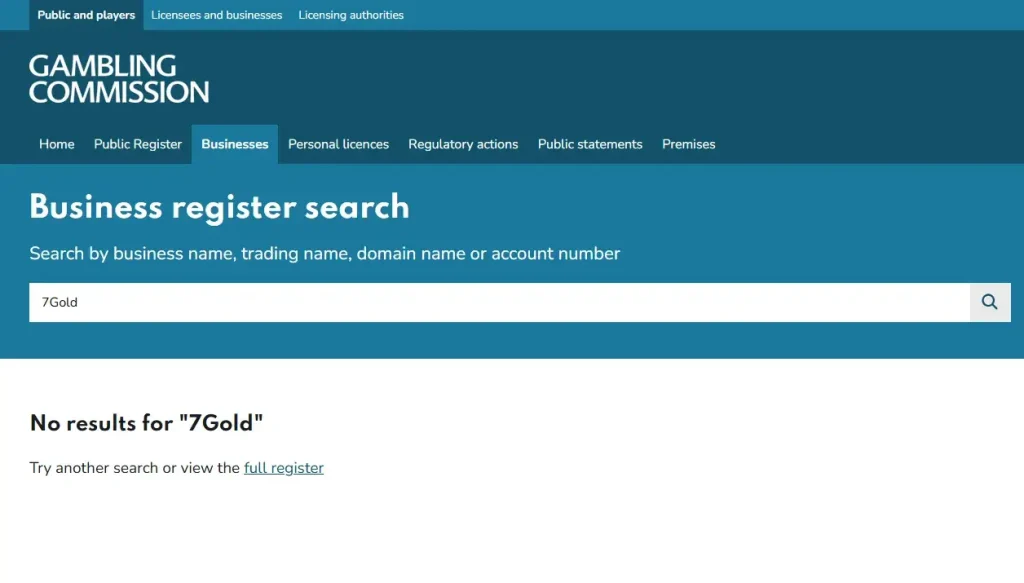
Licence verification
No UK Gambling Commission licence was verified for 7Gold, ChapChap Technologies or 7goldcasino.com in the current register check. The brand identifies an Anjouan licensing framework, but its own footer prints a licence identifier ending in FI12 while an independent register cross-check maps ChapChap Technologies and 7goldcasino.com to an active Anjouan record ending in FI2. That conflict is unresolved, so neither suffix should be presented as uncontested. For players in Great Britain, the more important point is the missing verified UKGC licence: remote casinos serving consumers in England, Scotland and Wales require a Gambling Commission licence, and GAMSTOP participation follows Great Britain licensing.
Table of Contents
- The licence evidence in one table
- How the UKGC check was interpreted
- Why a UKGC licence matters in Great Britain
- The FI12 versus FI2 licence-number conflict
- What the Anjouan evidence does establish
- GAMSTOP is tied to Great Britain licensed operators
- Great Britain and Northern Ireland need different wording
- How to verify the licence yourself
- Licence sources
- Why the UKGC gap matters more than the licence label alone
- Is 7Gold Casino Safe? Licence, Reputation and UK Player Protection
The licence evidence in one table
| Question | Current evidence | Safe conclusion |
|---|---|---|
| Is a UKGC licence verified? | No matching UKGC licence was verified for 7Gold, ChapChap Technologies or 7goldcasino.com. | Do not describe 7Gold as UKGC licensed. |
| Which offshore jurisdiction is identified? | 7Gold identifies Anjouan in the Union of Comoros. | Anjouan is the verified licence jurisdiction associated with the brand. |
| What licence number is shown? | The 7Gold footer shows a number ending FI12; an independent register mirror shows FI2 for ChapChap Technologies and 7goldcasino.com. | The exact suffix remains conflicting and should not be stated as settled. |
| Does GAMSTOP coverage follow automatically? | GAMSTOP covers online gambling companies licensed in Great Britain. | Do not claim 7Gold participates without verified Great Britain licensing evidence. |
This separation prevents a common mistake: treating an offshore licence as if it were equivalent to a local Great Britain operating licence. It also prevents the opposite mistake of treating a missing UKGC match as proof of every other claim about access, payments or game availability. For the wider risk picture, use the 7Gold safety.
How the UKGC check was interpreted
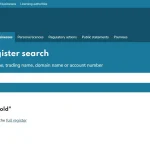
The UK Gambling Commission maintains a public register of licensed businesses. A meaningful check needs more than one spelling because casino brands can differ from the legal company that holds a licence. The UKGC register was checked against the brand name 7Gold, the operator name ChapChap Technologies and the domain 7goldcasino.com. The current verification record did not establish a matching UKGC licence for any of those identifiers.
The conclusion is deliberately narrow: no local Great Britain licence was verified. It is not converted into a statement that every visitor is blocked, that every transaction is unlawful, or that an account cannot technically be created. Those are separate questions requiring separate evidence. The 7Gold UK review keeps availability, product features and regulation as distinct dimensions.
Why a UKGC licence matters in Great Britain
The Gambling Commission states that businesses providing remote gambling to consumers in Great Britain need a licence from the Commission regardless of where the business itself is based. Great Britain means England, Scotland and Wales for this regulatory purpose. A remote casino licence places the operator inside the Commission’s licensing framework, conditions and supervision.
That makes local licence status a practical consumer-protection question rather than a decorative footer detail. If a reader expects the protections attached to a Great Britain licensed operator, the first step is to verify the operator or domain in the Commission’s register rather than infer licensing from GBP support, English language content or access from a British internet connection.
Nothing in this rule changes whether 7Gold has a bonus, games, payment methods or support. Those product facts are verified independently. The licence issue matters because it changes which regulatory framework a Great Britain player can rely on if something goes wrong.
The FI12 versus FI2 licence-number conflict
7Gold’s current branded material identifies ChapChap Technologies Ltd, Anjouan and a licence string ending in FI12. A separate registry-focused source maps ChapChap Technologies Limited and the exact 7goldcasino.com domain to an active Anjouan record with the same main number but an FI2 ending. Casino Guru also lists an Anjouan authority record ending FI2.
Those sources agree on the operator family and Anjouan jurisdiction but disagree on the final licence suffix. Because a licence number is a high-risk exact identifier, this review does not silently correct the brand footer and does not copy the footer as if the conflict did not exist. The safe editorial position is to show the discrepancy and leave the exact identifier unresolved until the sources reconcile.
This matters because small character differences are meaningful in a licence record. Readers checking the licence themselves should search by company and domain as well as by the printed number. A source-to-source mismatch is more informative than a falsely precise badge.
What the Anjouan evidence does establish
Anjouan Gaming maintains a public register for Internet Gaming Licence holders and states that its verification system can be searched by licence number, company name or operational domain. Its register is intended to show the holder, number, licence type and current status. Independent registry data links ChapChap Technologies Limited to 7goldcasino.com under an active Anjouan B2C record.
That is enough to describe 7Gold as associated with an Anjouan licensing framework. It is not enough to substitute Anjouan licensing for UKGC licensing in Great Britain. Different regulators have different territorial remits, licence conditions, complaint routes and safer gambling requirements. A licence can be real while still not being the local licence a British consumer expects.
The practical question is therefore not “licensed or unlicensed” in the abstract. It is “licensed by whom, for which jurisdiction, and what protection follows for this player?”
GAMSTOP is tied to Great Britain licensed operators
Current GAMSTOP guidance says that all online gambling companies licensed in Great Britain must be part of GAMSTOP Online. UK Gambling Commission material likewise treats participation as a requirement for licensed online operators. Since this review did not verify a UKGC licence for 7Gold, it would be inaccurate to tell readers that 7Gold is necessarily covered by GAMSTOP.
This distinction is especially important for anyone relying on multi-operator self-exclusion. A person registered with GAMSTOP should not assume that an offshore operator outside the verified Great Britain licensing set will be blocked by that scheme. Self-exclusion tools offered by a site itself are a separate matter and should be checked directly.
Great Britain and Northern Ireland need different wording
The UK Gambling Commission regulates remote gambling offered to consumers in Great Britain, not the provision of remote gambling in Northern Ireland. Its current guidance states that Northern Ireland has a distinct gambling-law framework, while remote operators advertising there can still face Gambling Commission licensing requirements.
That means a sentence such as “UKGC regulates all online gambling across the UK” is too broad. For readers in England, Scotland and Wales, the absence of a verified UKGC licence is directly relevant to the local remote-casino framework. Northern Ireland readers need to consider the separate Northern Ireland regime rather than assuming that Great Britain rules map across unchanged.
This page therefore avoids describing 7Gold as either “fully legal in the UK” or “illegal in the UK”. Those blanket labels erase the territorial distinction and go beyond the evidence available here.
How to verify the licence yourself
- Start with the UKGC public register. Search the brand, the operator name and the domain, not just one search term.
- Check the territorial scope. For a Great Britain decision, a foreign licence does not replace the need to identify a UKGC operating licence.
- Search the Anjouan register by company and domain. This reduces the chance that a formatting difference in the printed licence number hides a valid company record.
- Compare exact identifiers. If one source says FI12 and another says FI2, record the conflict instead of choosing whichever version looks more official.
- Separate licence status from reputation. A licence record does not erase complaints, and complaints do not rewrite the licence record. Review both dimensions independently on the 7Gold complaints.
For promotional terms, use the separate 7Gold bonus. Bonus value and wagering conditions should not be inferred from licence jurisdiction.
Licence sources
The Great Britain requirement is supported by current UK Gambling Commission guidance for remote casino operators and its remote-sector material. The Commission states that operators serving consumers in Great Britain require a licence. Its current Northern Ireland guidance confirms that the Commission does not regulate the provision of remote gambling there in the same way as in Great Britain.
7Gold’s branded material currently identifies ChapChap Technologies, Anjouan and the FI12-ending licence string. Independent registry-focused evidence maps ChapChap Technologies and 7goldcasino.com to an active Anjouan record ending FI2, while the Anjouan authority provides a current public verification register. The exact suffix conflict is therefore preserved rather than resolved by assumption.
Why the UKGC gap matters more than the licence label alone
For a Great Britain player, the key finding is not whether 7Gold can display an offshore licence label. It is whether the operator sits inside the local UKGC framework that governs remote casino services to consumers in England, Scotland and Wales. This review did not verify that local licence. The Anjouan evidence identifies a real offshore licensing framework, but the exact FI12/FI2 identifier remains conflicted. That combination supports a cautious, source-specific conclusion: recognise the Anjouan link, do not claim UKGC or GAMSTOP protection, and do not let a single licence badge substitute for checking the regulator that matters to your location.