Casino sites not registered with GamStop: what to know
 Available in GB

The guide distinguishes non-participation in GamStop from UKGC oversight and examines the limits of licensing, payment and bonus claims.
Table of Contents
- What “not on GamStop” actually means
- New and “best” sites: what the labels leave out
- Mobile access and payment claims: what can actually be checked
- Why a search result is not proof a casino can serve you
- Which casinos fall outside GamStop—and what that does not guarantee
- “Reputable” and PayPal: claims the facts cannot verify
- Overseas licences: Malta, Gibraltar and Curaçao are not UKGC licences
- Non-GamStop casinos and UK players: the legal distinction
- Slots, bonus wagering and the small print
- Responsible-gambling tools outside the UKGC framework
What “not on GamStop” actually means
GamStop is a self-exclusion service required for online casinos licensed by the UK Gambling Commission (UKGC). If you register, participating UKGC-licensed gambling establishments must prevent you from gambling with them for the period you select. The restriction applies across those participating sites; it is not a separate request you have to make with each one.
The available exclusion periods are six months, one year or five years. Choose carefully: once a period is in place, you cannot shorten it or cancel it early. If you signed up because gambling had become difficult to control, that detail matters more than any label a casino uses.
“Not on GamStop” describes a site that does not take part in the scheme. In practice, that generally means a casino operating outside the UKGC’s regulatory reach. It is not a special kind of GamStop account, nor does the phrase mean that a site has found a way to remove your registration from GamStop.
That distinction is easy to miss. I used to read labels like “unrestricted” as if they meant the same thing as “available to me”. They don’t. A site outside the scheme does not receive GamStop’s exclusion data and does not apply its restrictions. Your registration remains in force with UKGC-licensed operators; it simply does not extend to a casino outside that system.
So when someone says “casino sites not registered with GamStop”, they are usually referring to gambling sites that do not participate in the UK exclusion network. The wording can sound as though a casino has merely skipped a registration step. The more important point is that the operator sits outside the system that enforces your exclusion with UKGC-licensed sites.
That also means GamStop cannot make an outside casino recognise your self-exclusion. The two do not share the information that would make that happen. A casino may have its own rules, but those are not GamStop’s rules, and you should not assume that registering with GamStop automatically blocks access everywhere.
Trusted casinos not on GamStop UK: what to check
There is a reason to pause here. If you selected self-exclusion, using a site that does not honour it would undo the practical protection you chose, even though it would not end or cancel the GamStop registration itself. The restriction is still active where it applies. Nothing about an outside site changes the period you selected.
I know the temptation to treat a restriction as a technical obstacle can be strong, especially when you are focused on getting back into a game. But “not on GamStop” is not a workaround built into the service; it is a description of a different regulatory boundary. The distinction may sound dry. The consequence isn’t.
GamStop is intended for UK residents and covers gambling establishments under UKGC jurisdiction. Non-UK casinos are not required to enforce its registrations because they are outside that jurisdiction, and they do not share data with GamStop. That is why a self-exclusion can block access at UKGC-licensed sites without automatically blocking a site based elsewhere.
None of this should be read as a recommendation to look for an alternative place to gamble. If you self-excluded to create distance from gambling, that decision deserves to be respected, not tested against a list of sites with different rules. If the urge to play is hard to manage, stepping away and speaking with someone you trust or a support service is a more useful next move than trying to find a gap in the system.
The phrase can also blur together several different ideas: where a casino is based, which regulator oversees it, and whether it participates in GamStop.
A self-exclusion is a commitment with a defined term, not a setting you can toggle off when it becomes inconvenient. Six months, one year or five years: whichever period you chose, it remains in place until it ends. “Not on GamStop” does not change that.
New and “best” sites: what the labels leave out
If you’re looking at casino sites described as not registered with GamStop, check the terms, licensing and safer-gambling options carefully before deciding whether to use one. The details below are limited to the payout-speed information provided.
1. x3bet
Payout speed: 1-3 business days The listed payout speed for x3bet is 1–3 business days. Check the site’s terms for any conditions that may apply.
2. EvoSpin
Payout speed: 1-3 business days EvoSpin has a listed payout speed of 1–3 business days. Review its terms to understand any withdrawal conditions.
3. BeOnBet
Payout speed: 1-3 business days The payout speed provided for BeOnBet is 1–3 business days. Check the terms for details about withdrawals.
4. NightLuck
Payout speed: 1-3 business days NightLuck’s listed payout speed is 1–3 business days. You should consult its terms for any applicable conditions.
5. Revery Play
Payout speed: 1-3 business days Revery Play has a listed payout speed of 1–3 business days. Review the site’s terms for withdrawal details.
6. Chanze
Payout speed: 1-3 business days The payout speed provided for Chanze is 1–3 business days. Check its terms for any conditions that may affect withdrawals.
7. Britsino
Payout speed: 1-3 business days Britsino’s listed payout speed is 1–3 business days. Consult its terms for further withdrawal information.
8. SpinFormula
Payout speed: 1-3 business days SpinFormula has a listed payout speed of 1–3 business days. Check the terms to see what conditions apply.
9. SlotoSport
Payout speed: 1-3 business days The payout speed provided for SlotoSport is 1–3 business days. Review the site’s terms for withdrawal details.
10. WinBeast
Payout speed: 1-3 business days WinBeast’s listed payout speed is 1–3 business days. Check its terms for any applicable withdrawal conditions.
“New” sounds like a reason to look closer. “Best” sounds like somebody has already done the hard comparison for you. I’ve learned not to treat either word as evidence. They can be promotional labels, and a polished page can make a casino look thoroughly checked without showing what was actually checked.
That matters when you are weighing casinos not on GamStop. A recommendation is useful only if you can see the basis for it: what was examined, when, and whether the assessment covers the terms that affect your money. A ranking without that detail is just a ranking. I would not use it as a shortcut to deciding where to play, and I would be especially wary of a page that moves quickly from praise to a bonus offer.
The bonus headline is the easy part to notice. The rules below it are where the offer becomes real. A specialist affiliate review gives a benchmark of roughly 30x to 40x for wagering requirements, and describes anything above 50x as generally predatory. Treat that as a warning yardstick, not as a promise that a particular offer is fair. The calculation matters, but so does what the casino counts towards it and what happens if you do not finish.
Do
- Compare the wagering rule and deadline
- Check eligible games and maximum bet
- Read the withdrawal cap in bonus terms
Don’t
- Use a ranking as a shortcut
- Trust a bonus based on the headline
- Assume a polished page means it is checked
A multiplier on its own can also be misleading. Check what amount it applies to, then read the full conditions rather than assuming the headline bonus tells you the workload. The wording can make an offer sound generous while leaving important limits in the smaller print. I used to read the big number and move on. Bad habit.
Look for restrictions on how you can play while meeting the requirement. A specialist affiliate review notes that bonus terms may set a maximum bet, a deadline for completing wagering, or a cap on withdrawals from bonus winnings. Those conditions can change what the offer is worth in practice. A deadline can make a bonus unusable for someone who cannot play within the stated period; a withdrawal cap can limit what you receive even if you meet the requirement. Read each condition before accepting, not after a balance has become difficult to withdraw.
International Casinos for UK Players: Rules and Risks
Game contribution is another detail that can catch you out. Table games may count less towards wagering than slots, or not count at all. So a bonus that appears flexible may not be flexible in the way you assumed. The terms should say which games qualify and how much they contribute. If they do not make that clear, I would not fill in the gaps with optimism.
When a site calls itself “best”, ask what that means. Is the claim about the size of a bonus, the range of games, or the clarity of its terms? Those are different things, and one does not prove another. A large promotion is not automatically a good offer. A new launch is not automatically a better one. The label tells you what the page wants you to notice; it does not tell you what the conditions will feel like once you accept.
I’m not going to turn those labels into a list of winners. Without a clear, comparable basis for assessing operators and their current terms, a ranked recommendation would create confidence the evidence does not earn. The practical move is slower: compare the wagering rule, eligible games, maximum bet, deadline and withdrawal cap in the actual bonus terms. If one of those is unclear, pause before opting in.
Bonus Terms
Read the small print and actual bonus terms before opting in to avoid mistaking advertising for a useful assessment.
That is less exciting than a “best” badge. It is also a better way to avoid mistaking advertising for a useful assessment. Read the small print first.
Mobile access and payment claims: what can actually be checked
A phone-friendly label and a payment claim are two different things. “Mobile” may describe how a site is presented, but it does not tell you whether a particular payment route works on a phone, whether it is available to you, or what happens when you try to withdraw. I used to read a neat list of features as if it settled all of that. It doesn’t.
The same goes for claims about paying by mobile. The phrase can sound like a simple promise, but it may leave you unsure what the operator means: a payment made through a phone, a deposit charged to a mobile account, or something else. Don’t treat the wording as confirmation of a specific method. Before putting money in, look for the operator’s own current payment terms and check whether they explain deposits, withdrawals, fees and any restrictions in plain language. If the terms are vague, that is a reason to pause, not a reason to assume the method will work.
There is another distinction worth keeping in view: depositing successfully does not prove that withdrawing will be quick or straightforward. A specialist review describes e-wallet withdrawals as generally faster than card withdrawals, while noting that the casino’s own processing can take up to 24 hours. That is a general comparison, not a promise about a particular site or transaction. Processing by the casino is also only one part of the journey; the payment provider may have its own steps and timing.
Non-GamStop European Casinos: UK Rules Explained
KYC—identity verification—is another part people often leave until the moment they want their money. A specialist review advises completing it early to help avoid withdrawal delays. I’d take that as practical preparation, not a guarantee that a withdrawal will be approved or arrive on a particular day. Check what documents are requested and submit them through the operator’s stated process before you rely on the account for anything. A pending verification can turn a simple withdrawal request into a frustrating wait.
“Fast payouts” is marketing shorthand unless the conditions are clear. Look for the difference between the operator’s processing time and the time a payment provider takes after release. Check whether the withdrawal route has to match the deposit route, and whether the terms describe identity checks or other steps that could hold things up. If a page gives a headline speed but no usable explanation of those stages, I wouldn’t build a plan around the headline.
I also wouldn’t assume that using a phone makes an overseas casino safer or better supported. Casinos not on GamStop operate outside the UK Gambling Commission’s framework, and may not have the responsible-gambling tools that UK-licensed operators are required to provide. UK-based support services may not be available through them either. That matters if a payment problem becomes more than a routine delay.
Payment Verification
- Read the operator’s current payment terms
- Check for deposit, withdrawal, and fee details
- Complete KYC identity verification early
- Verify if withdrawal route must match deposit route
So keep the checks concrete: read the payment terms, understand the stated withdrawal process, and complete verification early. Don’t confuse a mobile-friendly pitch with evidence about payment availability, or a deposit going through with proof that cashing out will be effortless. Small print first. Promises second.
Why a search result is not proof a casino can serve you
A page can describe a casino as “not registered with GamStop” and still leave the most important question unanswered: is the operator allowed to offer online gambling to people in Great Britain? The label tells you about GamStop participation, not whether the site has permission to serve UK residents.
That distinction is easy to miss. UKGC-licensed operators must participate in GamStop. A casino licensed outside Great Britain may not be part of the scheme, but an overseas licence does not give its operator permission to offer gambling to UK residents. Operators serving people in the UK without a valid UK Gambling Commission licence are acting illegally.
The player’s position is different. Using a casino that is not on GamStop is not itself a criminal offence for a UK player. That does not make the operator’s offer lawful, or put the player under the protections of the UKGC system. Two things can be true at once. It’s an uncomfortable distinction, but an important one.
I’ve found that lists can make this feel simpler than it is. A heading may promise a list of casinos not registered with GamStop, but the entries do not establish that every named operator can legally serve someone in Britain. Nor does a search result, a review page, or a casino’s own wording settle the question. They are claims to interpret, not proof of regulatory status.
Non-UK-Regulated Casinos: Rules for UK Players
Be careful with “available to UK players”. That phrase can mean a site is reachable or accepts registrations; it does not show that the operator holds the licence required to serve the British market. Likewise, saying a casino is licensed somewhere does not mean it holds a UKGC licence. Those are separate points, and blurring them can make a risky choice look officially approved.
There is another gap worth keeping in view. Casinos outside the UKGC framework are not subject to the same mandatory responsible-gambling requirements. Some may offer tools voluntarily, but you cannot assume that protections familiar from UKGC-licensed sites will be present or work in the same way. UK-based support services may also not be available through an overseas operator. That matters most if you are trying to keep gambling under control.
So treat “not on GamStop” as a narrow description, not a seal of approval. It does not confirm that a casino is lawful for the UK market, that its claims are accurate, or that it offers equivalent consumer protection. And if you registered with GamStop because you needed a break, searching for a route around that decision is not a neutral bit of research. The exclusion cannot be shortened or cancelled before the period you selected ends. I would take that seriously, even when a page makes the alternative sound easy.
Illegal Operators
Operators serving people in the UK without a valid UK Gambling Commission licence are acting illegally.
Which casinos fall outside GamStop—and what that does not guarantee
A casino with a licence issued outside the UK is not required by law to connect to GamStop. That is the basic reason a site can be described as “not on GamStop”. It tells you something about its relationship with the exclusion scheme; it does not tell you whether the operator is honest, financially stable or suitable for you.
I used to treat labels like this as if they settled more than they did. They don’t. “Not on GamStop” is not a quality mark, a safety check or proof that a casino has been properly assessed. It cannot, by itself, confirm that a site will handle a complaint fairly or pay winnings without a dispute. Those are different questions.
The important distinction is what protections apply. A casino outside the UK Gambling Commission’s framework does not provide the consumer protections attached to a UKGC licence. You should not assume that safeguards, complaint routes or oversight work in the same way simply because a site has a licence somewhere else. The label does not bridge that gap.
Nor does the phrase tell you whether a particular operator is legitimate. Two sites could both sit outside GamStop and still differ greatly in how they run. Treating them as one dependable category would be like judging a business by the fact that it is not part of a particular scheme. That says where it stands in relation to that scheme, not whether you can trust it.
Most Trustworthy Online Casinos in the UK: What to Check
There is a practical support issue, too. If you use a non-GamStop casino, you may not have access to UK-based gambling support services through that operator. That can matter if gambling stops feeling manageable or you need help dealing with a problem. Don’t assume the same local routes are available just because the site accepts UK customers.
I’d keep the label narrow in my head: it describes an exclusion-system connection, not the whole operation. It does not certify safety, establish good customer service or make a casino equivalent to one regulated by the UKGC. And it is not a reason to act against a self-exclusion decision. If you registered with GamStop because gambling had become a problem, using a site outside it risks removing a barrier you chose to put in place.
A short label. A much bigger decision.
“Reputable” and PayPal: claims the facts cannot verify
“Reputable” sounds reassuring, but it is a label, not evidence. I’ve learned not to let a polished payment badge do the thinking for me. A mention of PayPal, or a logo on a page, does not by itself tell you whether that method is available for your account, whether withdrawals are supported, or what conditions apply. Those details need to match what the casino states in its own payment terms and cashier.
That matters especially with casinos not on GamStop. They operate outside the UK Gambling Commission’s framework and may not provide the consumer protections associated with a UKGC licence. Some responsible-gambling controls may be offered voluntarily rather than required. A familiar payment name does not change that.
Attention A familiar payment name or logo does not guarantee that the method is available for your account or that the operator is reputable.
Before relying on any payment claim, look for the practical details: whether the method can be used for both deposits and withdrawals, what verification is required, and how long the casino itself may take to process a withdrawal. A specialist gambling review reports that e-wallet withdrawals can be faster than card withdrawals, while casino processing may take up to 24 hours. That is a reported general pattern, not a promise about an individual transaction. The casino’s processing time is also only one part of the wait.
KYC is another detail worth dealing with early. Specialist reviews advise completing identity checks before you need to withdraw, because leaving verification until then can add delay. Read what documents are requested and follow the casino’s stated process. A payment method that appears on a page cannot remove a verification requirement.
Crypto needs a different kind of caution. A specialist review reports that cryptocurrency withdrawals may be fast, but the value of winnings can move with the cryptocurrency’s price. The amount you receive in a currency you spend can therefore change while you hold it. Crypto transfers are also irreversible: if you send funds to the wrong wallet address, you may lose them permanently. Fast is not the same as dependable.
I’d treat “PayPal accepted” as a claim to check, not a verdict on the casino. Look for clear, consistent payment terms and make sure they cover withdrawal rules as well as deposits. If the wording is vague, that is a reason to pause rather than fill in the gaps yourself. And if you have self-excluded, a payment option is not a reason to undo that decision or seek another route to gamble.
Overseas licences: Malta, Gibraltar and Curaçao are not UKGC licences
A casino may display a licence from Malta, Gibraltar or Curaçao and still be outside the UK Gambling Commission’s framework. Those are separate licensing jurisdictions; a licence from one does not become a UKGC licence just because the casino accepts a familiar currency or has an English-language site.
Non-GamStop Curaçao Casino Sites: What to Check
That distinction is easy to blur when a page calls a casino “European” or “international”. Those words describe a broad location or market, not the regulator responsible for the operator. Malta and Gibraltar are in Europe; Curaçao is not. None of those labels, on its own, tells you that the UKGC oversees the casino.
I used to treat a licence badge as a kind of safety stamp. It isn’t. It may identify the jurisdiction the operator says has licensed it, but it does not establish that the protections associated with UKGC-regulated gambling apply. Casinos licensed outside the UK are not required to connect to GamStop, and their regulatory arrangements should not be assumed to match the UK’s.
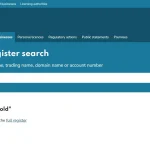
That matters most when something goes wrong. A logo on a footer does not tell you what rules govern a complaint, what practical recourse you have, or whether the site’s claims about its licence are accurate. I would want the operator’s legal name and licence details to match information in the relevant regulator’s official records. If that link is unclear, the badge has not answered the question. It has raised one.
Licensing Difference
A licence from Malta, Gibraltar, or Curaçao is a separate jurisdiction and does not establish that UKGC-regulated protections apply.
A licence from another jurisdiction also does not, by itself, show that a casino is authorised to offer gambling to people in Great Britain. The UK’s rules distinguish between an overseas licence and the permission required to serve the British market. So “licensed abroad” is not shorthand for “approved here”.
Nor does the fact that some people can access a site settle whether it offers the same consumer protection as a UKGC-licensed casino. Access and oversight are different things. A non-GamStop casino may operate under another regulator’s rules, but that does not make those rules equivalent to UKGC requirements.
I’m not saying every foreign licence is meaningless. I am saying the country named beside a badge cannot do the work of checking the operator, its regulator and the protections actually available. Don’t let a tidy flag or a polished seal do your thinking for you.
Different regulator. Different framework.
Non-GamStop casinos and UK players: the legal distinction
The legal position is easy to muddle because it involves two different people: the customer and the company taking the bet. A UK player does not commit a criminal offence simply by using a casino that is not on GamStop. That does not make the service lawful for the operator to provide.
For an online casino to serve customers in Great Britain, it must hold a valid licence from the UK Gambling Commission (UKGC). If a company offers gambling to UK residents without that licence, it is acting illegally, even if it holds permission from a regulator elsewhere. The operator’s location does not remove that requirement.
Casinos That Bypass GamStop: What UK Players Should Know
That distinction matters. I’ve seen the wording around “available to UK players” treated as if availability were proof of approval. It isn’t. A site being accessible, accepting a registration or displaying an overseas licence does not establish that it is entitled to operate in the British market.
For you as a player, the key point is that the absence of criminal liability is not the same as UK regulation or protection. Casinos not on GamStop sit outside the UKGC framework, so you do not get the consumer protections attached to a UKGC-licensed operator. Do not read the legal position as an endorsement or as a recommendation to use one.
There is a practical support gap as well: using a site outside the UKGC system means you may not have access to the UK-based protections and support routes associated with licensed operators. Those sites may also lack responsible-gambling tools that are mandatory under the UK framework.
So keep the two questions separate: Is the player committing a crime? No, not merely by playing. Can an operator offer online gambling to UK residents without a UKGC licence? No. The law draws the line at the operator’s conduct, but the weaker protections still affect the person placing the bet.
Slots, bonus wagering and the small print
A slot can look like the simplest option on a casino page: choose a stake, spin, and see what happens. A bonus changes the calculation. The offer may come with wagering requirements, and the game you choose can affect how much each bet contributes towards meeting them.
Slot Wagering Contribution
Slots may count more towards wagering than table games, which may contribute less or nothing at all. This means a bonus may take longer to clear depending on the games you choose.
Slots may count more towards wagering than table games. Table games may contribute less, or nothing at all. So a bonus that appears straightforward can take longer to clear if you spend your play on games that carry little or no weighting. Check the terms for each game type before accepting an offer; the headline number does not tell you how much progress your play will make.
A specialist review describes bonus conditions that can include a maximum bet while wagering, a deadline for completing the requirement, and a cap on withdrawals from bonus winnings. Those details matter. Exceeding a maximum bet or missing a deadline may affect whether you can withdraw, while a withdrawal cap can limit what you keep even after completing the wagering. Read the full terms, not just the banner.
I learned that the dull paragraph is where the real offer lives. Annoying, but true.
There is another distinction worth keeping clear: the bonus mechanics do not make a site’s regulatory status any safer. Casinos not on GamStop operate outside the UK Gambling Commission framework, and they may not be required to provide the responsible-gambling tools expected under UK rules. A bonus is not a reason to treat those protections as equivalent.
For British players, online slots are subject to UK rules when offered by a UK-licensed operator. Autoplay is banned, and each online slot spin must last at least 2.5 seconds. The maximum stake per game cycle is £5 for adults aged 25 and over, and £2 for players aged 18 to 24. These rules are separate from bonus wagering: they do not explain a promotion’s weighting, deadline or withdrawal cap.
Before you play, check whether slots and table games count differently, what actions could void bonus winnings, and when the requirement ends. If the wording is unclear, walking away from the offer is simpler than trying to decode it after a win.
Casino Licensing & Safety for UK Players
Responsible-gambling tools outside the UKGC framework
A deposit limit or a reminder can sound reassuring, but the important question is what backs it up. At casinos not on GamStop, responsible-gambling features may be offered voluntarily rather than required by the rules that apply to UKGC-licensed operators. A specialist review describes some non-UK sites as providing deposit or loss limits, session time limits, reality checks and self-exclusion; that does not mean every site offers them, or that they work in the same way.
I’ve learned not to treat a button labelled “take a break” as equivalent to a formal protection. Before relying on any control, look for its actual terms: whether you can set it yourself, how it takes effect, and what the operator says happens when you request exclusion. If those details are hard to find, that uncertainty matters.
A self-exclusion option at one site also should not be assumed to apply elsewhere. The scheme and consumer protections associated with a UKGC licence are not provided by non-GamStop sites. Playing at such a site is not itself a criminal offence for a UK player, but that does not make the protections comparable. There may also be no access to UK-based support services through the operator.
Casino Without a Swedish Licence: UK Rules Explained
That gap is easy to underestimate when a site displays familiar-looking tools. Voluntary features depend on the operator’s own arrangements, and a regulator outside the UK may not require the same measures. A feature being visible is not proof of how consistently it is applied.
If you have chosen self-exclusion because gambling is causing harm, I would not use another site as a workaround. GamStop’s restriction cannot be shortened or cancelled before the period you selected ends. It is safer to keep the barrier in place and seek support rather than rely on controls whose scope may be limited.
One more practical point: if a site accepts cryptocurrency, transfers are irreversible, and a mistake in the wallet address can mean a permanent loss. Small print matters. So does the protection that may be missing.
Are casinos that bypass GamStop illegal for UK players to use?
No, using a non-GamStop casino is not a criminal offence for you. However, an operator offering online gambling to UK residents without a UKGC licence is acting illegally.
What gambling sites are not on GamStop?
They are generally casinos operating outside the UKGC’s jurisdiction, such as some sites licensed in Malta, Gibraltar or Curaçao. They do not apply GamStop exclusions, and a licence outside the UK does not provide UKGC protections.
Is it safe to play at non-GamStop gambling sites?
You do not get the consumer protections associated with a UKGC licence at these sites. Some may offer limits or self-exclusion voluntarily, but their regulators may not require those safeguards.
What are casinos not on GamStop?
They are casinos outside the UKGC-regulated system that do not participate in GamStop. Your exclusion remains active at UKGC-licensed sites, but these casinos do not receive GamStop data or enforce its restrictions.
Is it legal to play in casinos not blocked by GamStop?
It is not a criminal offence for you to play at a non-GamStop casino. But an operator offering online gambling to UK residents without a UKGC licence is acting illegally.
Can I reverse a self-exclusion from GamStop early?
No. You cannot shorten or cancel a GamStop exclusion before the period you selected ends.
Safety

Anjouan Casino Licence UK: Legal Status and Limits
Anjouan licensing does not authorise service in Great Britain; operators serving that market need permission...

Foreign Casinos for UK Players: Rules and Risks
A practical guide to offshore licensing, account checks, bonus conditions and withdrawals for players in...

International Casinos for UK Players: Rules and Risks
A practical guide to UKGC status, player protections, bonus terms, crypto value and payment risks...

Offshore Casino Sites for UK Players: What to Know
A practical look at licensing, payment trade-offs, bonuses and identity checks, without treating a casino...

Offshore casinos for UK players: what to check
A practical look at licence status, bonus conditions, crypto value changes and the steps between...

British Casinos Not on GamStop: What to Know
The guide distinguishes GamStop coverage from trustworthiness and examines licensing, safeguards, bonus terms and withdrawal...

Casino Without a Swedish Licence: UK Rules Explained
A practical explanation of UKGC oversight, foreign licences, self-exclusion, bonus terms and the risks of...

Casinos That Bypass GamStop: What UK Players Should Know
GamStop participation, UK Gambling Commission oversight and offshore access are separate issues, so the label...

Curaçao Casino Licence UK: What the Label Means
A Curaçao label identifies a claimed licensing jurisdiction, not UK Gambling Commission regulation or identical...

Gibraltar Casino Licence: UK Rules Explained
A Gibraltar licence may describe an operator’s base, but it does not show that the...

Merkur Casino Online UK: Rules and Demo Play
A practical look at UK availability, demo play, stakes, domains and the terms attached to...

Most Trustworthy Online Casinos in the UK: What to Check
A practical way to assess licensing, safer-play safeguards, payment labels and bonus terms without treating...

Non-Gamban Casinos in the UK: What the Label Means
A casino’s availability outside a blocking tool does not establish its safety, authorisation, or whether...

Non-GamStop Curaçao Casino Sites: What to Check
A Curaçao label alone does not identify the operator, confirm an active licence or show...

Non-GamStop European Casinos: UK Rules Explained
A casino’s European base does not establish that it can legally serve customers in Britain;...

Non-UK Licence Casinos: What the Licence Means
A licence links an operator to a regulator’s rules, but an overseas licence does not...

Non-UK-Registered Casinos: What UK Players Should Know
A foreign licence does not mean the UK Gambling Commission oversees a casino, and GamStop...

Non-UK-Regulated Casinos: Rules for UK Players
Understand how UKGC oversight differs from overseas licensing and what that distinction means for players...

Non-UKGC Licensed Casinos: What UK Players Should Know
This guide distinguishes UKGC authorisation from other licences and explains what offshore status means for...

Malta MGA Licence for UK Online Casinos Explained
A Malta address or MGA licence does not settle whether a casino can serve Great...

Online slots not on GamStop: what it means
GamStop applies to participating gambling establishments, not individual game titles, so a provider name or...

Safe Online Casino UK: Licence, Payments and Checks
A practical way to assess licensing, bonus terms, payment routes, withdrawals and affordability checks before...

Trusted casinos not on GamStop UK: what to check
A practical look at licensing, payouts, bonuses and the limits of reputation claims at casinos...

Trusted UK Casino: Check the Licence and Terms
A practical guide to licensing, account checks, bonus terms, apps, crypto payments and withdrawal conditions...

USA Casinos for UK Players: Licensing and Safety
The label does not prove US ownership or UK approval; licensing, deposits, bonuses and withdrawals...

VPN-Friendly Casinos in the UK: What to Check
A casino may accept VPN connections while still applying its own terms, identity checks and...