Offshore Casino Sites for UK Players: What to Know
 Available in GB

A practical look at licensing, payment trade-offs, bonuses and identity checks, without treating a casino list as a safety guarantee.
Table of Contents
- What “offshore” means for UK players
- Why “top” claims need a closer look
- An offshore casino list is not a safety guarantee
- The business interests behind an offshore casino
- Licences, deposits and the wait for a withdrawal
- Bonuses, games and the terms behind the offer
- No-deposit offers, deposits and the crypto trade-off
- Crypto withdrawals: fast does not mean risk-free
- KYC, identity checks and what “no KYC” leaves out
- If you’re looking for an alternative, consider the trade-off
What “offshore” means for UK players
“Offshore” describes the operator, not the person placing a bet. In the UK market, a foreign casino is an online gambling business that takes British customers without a licence from the UK Gambling Commission. The company may be based abroad and may hold a licence elsewhere, but that does not make it a UK-licensed casino.
I used to treat “offshore” as if it were a neat label for a casino’s location. It is more useful to think of it as a regulatory distinction: the operator is outside the UK Gambling Commission’s system. That remains true even if the site is available to British customers, has pages in English or accepts familiar payment methods. None of those features turns an overseas licence into a UK Gambling Commission licence.
The distinction matters because the operator’s position and the player’s position are not the same. An online casino offering gambling to customers in England, Scotland or Wales must hold the relevant Gambling Commission licence. If it does not, it is the operator that is acting unlawfully by providing those services there. The fact that a site is run from another country does not remove that requirement when it is serving customers in those parts of Great Britain.
For a player, the legal position is different. UK law does not make it a crime for an individual to place a bet with an overseas casino, and there is no criminal penalty simply for playing there. That does not mean the casino is authorised to serve British customers. It means the law draws a line between the operator’s obligation to hold a licence and the individual’s act of betting.
Most Trustworthy Online Casinos in the UK: What to Check
That was the part I initially muddled. I assumed that if a site was outside the UK system, the player must be breaking the same rule as the business. Those are separate questions. The operator’s lack of a UK licence is not converted into a criminal offence by the customer’s decision to place a bet.
The Gambling Act 2005 provides the framework for gambling in England, Scotland and Wales; Northern Ireland has a separate legal framework. For the three Great Britain jurisdictions, the practical point is straightforward: a remote operator selling gambling to local customers needs the appropriate UK Gambling Commission licence. A casino that accepts British customers without one fits the offshore description used in this context, but that description does not make it a lawful UK operator.
Nor does the word “foreign” settle the question by itself. A business can be located abroad and still need UK authorisation if it offers gambling to customers in Great Britain. Conversely, seeing a foreign licence mentioned on a site tells you only that the operator claims to be licensed in that jurisdiction. It does not establish that it holds the licence required to serve the British market.
I would keep those ideas in separate boxes: where the business is based, what licence it holds, and whether it is authorised to offer gambling here. They are related, but they are not interchangeable. A site can be accessible from a British address and still lack the UK licence required for its offer to customers in England, Scotland or Wales.
Attention: Being personally outside criminal liability for betting with an offshore casino does not grant the business permission to operate in Great Britain or validate its overseas licence locally.
The phrase “best offshore casino sites” can make the category sound like a simple shopping choice. But “offshore” is not a quality mark or a recommendation. It says that the operator is outside UK Gambling Commission regulation, not that the site has been approved for British players. And the absence of a UK licence does not, by itself, mean the player has committed an offence.
That legal distinction should not be mistaken for reassurance about the operator. Being personally outside criminal liability does not grant the business permission to provide gambling in Great Britain, or turn its overseas licence into local authorisation. I find it helps to resist both shortcuts: “the player is breaking the law” and “the player can use it, so the operator must be allowed to offer it.” Neither captures the difference.
So when you see offshore casino sites described as available to UK players, read “available” as a statement about access, not as proof of UK licensing. The central question is whether the operator holds a Gambling Commission licence for the British market. If it does not, its legal position as a provider is different from yours as a player.
Two positions. Don’t blur them.
Why “top” claims need a closer look
Choosing an offshore casino site calls for careful consideration of the information available to you. Use this list as a starting point and check the terms that matter to you before signing up.
1. x3bet
Payout speed: 1-3 business days x3bet lists a payout speed of 1–3 business days, which gives you a stated timeframe to consider.
2. EvoSpin
Payout speed: 1-3 business days EvoSpin lists a payout speed of 1–3 business days, giving you a stated timeframe to consider.
3. BeOnBet
Payout speed: 1-3 business days BeOnBet lists a payout speed of 1–3 business days, so you have a stated timeframe for payouts.
4. NightLuck
Payout speed: 1-3 business days NightLuck lists a payout speed of 1–3 business days, a timeframe you can factor into your choice.
5. Revery Play
Payout speed: 1-3 business days Revery Play lists a payout speed of 1–3 business days, giving you a specific timeframe to review.
6. Chanze
Payout speed: 1-3 business days Chanze lists a payout speed of 1–3 business days, which you can consider when assessing payout timing.
7. Britsino
Payout speed: 1-3 business days Britsino lists a payout speed of 1–3 business days, offering you a stated payout timeframe.
8. SpinFormula
Payout speed: 1-3 business days SpinFormula lists a payout speed of 1–3 business days, giving you a timeframe to bear in mind.
9. SlotoSport
Payout speed: 1-3 business days SlotoSport lists a payout speed of 1–3 business days, a useful detail for you to check against the site’s terms.
10. WinBeast
Payout speed: 1-3 business days WinBeast lists a payout speed of 1–3 business days, giving you a stated timeframe to consider.
“Top” is a confident word. It can make a casino sound checked, compared and somehow safer than the rest. I used to read it that way. Now I treat it as a label, not a finding: it does not tell you who checked the site, what they checked, or what happens if the operator falls short.
An offshore casino operates outside the UK Gambling Commission’s regulatory system. That remains true even when it has a licence from another jurisdiction, uses polished branding or appears high in a comparison. A foreign licence may matter in the place that issued it, but it is not a UKGC licence and does not put the operator under UKGC oversight. The distinction is easy to blur in promotional copy. It matters.
A security feature is not the same as oversight
You may see claims about encryption and protection of personal or financial information. Non-GamStop casinos can use advanced encryption to protect data, and that can be a useful technical safeguard. But encryption addresses how information is protected as it moves or is stored; it does not tell you whether the operator follows UK rules, how it handles a complaint, or whether a regulator can make it put things right for a British customer.
That’s the gap.
Casino Without a Swedish Licence: UK Rules Explained
A secure connection can sit alongside weak accountability. The presence of a padlock in a browser, or a sentence promising “safe play”, does not establish that an independent regulator has tested the operator against UK requirements. I learned to separate the claim from the question it leaves unanswered. What technology is being described? Who is responsible for checking it? What standard is the operator being held to? If the wording does not answer those things, it is reassurance, not proof of UK regulation.
Some specialist reviews describe offshore platforms as using security measures such as encryption and as holding licences from authorities they regard as reputable. That is a report of what those reviews say, not a guarantee that every site has the same safeguards or that its licensing arrangement provides protections equivalent to the UK system. “Licensed” is not a complete explanation on its own. The regulator, the rules that apply, and the way those rules are enforced all matter.
Read “regulated” with the missing words in mind
When an advert says a casino is regulated, the next question is: regulated by whom, and for which market? An offshore licence does not authorise an operator to offer gambling to customers in Great Britain. Remote operators selling gambling to people in Great Britain must hold a UK Gambling Commission licence. A foreign regulator’s involvement does not replace that requirement.
Remote operators selling gambling to people in Great Britain must hold a UK Gambling Commission licence; a foreign regulator’s involvement does not replace this requirement.
This is why “internationally regulated” can sound more meaningful than it is. It may indicate that an authority elsewhere has issued a licence, but it does not mean the UKGC supervises the operator. Offshore casinos are not subject to UKGC regulation, and a British customer should not assume that protections attached to UK-licensed gambling apply there. The word “regulated” needs its jurisdiction attached. Otherwise it leaves out the part you most need to know.
There is also a practical protection that does not come with an offshore site: UKGC-mandated affordability checks. Offshore operators do not offer those checks under the UKGC framework. That is not a reason to treat the absence of checks as a benefit. It means a safeguard associated with the British regulatory system is missing, and you are left to set your own limits without that particular intervention.
A page can list security features, a foreign licence and a reassuring statement about compliance in the same paragraph. Those details may each describe something real, but together they still do not turn the operator into a UK-licensed casino. I try not to let several reassuring words add up to a conclusion they do not support.
What “best” can and cannot tell you
A ranking can be useful as a starting point for research, but “best” depends on the standard being used. A site might be labelled top for its design, range of features or promotional appeal. That tells you little about whether it is accountable to the UKGC. Unless the criteria are clear, the ranking is an opinion dressed up as a verdict.
Trusted casinos not on GamStop UK: what to check
I now look for the boundary of each claim rather than the shine of the headline. If a review praises encryption, I read that as a technical claim. If it praises a foreign licence, I ask which regulator it means. Neither statement answers whether the operator holds the licence required to serve Great Britain, because an offshore casino does not gain UKGC status through good presentation or a positive review.
There is no magic phrase that settles the question. “Top offshore online casinos” still describes offshore operators: sites outside the UKGC system. The label can help identify what kind of service is being discussed; it cannot certify that the service meets British standards or offers the same protections as a UK-licensed operator.
That’s the useful distinction. A claim may be true in a narrow sense and still leave out the thing you care about. Read the qualification, not just the headline.
An offshore casino list is not a safety guarantee
I used to treat a list of offshore casinos as if someone had already done the hard part for me. A name on a page looked like a quiet thumbs-up: someone had checked it, so I could get on with playing. That was an easy assumption, and a bad one. A list tells you which operators its publisher chose to mention. It does not, by itself, prove that an operator is safe, dependable or suitable for you.
Risk of Loss
If an unlicensed site refuses to pay winnings, you may have far fewer practical routes to resolve the problem than you would with a UKGC-licensed site.
The word “reviewed” can be doing a lot of work. A site may describe its checks, but that description is not the same as protection from the UK Gambling Commission. Offshore casinos sit outside UKGC regulation, even when they accept British customers. So an attractive presentation, a confident verdict or a long page of features cannot give you the safeguards that come with a UKGC-licensed operator.
That does not mean every listing is worthless. It means I read one as a lead to investigate, not as an endorsement. I look for what the page actually establishes, and whether it separates verifiable details from sales language. If it calls a site “legit”, I want to know what that means in practical terms. A foreign licence may tell you that an authority issued a licence; it does not mean the casino has permission to provide gambling facilities to customers in Britain.
There is a legal distinction worth keeping straight. In Great Britain, it is the operator that breaks the rules by providing gambling facilities to UK customers without a UKGC licence, or advertising those services here. A page naming a casino does not change that position. Nor does a neat list turn an offshore casino licence into a UK operating licence.
The harder question is what happens if a dispute goes badly. Gambling.com has reported cases in which an unlicensed site refused to pay a customer’s winnings, leaving that customer without legal recourse. That is not a prediction about every offshore operator, and it is not proof that a listed casino will do the same. But it is a real risk to weigh before depositing: if the operator will not pay, you may have far fewer practical routes to resolve the problem than you would with a UKGC-licensed site.
Non-GamStop Curaçao Casino Sites: What to Check
I learned to be wary of pages that make certainty sound effortless. “Trusted” can mean a reviewer liked the sign-up process. “Top” can mean a site appeared in a commercial ranking. Neither tells you how a dispute would be handled. Even a page that names an offshore licence needs to be read carefully: the licence and the protections available to a British customer are separate questions.
So if you are comparing a list of offshore casinos, pause before treating its order as a judgement of safety. Read the caveats, look for clear explanations of who runs the site and what licence it holds, and remember that those details do not bring it under UKGC oversight. If the page leans on bold promises but leaves the operator’s status unclear, that is useful information too.
A list can help you know what to examine. It cannot take responsibility for your choice, settle a complaint, or guarantee that winnings will be paid. I wish I had understood that before I mistook a polished recommendation for a safety net. It isn’t one.
The business interests behind an offshore casino
A licence can sound like a full answer: an operator has one, so surely it is allowed to serve you. That leap is where I used to stop thinking. A licence from another jurisdiction may say something about the operator’s status there, but it does not give permission to take British customers. Santeda is a useful example: its Curaçao authorisation does not allow it to operate in the UK or the US. A foreign licence and a UK Gambling Commission licence are not interchangeable.
An offshore licence does not provide the UKGC-mandated affordability checks, which shape the protections and oversight available to the player.
That distinction matters when you see an offshore casino site described as “licensed” without much explanation. The word can be technically true and still leave out the part you need to know: who issued the licence, and what does it authorise? For British players, offshore casinos sit outside UKGC regulation. They also do not provide the UKGC-mandated affordability checks. Those are not small footnotes to a badge; they shape what protections and oversight apply.
I’m wary of treating a business name or a familiar industry partner as a shortcut to trust, too. A company may have ties to established gambling businesses without those ties making its operation in Britain lawful or bringing it under UKGC supervision. The relationship itself is worth understanding, but it does not replace the question of permission to serve UK customers.
Santeda illustrates why the commercial arrangements deserve a closer look. Under its contract, SIS received a share of revenue generated by losing bets made through Santeda’s brands. That is a specific financial link: SIS’s return depended, in part, on losses from those brands. It does not, by itself, tell us everything about how either party operated, nor does it prove wrongdoing. But it is relevant context when you are assessing who benefits from the arrangement.
I used to read partnerships and supplier names as reassuring signals. They felt like evidence that a site belonged to a respectable part of the industry. That was too generous an interpretation. A connection can tell you something about a commercial relationship; it cannot establish that the operator has permission to serve you in Britain, or that a UK regulator oversees its conduct.
So separate the questions. What licence does the company hold? What territory does that licence cover? Which businesses have a financial interest in the operation, and how are they paid? Those are not interchangeable checks. A prominent partner does not turn an offshore licence into a UKGC licence, and a licence issued abroad does not make a British-facing operation authorised here.
This is less tidy than a logo on a homepage. It is also more useful. With Santeda, the known details point to both a territorial limit on its Curaçao licence and a revenue-sharing arrangement connected to losing bets. Neither detail is a general verdict on every offshore casino site. They are reminders to read claims in context, rather than letting a familiar name or the word “licensed” do the thinking for you.
The commercial link matters. So does the boundary of the licence.
Licences, deposits and the wait for a withdrawal
When you compare offshore casino deposit methods, it is easy to focus on how quickly money arrives in the account. I’ve learned to look just as closely at the journey back out. A deposit can feel straightforward; a withdrawal depends on the operator’s own procedures, the payment route and whether any checks are still pending.
Attention: An offshore licence is not a UK Gambling Commission licence, meaning UK rules and protections do not automatically apply to these operators.
An offshore licence is not a UK Gambling Commission licence. Casinos with an offshore licence are outside UKGC regulation, so the UK rules and protections that apply to licensed operators do not automatically apply. Offshore operators also do not offer UKGC-mandated affordability checks. That matters when you are thinking about the money you may put in, not just the time it takes to get a payout.
E-wallets and bank transfers
Skrill and Neteller are often among the quicker offshore casino withdrawal methods. Most foreign casinos are reported to clear these transactions within 24 hours, with many processing them in under 12 hours. That is the operator’s processing time, though; a payment can still be affected by account procedures or the wallet provider.
Bank transfers are a slower option. A specialist review reports that they can take five to seven business days, with some casinos adding their own processing time before the bank transfer even begins. That can make the total wait longer than the banking timeline alone. If you need access to the money promptly, check whether the casino has a pending period and when it starts counting the processing time.
“Fast payout” sounds tidy. The terms matter.
Read the withdrawal rules before depositing
Withdrawal limits, pending periods and verification procedures vary considerably between operators, according to specialist reviews. Don’t assume the process will match another site you have used, even if both accept the same e-wallet. Look for the minimum and maximum withdrawal amounts, whether multiple withdrawals can be requested at once, and what may pause a request. If those details are hard to find before you deposit, that is useful information in itself.
British Casinos Not on GamStop: What to Know
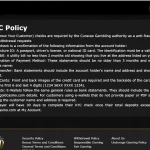
UKGC-licensed operators must verify a player’s identity before processing withdrawals. Offshore casinos are not regulated by the UKGC, so you should not treat that requirement as a promise about how an offshore operator will handle your account. Operators must verify age before allowing deposits, but the steps and timing for other checks can differ. A request for documents after a withdrawal is underway may add to the wait.
Keep the payment method and account details consistent where possible, and save the casino’s withdrawal terms when you sign up. If a payout is delayed, you will want to know whether the stated processing window has passed or whether the request is still within the operator’s own process. No shortcut. Just read the small print before your money is in.
Bonuses, games and the terms behind the offer
A large bonus headline can make a casino look generous. I’ve learned to read the conditions before deciding what that headline is worth. A specialist review of foreign casinos describes their welcome packages as larger because these operators are not bound by the UK Gambling Commission’s restrictions on bonus terms, wagering requirements and promotional language. That is a description, not a promise that every offer is large or worthwhile.
The same kind of review identifies four formats commonly found at foreign casinos serving British players: deposit matches, free spins, no-deposit bonuses and cashback. The names tell you very little on their own. A match offer can have a wagering condition; free spins may apply only to particular games; and cashback may be subject to its own rules. The terms determine what you can actually do with the offer.
Wagering Calculation
Calculate the turnover
Take a £100 match bonus with a 35x requirement.
Determine the total stake
Multiply the bonus (£100) by the requirement (35x) to get £3,500.
Identify the goal
You must place £3,500 in qualifying bets before those bonus funds can be withdrawn as cash.
Wagering requirements are the part I would check first. They specify how much you must stake before bonus funds can become withdrawable. For a simple illustration, a £100 match bonus with a 35x requirement means £3,500 in qualifying bets before those bonus funds convert to cash you can withdraw. That is a lot of betting attached to a figure that can look like free money. It isn’t.
Check what counts towards the requirement, how long you have to meet it, and whether the offer has a maximum cash-out or game restrictions. Those details differ between offers, so don’t assume the rules on one promotion apply to another. If the terms are hard to find or unclear, I would treat that as a reason to pause rather than a small-print problem to sort out later.
The same caution applies when browsing offshore casino games. A long catalogue is not proof that the games suit you, and the bonus rules may limit which titles contribute to wagering. Read the promotion’s terms alongside the game information, not after you have already opted in. “Big choice” is a selling phrase; the useful question is whether the games you want to play are eligible under the offer.
There is also a practical rule that matters if you play slots in Britain: online slot autoplay is banned. Spins must last at least two and a half seconds. A site’s controls or promotional language do not change that requirement. If an offshore operator presents autoplay as an available way to play slots to British customers, that is not a reason to assume the rule no longer applies.
An offshore licence does not make a casino regulated by the UK Gambling Commission. These operators also do not provide the UKGC-mandated affordability checks. A bonus cannot fill either gap. “Safe” is not something a welcome offer proves; the terms tell you about the offer, not the protections around the operator.
I wouldn’t treat a bonus as a reason to sign up. Read the conditions, work out what the wagering asks of you, and decide whether the offer still makes sense without the headline figure. Sometimes it doesn’t.
No-deposit offers, deposits and the crypto trade-off
A no-deposit bonus sounds like money you can claim without putting your own cash in. The catch is that “bonus” does not mean “ready to withdraw”. An offer can attach wagering conditions, so winnings may stay locked until you have placed enough qualifying bets. Read the terms before you accept it; I’ve learned that the headline and the cash-out rules are two very different things.
The arithmetic is easier to judge when it is made explicit. A specialist review gives this illustration: a £20 bonus with a 35x wagering condition requires £700 in qualifying bets before the funds can be cashed out. That is the turnover required, not a promise that you will finish with £700, or even retain the bonus. Bets can lose while you work through the requirement.
No-deposit bonus example
A £20 bonus with a 35x wagering condition requires £700 in qualifying bets before the funds can be cashed out. This is the turnover required, not a guaranteed return.
The same calculation can make a deposit match look less generous. If a casino matches a £100 deposit in full and applies a 35x requirement to the bonus, the bonus amount has to generate £3,500 in qualifying bets before it becomes withdrawable. Check what the multiplier applies to: the bonus alone or the combined deposit and bonus. Also look for game exclusions, maximum bet rules and an expiry condition. Those details can change how achievable an offer is.
“Free” can be expensive in time and losses. I would not treat a no-deposit offer as a reason to sign up, and I would not deposit just to unlock a larger offshore casino bonus. Work out the required turnover first, then decide whether the offer is worth the conditions attached to it.
Deposits can be made through different payment methods, and some casinos include cryptocurrency options. That is why people looking at offshore Bitcoin casinos may see crypto listed alongside other ways to fund an account. But the payment choice does not make a bonus easier to clear: wagering rules still apply. Keep the deposit method and the bonus calculation separate in your head. One is how funds enter the account; the other determines what you must do before bonus funds can be withdrawn. No shortcut there.
Crypto withdrawals: fast does not mean risk-free
The appeal of a crypto withdrawal is easy to see: a specialist review of foreign casinos reports that these payouts can clear in under an hour, faster than fiat methods. Treat that as a reported possibility, not a promise. A casino can still have its own processing steps, and “fast” tells you nothing about what the money will be worth when it arrives.
Non-UK-Regulated Casinos: Rules for UK Players
That second part is the one I would keep in view. Crypto values fluctuate. The amount credited to your wallet may be worth more or less by the time you use it or convert it. A quick transfer can save waiting while leaving you exposed to a change in value. Speed is not the same as certainty.
Before requesting a payout, look at the operator’s stated crypto withdrawal terms: which currencies it supports, what conversion basis it uses, and whether its rules explain how the amount is calculated. Do not assume that a figure shown in a casino account will retain the same value outside it. If those details are unclear, pause rather than treating the advertised speed as the whole story.
There is another distinction worth keeping straight. An offshore casino is not regulated by the UK Gambling Commission, and it does not provide UKGC-mandated affordability checks. A crypto payout does not change that. Nor does a quick transfer amount to the protections that come with a UK-licensed operator. The payment method and the operator’s regulatory status are separate issues.
I used to read “instant” as if it meant the whole transaction was simple. It only describes one part of the journey, and may describe an outcome reported by a reviewer rather than a result you can count on. Once the value can move, the real question is not just how quickly the funds reach you, but what they are worth when they do.
Attention: Crypto payouts can be fast, but they leave you exposed to currency fluctuations, meaning the value may change before you can use or convert the funds.
If you are comparing offshore crypto casinos, weigh the potential speed against that uncertainty. There is no need to turn a payout into a bet on the currency as well. Fast, yes. Risk-free, no.
KYC, identity checks and what “no KYC” leaves out
“No KYC” sounds like less hassle. I used to read it as “no paperwork, no catch”. That is too generous an interpretation. KYC means checks on who you are; the phrase on a casino page does not tell you what the operator will ask for, or when.
For UKGC-licensed operators, identity verification must be completed before a withdrawal is processed. Separately, operators must verify a customer’s age before allowing them to deposit. Those checks are not optional safeguards to skip because a site advertises itself as an offshore casino with no KYC.
An offshore operator is outside UK Gambling Commission regulation. It does not provide the UKGC-mandated affordability checks that apply to licensed operators. That difference matters: fewer questions at sign-up do not mean the same level of protection, or that you can rely on UK rules if a problem arises.
A specialist review may describe an offshore site as “no KYC”, but treat that as a claim to investigate, not a guarantee. Read the operator’s own terms for identity-document requirements and the circumstances in which it may request them. If you cannot establish what information it may require, you cannot make an informed call about handing over your details.
I would also avoid assuming that a quick registration means you will never be asked to verify your identity later. If a check is requested and you are unwilling or unable to provide the required details, access to your account or funds could become a point of dispute. That is the practical risk behind the label.
Casino Licensing & Safety for UK Players
Before creating an account, decide whether you are comfortable sharing identification with an operator that is not regulated by the UKGC. “No KYC” is not the same as “no consequences”. And the missing safeguard matters.
If you’re looking for an alternative, consider the trade-off
People look beyond UKGC-licensed sites for different reasons: perhaps they want more choice, or they feel the limits of the British system do not suit them. But an offshore casino is not simply another door to the same protections. It operates outside UK Gambling Commission regulation, and it does not provide the UKGC-mandated affordability checks. That difference matters most when gambling is starting to feel hard to control.
GamStop covers every UKGC-licensed operator. Once you have registered for self-exclusion, you are blocked from all of those sites for the period you selected. Foreign casinos outside the UKGC’s remit are not part of GamStop, so the block does not reach them.
That gap can look like an easy workaround. A specialist review reports that a person who has self-excluded may be able to sign up with a foreign casino and deposit without the safeguards that come with UK-licensed play. Easy access is the point. It is also the danger.
I understand the temptation to find offshore casino alternatives when a restriction feels frustrating. But if you chose self-exclusion because you were losing control, bypassing it removes a barrier you deliberately put in place. It does not solve the reason you needed that barrier. I have learned not to treat “more choice” as a benefit by itself.
Before looking for an offshore internet casino, pause and be honest about what you want from it. If it is a way around your own exclusion, step back rather than signing up. Keep the block in place and consider speaking to someone you trust or contacting a gambling support service. A workaround is not support.
Are foreign casinos safe for UK players to use?
Not necessarily. Encryption can help protect your data, but it does not provide UKGC oversight, and some unlicensed sites have refused to pay winnings, leaving customers with little legal recourse.
Can I play at a casino licensed outside the UK?
Yes. UK law does not make it a crime for you to bet with an overseas casino, although a foreign licence does not authorise the operator to offer gambling in Great Britain.
Are winnings from foreign casinos taxable in the UK?
No. Gambling winnings are not subject to UK income tax, whether the casino is UKGC-licensed or not.
Can I use cryptocurrency at foreign casinos from the UK?
Yes. Some foreign casinos offer crypto payment options, and crypto withdrawals can clear in under an hour, though the value can fluctuate.
What is the fastest way to withdraw from an online casino in the UK?
E-wallets are generally the fastest option at UK-market operators, with most processing withdrawals within 24 hours. At foreign casinos, crypto withdrawals can clear in under an hour.
Is playing at an international casino legal for UK residents?
Yes. You are not committing a crime simply by betting with an overseas casino, but the operator still needs a UKGC licence to offer gambling to customers in England, Scotland and Wales.
Are gambling winnings subject to income tax in the United Kingdom?
No. Gambling winnings are not subject to income tax in the UK.
Safety

Anjouan Casino Licence UK: Legal Status and Limits
Anjouan licensing does not authorise service in Great Britain; operators serving that market need permission...

Foreign Casinos for UK Players: Rules and Risks
A practical guide to offshore licensing, account checks, bonus conditions and withdrawals for players in...

International Casinos for UK Players: Rules and Risks
A practical guide to UKGC status, player protections, bonus terms, crypto value and payment risks...

Offshore casinos for UK players: what to check
A practical look at licence status, bonus conditions, crypto value changes and the steps between...

British Casinos Not on GamStop: What to Know
The guide distinguishes GamStop coverage from trustworthiness and examines licensing, safeguards, bonus terms and withdrawal...

Casino sites not registered with GamStop: what to know
The guide distinguishes non-participation in GamStop from UKGC oversight and examines the limits of licensing,...

Casino Without a Swedish Licence: UK Rules Explained
A practical explanation of UKGC oversight, foreign licences, self-exclusion, bonus terms and the risks of...

Casinos That Bypass GamStop: What UK Players Should Know
GamStop participation, UK Gambling Commission oversight and offshore access are separate issues, so the label...

Curaçao Casino Licence UK: What the Label Means
A Curaçao label identifies a claimed licensing jurisdiction, not UK Gambling Commission regulation or identical...

Gibraltar Casino Licence: UK Rules Explained
A Gibraltar licence may describe an operator’s base, but it does not show that the...

Merkur Casino Online UK: Rules and Demo Play
A practical look at UK availability, demo play, stakes, domains and the terms attached to...

Most Trustworthy Online Casinos in the UK: What to Check
A practical way to assess licensing, safer-play safeguards, payment labels and bonus terms without treating...

Non-Gamban Casinos in the UK: What the Label Means
A casino’s availability outside a blocking tool does not establish its safety, authorisation, or whether...

Non-GamStop Curaçao Casino Sites: What to Check
A Curaçao label alone does not identify the operator, confirm an active licence or show...

Non-GamStop European Casinos: UK Rules Explained
A casino’s European base does not establish that it can legally serve customers in Britain;...

Non-UK Licence Casinos: What the Licence Means
A licence links an operator to a regulator’s rules, but an overseas licence does not...

Non-UK-Registered Casinos: What UK Players Should Know
A foreign licence does not mean the UK Gambling Commission oversees a casino, and GamStop...

Non-UK-Regulated Casinos: Rules for UK Players
Understand how UKGC oversight differs from overseas licensing and what that distinction means for players...

Non-UKGC Licensed Casinos: What UK Players Should Know
This guide distinguishes UKGC authorisation from other licences and explains what offshore status means for...

Malta MGA Licence for UK Online Casinos Explained
A Malta address or MGA licence does not settle whether a casino can serve Great...

Online slots not on GamStop: what it means
GamStop applies to participating gambling establishments, not individual game titles, so a provider name or...

Safe Online Casino UK: Licence, Payments and Checks
A practical way to assess licensing, bonus terms, payment routes, withdrawals and affordability checks before...

Trusted casinos not on GamStop UK: what to check
A practical look at licensing, payouts, bonuses and the limits of reputation claims at casinos...

Trusted UK Casino: Check the Licence and Terms
A practical guide to licensing, account checks, bonus terms, apps, crypto payments and withdrawal conditions...

USA Casinos for UK Players: Licensing and Safety
The label does not prove US ownership or UK approval; licensing, deposits, bonuses and withdrawals...

VPN-Friendly Casinos in the UK: What to Check
A casino may accept VPN connections while still applying its own terms, identity checks and...