British Casinos Not on GamStop: What to Know
 Available in GB

The guide distinguishes GamStop coverage from trustworthiness and examines licensing, safeguards, bonus terms and withdrawal realities.
Table of Contents
- What “Not on GamStop” Means in Practice
- UK Casinos, UK Players and the Licensing Line
- What to Check Before Trusting a Casino Site
- When “Best” or “Top” Is Just a Sales Pitch
- Self-Exclusion Is a Boundary, Not a Workaround
- The Responsible-Gambling Tools You May Not Get
- Free Spins and Bonus Terms That Change the Value
- No-Deposit Bonuses Still Come With Strings
- Reviews, New Slots and the Withdrawal Reality
What “Not on GamStop” Means in Practice
GamStop is a self-exclusion service linked to online casinos under the UK Gambling Commission’s jurisdiction. When someone registers with the scheme, participating establishments are restricted from letting that person gamble. UKGC-licensed online casino operators are required to take part, so GamStop works across that group rather than every gambling website a person might encounter.
That boundary is what people mean by “not on GamStop”. A casino outside the scheme’s reach does not participate in it, and GamStop cannot apply its restriction there. The phrase describes the relationship between an operator and the self-exclusion service; it does not, by itself, tell you whether a site is trustworthy, what rules it follows, or what protections it offers.
I used to read a label like “British casino” as if it settled the important questions. It doesn’t. A familiar-looking name or UK-facing page doesn’t change whether the operator is part of GamStop. The practical distinction is simple: casinos covered by the UKGC framework must participate; operators beyond that framework do not become GamStop participants just because someone in Britain can see their site.
That distinction can be easy to miss when listings use phrases such as “British casinos not on GamStop” or “non-GamStop UK casinos”. They can make the category sound like a special version of a UK casino, when the useful meaning is narrower: these are casino sites that do not cooperate with GamStop. “British” in a headline is not proof that the scheme applies, nor is “new” a clue about participation. The scheme’s reach depends on the operator’s regulatory position, not the wording in a promotion.
There’s a human reason to be precise here. GamStop is meant to put a barrier between a person and gambling at participating sites. A site outside its reach is not an extension of that barrier, and searching for one while an exclusion is active can undermine the separation someone chose. I know how tempting it can be to treat a restriction as an inconvenience to get around. That is exactly when a neat label can hide what matters.
Non-GamStop European Casinos: UK Rules Explained
So when you see “not on GamStop”, don’t read it as a safety badge, a guarantee of access, or a recommendation. It tells you only that the operator is outside GamStop’s participation network. It says nothing on its own about whether the operator is a good fit, how it handles customers, or what recourse a player would have if something went wrong. Those questions need separate attention.
The same goes for offers attached to the label. A British casino no-deposit bonus, free spins, or a promise of a new online casino may look like the main attraction, but none of those phrases explains GamStop participation. A bonus does not switch an operator into the scheme, and a site’s design cannot establish that it is covered. I’ve learned to separate the sales pitch from the basic fact: does GamStop apply to this operator or not?
In plain terms, UKGC-licensed online casinos must participate in GamStop. Casinos operating beyond the Commission’s jurisdiction do not take part in the service, so a registered user’s GamStop restriction does not reach them. That is the meaning behind “not on GamStop”—and it is a boundary to understand, not a workaround to pursue.
UK Casinos, UK Players and the Licensing Line
“UK casino” can mean two different things: a casino licensed by the UK Gambling Commission, or a site that happens to accept customers who live in the UK. Those are not interchangeable. I used to treat a British-facing website as proof it was operating under British rules. That was a bad shortcut.
The key distinction is between the player and the operator. A UK player is not committing a crime simply by using an online casino licensed overseas. But an operator offering online gambling to people in Great Britain must hold a UK Gambling Commission licence. If it accepts UK residents without one, it is acting illegally in the British market. The legal exposure falls on the operator, not the player.
Legal Risk
An operator offering online gambling to people in Great Britain without a UK Gambling Commission licence is acting illegally in the British market.
That does not make the two situations equivalent. A foreign licence may allow a casino to operate in the jurisdiction that issued it, but it does not give that casino permission to serve the British market. Nor does a site’s willingness to take a UK registration, show prices in pounds or advertise a UK live casino change its licensing status. GBP is a payment currency, not a regulatory badge.
This matters when you’re reading UK casino reviews or comparing bonuses. A site can look tailored to British players while remaining outside the UKGC system. “Available in the UK” is a description of access, not proof that the operator is authorised to provide gambling services here. I’ve learned to separate those claims instead of letting a familiar-looking page do the thinking for me.
The same goes for phrases such as “best UK casinos” or “top UK casinos”. They may describe what a review site chooses to feature, but they do not settle whether an operator has the licence required to serve customers in Great Britain. Marketing labels are not legal status. Simple distinction.
So, when someone says that UK players can use an overseas-licensed casino, keep the subject of that sentence clear: it describes what a player may do. It does not say the operator is allowed to target or serve that player without a UKGC licence. A casino can hold a licence elsewhere and still lack the authorisation required for the British market.
Offshore Casino Sites for UK Players: What to Know
That line is easy to blur in a list of UK casino bonuses or a page promising familiar games and pound-denominated deposits. I now read “UK” as a claim to examine, not a guarantee. Access and authorisation are different things. The player’s position and the operator’s obligations are different too. Keeping those points apart is the first step towards understanding what a site’s British-facing presentation actually means.
What to Check Before Trusting a Casino Site
A polished website can make a casino look British without telling you who regulates it. I’ve learned to look past the flag-coloured graphics and familiar phrases. The useful question is not whether the site calls itself a British casino, but which regulator has authorised the operator, and what that authorisation actually covers.
For a casino serving customers in Great Britain, the key distinction is a licence from the UK Gambling Commission (UKGC). A licence from another jurisdiction is not a substitute. A site may display a licence from Malta, Gibraltar or Curaçao, but that does not put it under UKGC oversight. Overseas regulators have their own rules and systems; protections should not be assumed to match those attached to a UKGC licence.
That matters beyond the wording on a footer. Casinos licensed outside the UK are not required to connect to GamStop. They operate beyond the UKGC’s regulatory reach, do not share data with GamStop and do not apply its exclusion measures. A licence badge from elsewhere therefore does not mean the site recognises a GamStop registration.
Check the regulator, not just the badge
Start with the casino’s legal terms or licensing page. Find the name of the company operating the site, the stated regulator and any licence reference. If those details are missing, unclear or hard to reconcile, treat that as a reason to pause rather than a small paperwork issue.
Checking a Licence
Find the operator
Look at the casino’s legal terms or licensing page to find the company name, regulator, and licence reference.
Verify the register
Search for the operator in the regulator’s official database to ensure the company name and licence status are current.
Confirm activity
Check that the permission in the register specifically relates to the gambling activity being offered on the site.
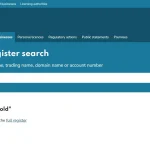
Then go to the regulator’s own official register. Search for the operator and compare the record with what the casino says. Check that the company name matches, that the licence is current, and that the permission relates to the gambling activity being offered. A logo pasted onto a webpage is only a claim; an entry in the regulator’s database is something you can independently inspect.
The same principle applies to an overseas licence. Use the relevant regulator’s official database, not a screenshot supplied by the casino or a page repeating its claims. Confirm that the named company appears there and that the licence status is shown as active. If the site gives a brand name but the register lists a different legal entity, look for a clear explanation linking the two. If you cannot establish that connection, you cannot confidently tell who is accountable for the service.
I’m wary of treating a regulator’s name as a blanket endorsement. A licence tells you that an operator is authorised under that regulator’s framework; it does not, by itself, prove that every claim on the casino site is fair or that resolving a complaint will be straightforward. Nor does a foreign licence turn an operator into a UKGC-licensed casino. Those are different regulatory relationships.
Read what the licence does — and doesn’t — tell you
A licence from an overseas jurisdiction may be genuine while still offering a different level or form of consumer protection from UKGC regulation. The country or regulator named on the page is not enough to judge equivalence. Look up the regulator’s own information about the licence and the operator, and be careful about claims that imply the site is “UK approved” when the only stated authorisation is foreign.
There is a practical gap here. UKGC-licensed operators must participate in GamStop; casinos licensed elsewhere are not legally required to integrate with it. So a badge from Malta, Gibraltar or Curaçao should not be read as evidence that a casino will honour a GamStop exclusion. That is not a small technical detail. It changes what the licence can tell you about the site’s relationship to UK safeguards.
A licence from Malta, Gibraltar, or Curaçao does not mean the site recognizes a GamStop registration or provides equivalent UKGC protections.
When checking a site, keep the evidence together: the operator’s legal name, the regulator’s register entry, the licence status and the terms identifying the company behind the brand. If a detail conflicts, ask the operator to clarify it before sharing personal or payment information. A vague support reply is not the same as an independently verifiable answer.
I would not call a site trusted simply because it has a licence number, nor because it appears in a list of UK casino sites. The regulator and the scope of the licence matter. Even if an overseas casino has a valid authorisation at home, that does not make its oversight equivalent to the UKGC framework or make it a UKGC-licensed operator.
The check is deliberately unglamorous: identify the company, confirm the licence in the regulator’s own database, and understand which regulator’s rules apply. If the information does not line up, don’t fill the gaps with assumptions. A smart-looking site can still leave you with unanswered questions. Stop there.
When “Best” or “Top” Is Just a Sales Pitch
If you’re looking at British casinos not on Gamstop in 2026, use this list as a starting point and check each site’s terms before deciding. If you have self-excluded or are concerned about your gambling, avoid sites outside your exclusion scheme and seek support.
1. x3bet
Payout speed: 1-3 business days x3bet lists a payout speed of 1–3 business days. That gives you a stated timeframe to consider when reviewing the operator.
2. EvoSpin
Payout speed: 1-3 business days EvoSpin lists a payout speed of 1–3 business days. This is the only operator-specific detail provided here.
3. BeOnBet
Payout speed: 1-3 business days BeOnBet lists a payout speed of 1–3 business days. Use that stated timeframe as one point to check before choosing.
4. NightLuck
Payout speed: 1-3 business days NightLuck lists a payout speed of 1–3 business days. No other operator-specific details are available here.
5. Revery Play
Payout speed: 1-3 business days Revery Play lists a payout speed of 1–3 business days. That is the only specific feature available to note.
6. Chanze
Payout speed: 1-3 business days Chanze lists a payout speed of 1–3 business days. Check the operator’s terms for any further details relevant to you.
7. Britsino
Payout speed: 1-3 business days Britsino lists a payout speed of 1–3 business days. The available information does not establish any other distinguishing features.
8. SpinFormula
Payout speed: 1-3 business days SpinFormula lists a payout speed of 1–3 business days. This stated timeframe is the only specific detail provided.
9. SlotoSport
Payout speed: 1-3 business days SlotoSport lists a payout speed of 1–3 business days. You’ll need to check its terms for information beyond that.
10. WinBeast
Payout speed: 1-3 business days WinBeast lists a payout speed of 1–3 business days. No other specific attributes are available for this verdict.
I used to treat “best” as if it meant somebody had done the hard comparison for me. A page called the best British casinos sounded like a shortcut: read the verdict, pick a name, move on. Then I noticed how often the confident label told me more about the page’s sales pitch than about the casino.
“Top-rated” is not a standard a reader can check by itself. It may refer to votes, a review score, an editor’s opinion, or nothing clearly explained. Before giving weight to a ranking, I look for its method: what was compared, what counted, and whether the writer explains how a score was reached. If all I get is a row of glowing adjectives, that isn’t much to go on.
A polished table can make a recommendation look measured even when its reasoning is hard to see. A list might say one casino is “best overall” and another is “best for rewards”, but those labels do not tell you what the comparison actually found. Without clear criteria and evidence, the categories are decoration. Useful-looking decoration, perhaps. Still decoration.
Ask what “best” means
The phrase best British casino could mean different things to different people. One person might care about the games; another might care about whether the site is easy to use. Someone looking for the best British casino bonuses may be focused on an offer, while another reader may be trying to understand how reliable a casino’s promises are. A single winner cannot answer all those questions unless the review explains what it measured.
Non-Gamban Casinos in the UK: What the Label Means
I try to turn the label into a smaller question. What does this page mean by “best”? Does it show reasons that can be checked, or does it simply repeat a casino’s own selling points? Is the same standard applied to every site it discusses? If the answer is unclear, I don’t treat the order of the list as a finding.
That’s not being cynical for sport. It’s a way to stop a confident headline doing the thinking for me. The label may be a useful starting point, but it is not proof that a site suits you, or that its protections match those of a UKGC-licensed casino.
Reviews have a point of view
When I read best British casino reviews, I look for the difference between what the reviewer says they checked and what they merely repeat. A review that explains its criteria gives me something to assess. A page that mostly echoes phrases such as “trusted”, “premium” or “unmissable” asks me to take its word for it.
I also look for a clear disclosure of commercial relationships. If a review may earn money when someone follows its links or signs up, that matters to how I read its recommendations. It doesn’t automatically make every observation false, but it gives me a reason to separate evidence from persuasion. If the relationship is hidden or hard to understand, I give the verdict less weight.
Do
- Look for the review’s comparison method
- Check for commercial relationship disclosures
- Seek evidence behind the scoring
Don’t
- Trust glowing adjectives without criteria
- Assume a precise number is objective
- Treat a ranking as a flawless endorsement
A good review should leave room for limits. It should not make a site sound flawless, or pretend that one person’s experience settles the question for everyone. If every entry is praised in much the same breathless language, I wonder what the review is actually distinguishing. A ranking with no meaningful differences is a catalogue wearing a medal.
I’ve made the mistake of trusting a score because it looked precise. A number in a badge can feel objective even when the page does not explain how it was produced. Now I look for the reasoning behind the score, not the neatness of its presentation. The score alone doesn’t tell me enough.
The category label can mislead
“Best games” or “best slots” can be another way of drawing you towards a site without saying much about the experience you will actually have. A list of games, even if it is long, does not establish that a casino is good overall. Nor does an app label tell me what matters about the service behind the app. Best British casino apps and best UK casino apps may sound like separate endorsements, but the wording alone gives no account of what was tested or why one option came out ahead.
The same applies to claims about payouts, rewards or jackpots. “Best payout” needs a clear basis; “best rewards” needs more than a bright banner; “best jackpots” says little unless the page explains what it is comparing. I don’t assume the claim is false. I just don’t let the superlative stand in for an explanation.
Casino Without a Swedish Licence: UK Rules Explained
This is where I try to keep the question narrow. A casino may be appealing in one respect and unsuitable in another. A review’s category can help me notice what it wants me to focus on, but it can also push everything outside that category out of view. That’s an easy detail to miss when the headline promises a simple winner.
“Legit” is not the same as protected
I’d be especially careful with a page that calls a site one of the legit British casinos and leaves the word “legit” undefined. It can sound like a broad promise of safety, fairness and recourse, even though it may only be a reviewer’s opinion. A reassuring label is not a substitute for the protections attached to a UKGC licence.
Playing on a site that is not part of GamStop is not itself a criminal offence for the player. But that does not make the site equivalent to a UKGC-licensed casino. Sites outside that framework do not provide the consumer protections associated with a UKGC licence. That gap matters more than whether a review gives the site a shiny badge or places it near the top of a page.
I try not to let a review blur those two points. A positive rating is a view about the site; it does not change what protections apply. And a list that calls a casino “trusted” should not make me assume that the protections are the same as they would be under the UKGC system. They are not interchangeable claims.
Casinos That Bypass GamStop: What UK Players Should Know
My test for a ranking
Before I let a “top” list influence me, I check whether it gives reasons, explains its standards and makes any commercial relationship visible. I read the details rather than relying on the order of names. If I cannot tell why a casino is praised, I treat the praise as promotion, not evidence.
I also watch how the page handles uncertainty. Does it acknowledge that its recommendation has limits, or does it speak as though a single label settles every concern? Does it distinguish a reviewer’s judgement from a fact about consumer protection? If not, the confident tone is doing too much work.
There’s no magic phrase that makes a ranking reliable. “Editor’s choice” can be as thin as “best overall” if neither comes with a clear explanation. The useful part is not the crown at the top of the page. It’s the reasoning underneath it—and whether that reasoning leaves you with a realistic picture rather than a sales pitch.
Sometimes the sensible verdict is that the ranking hasn’t shown enough to earn your trust. Not dramatic. Just useful.
Self-Exclusion Is a Boundary, Not a Workaround
When I first looked at self-exclusion, I treated it like a setting I could change if I regretted it. That was the wrong way to think about it. GamStop offers exclusion periods of six months, one year or five years. Once you have selected a period and registered, you cannot shorten it or cancel it early. The point is to put distance between you and gambling when you have decided you need that distance.
So it is worth slowing down before you enrol and choosing the period with care. That does not mean trying to predict exactly how you will feel later; none of us can do that. It means recognising that a difficult day, a changed mood or an urge to play does not switch the restriction off. An active exclusion remains in place until the selected period has ended.
Only people who live in the UK can use GamStop. If you are eligible and choose to register, treat the decision as a firm boundary, not a pause button. I have made the mistake of looking for a quick exception to a decision I made for good reason. The search for one tends to pull attention away from the original problem. It does not make the problem smaller.
Why bypassing the restriction is a risk
There are ways a person might try to get around an exclusion, but they are risks to avoid, not alternatives to recommend. Reports from neconnected.co.uk describe routes involving gambling services that do not cooperate with GamStop, identity details belonging to someone else, anonymising tools, and some cryptocurrency services that do not require customer registration and identity checks. The report also refers to gambling in person. Those descriptions are not a checklist. Trying to defeat a self-exclusion can expose you to further harm, and using another person’s details creates problems for them as well as for you.
Avoid Workarounds
Trying to bypass self-exclusion using other people’s identity details or anonymising tools can expose you to further harm.
A website that accepts a registration does not mean the choice is safe or that it has undone your exclusion. In particular, a service beyond GamStop’s reach does not remove the reason you chose to exclude yourself. It can instead create a false sense that the boundary has been dealt with. It hasn’t.
I would be wary of any message that makes a workaround sound like a clever loophole. “Access” can mean being able to open an account; it does not mean the restriction no longer matters. And if a route involves hiding who you are or relying on someone else’s identity, stop there. That is not a sound way to handle a decision about gambling.
Let the exclusion do its job
If you are already excluded, do not treat the remaining time as a challenge to beat. The selected period cannot be cut short, and trying to reach gambling through another route works against the protection you put in place. If you are thinking of registering, take the choice seriously before you submit it. A moment of uncertainty is a good reason to pause and think, not a reason to assume you can reverse the decision later.
There is also a difference between waiting for the chosen period to end and trying to circumvent it while it is active. The former respects the boundary you set; the latter attempts to get around it. When the period has ended, you can decide what you want to do then. You do not need to solve that future decision today.
If the urge to gamble is driving the search for a workaround, step away from the sign-up page and give yourself time before acting. Tell someone you trust what is going on if that feels possible. The useful move is not finding another door into gambling. It is making the next impulsive step harder to take.
That can be as practical as closing the browser, putting your phone elsewhere or asking someone you trust to sit with you while the urge passes. Those actions do not change the exclusion period, and they are not a substitute for support. They can give you a moment to get out of the loop of searching, signing up and hoping the consequences will be manageable.
I know the appeal of telling yourself that one workaround is harmless. It is an easy story to believe when the urge is loud. But self-exclusion is there precisely because relying on a promise to stop later may not be enough. Respect the boundary you chose. No shortcut.
The Responsible-Gambling Tools You May Not Get
A newly launched casino can look polished and still leave you doing the work of checking its safeguards. I’ve learned not to treat a tidy account page as proof that the tools behind it are meaningful.
Controls such as deposit limits, loss limits, and session timers are choices made by the operator and are not required protections if the casino is outside the UKGC framework.
A specialist review reports that some casinos outside GamStop provide controls such as deposit and loss limits, session timers and reality checks. These are choices made by the operator, not protections required of it by the UK Gambling Commission. Some sites may also provide self-exclusion controls or reminders, but their presence and operation can vary. A button on a page is not the same as a firm safeguard.
Before depositing, look for the tools in the account settings and read what the site says each one does. Can you set a limit before playing? Is there a clear way to see time spent or money lost? Does a reminder simply appear, or can you act on it without being pushed back into play? If the answers are vague, assume little.
The difference matters. UKGC rules require licensed operators to follow protections that do not automatically apply to casinos outside that framework. A site may offer useful voluntary features, but you cannot assume they are equivalent or consistently enforced. And if gambling starts to feel difficult to control, UK-based support services may not be available through that operator. Check access to help before you need it.
New slots will not make up for missing safeguards. I’d rather see plain, usable controls than another row of games. Look closely. Don’t guess.
Free Spins and Bonus Terms That Change the Value
A “free” spin sounds like a little gift. I used to read that as money I could simply win and withdraw. The catch is that the offer can attach conditions to any winnings, so the number of spins alone tells you very little about what they are worth.
Non-UK-Registered Casinos: What UK Players Should Know
Start with the wagering rule. It says how much qualifying play is required before bonus winnings can be withdrawn. Read the wording closely: it may apply to winnings from the spins, not just to the original bonus. A specialist review of casino promotions describes wagering requirements as one of the terms that can shape the offer, but the operator’s own rules are what you need to check for a particular promotion. “Free” is the headline. The conditions are the deal.
Then check which games count. Slots may contribute differently from table games: a table game might count for less towards wagering, or not count at all. That matters if you were planning to move from a slot to a favourite table game after using the spins. The play can feel like progress while barely moving the requirement. I have made that mistake: I focused on the game, not the small print.
There may be other restrictions alongside wagering. A specialist review of bonus terms notes that promotions can set a maximum bet while wagering is in progress, a deadline for completing the requirement, or a cap on withdrawals from bonus winnings. Those conditions can change the practical value of an offer. A withdrawal cap, for instance, means meeting the wagering rule does not necessarily mean every resulting win can be cashed out. And a deadline can make an offer a poor fit if you do not want to keep playing just to finish it.
Checking Free Spins
- Read the wagering requirements
- Identify which games contribute to wagering
- Check for a maximum bet limit
- Note the deadline for completing wagering
- Verify if there is a withdrawal cap on winnings
Before accepting a British casino free-spins bonus, find the full terms and look for the eligible games, contribution rules, maximum bet, deadline and any withdrawal cap. If one of those details is hard to find or unclear, pause rather than assuming the most generous interpretation. Promotional wording is designed to catch the eye; the terms tell you what you are agreeing to.
A casino not on GamStop operates outside the UK Gambling Commission’s framework, so UKGC requirements for consumer protection do not apply there. Do not treat an attractive spin offer as evidence of equivalent safeguards. The bonus is only one part of the decision.
I now judge a free-spins offer by what I can actually use and withdraw, not by the number printed beside it. A smaller promise with readable terms is easier to assess than a flashy one whose restrictions you discover afterwards. The detail matters.
No-Deposit Bonuses Still Come With Strings
“No deposit” sounds like the casino is handing you something for nothing. I used to read the headline and stop there. That was the mistake. The important line is the wagering requirement: how much you must stake before bonus-related funds can become withdrawable.
A specialist review describes requirements around 30x to 40x as an industry average, and anything above 50x as generally predatory. Treat those figures as a rough warning scale, not a guarantee that a lower requirement is fair. The exact wording matters too. Check what balance the multiplier applies to and whether the offer explains clearly how progress is counted. If the casino leaves that vague, you cannot sensibly judge the burden.
A British online casino no-deposit bonus may look generous because there is no deposit attached, but a large wagering requirement can make it hard to realise any value. Work out the requirement using the bonus terms before you accept; don’t let the headline do the arithmetic for you. If the condition is so demanding that you would not choose to play without the offer, that tells you something.
Non-GamStop Curaçao Casino Sites: What to Check
I also learned not to treat a requirement as a target worth chasing. You can stake more and still fail to clear it, while spending time and money you had not planned to risk. Read the condition first, decide whether it is acceptable, and walk away if it is not. “Free” has fine print.
Reviews, New Slots and the Withdrawal Reality
A polished review can make a casino sound settled and dependable; a claim about “new slots” can make it seem more exciting than it is. I’ve learned to treat both as sales copy until I can check what they actually tell me. A review should explain how withdrawals work, what identity checks are required and what can hold up payment—not just praise the games or rewards.
KYC checks can delay a withdrawal, so read the verification requirements and submit the requested documents early. That doesn’t guarantee a quick payout, but leaving checks until you want to cash out is asking for an avoidable wait.
The payment route matters too. A specialist review source describes e-wallet withdrawals as generally faster than card withdrawals, while noting that casino processing can take up to 24 hours. That is not the same as a promise that the money will reach you by then: the payment provider may add its own delay.
Crypto needs a different kind of caution. A specialist review source reports that cryptocurrency withdrawals may be fast, but the value of the winnings can move with the market. Crypto transfers are also irreversible; a mistake in the wallet address can mean a permanent loss. Fast is not the same as safe.
Finally, a site outside the UKGC framework may not provide the protections or UK-based support you expect from a British-licensed operator. I wouldn’t treat an enthusiastic payout review as proof of either. Check the withdrawal terms, verification process and payment details before depositing. Marketing is easy. Getting your money out is the test.
Are casinos that bypass GamStop illegal for UK players to use?
No. Using an overseas casino is not a criminal offence for you, but an operator offering gambling to people in Great Britain must hold a UK Gambling Commission licence.
What gambling sites are not on GamStop?
Sites operating outside the UK Gambling Commission’s jurisdiction do not participate in GamStop. Some may hold licences from other jurisdictions, but that does not authorise them to serve customers in Great Britain.
Can I reverse a self-exclusion from GamStop early?
No. A GamStop exclusion cannot be shortened or cancelled before the period you selected has ended.
What are casinos not on GamStop?
They are casinos that do not participate in GamStop, generally because they operate outside the UK Gambling Commission’s jurisdiction. The label alone does not indicate whether a site is trustworthy or authorised to serve customers in Great Britain.
Is it legal to play in casinos not blocked by Game Stop?
Playing at an overseas casino is not a criminal offence for you. However, an operator offering online gambling to people in Great Britain must have a UK Gambling Commission licence.
What exactly does GamStop block?
GamStop prevents registered users from gambling at participating establishments licensed by the UK Gambling Commission. It does not apply to casinos outside that network.
What is Gamstop?
GamStop is a self-exclusion service for online gambling. UK Gambling Commission-licensed online casinos must participate in it.
How does Gamstop work?
You register with GamStop and select an exclusion period of six months, one year or five years. Participating UK Gambling Commission-licensed establishments then restrict you from gambling during that period.
Safety

Anjouan Casino Licence UK: Legal Status and Limits
Anjouan licensing does not authorise service in Great Britain; operators serving that market need permission...

Foreign Casinos for UK Players: Rules and Risks
A practical guide to offshore licensing, account checks, bonus conditions and withdrawals for players in...

International Casinos for UK Players: Rules and Risks
A practical guide to UKGC status, player protections, bonus terms, crypto value and payment risks...

Offshore Casino Sites for UK Players: What to Know
A practical look at licensing, payment trade-offs, bonuses and identity checks, without treating a casino...

Offshore casinos for UK players: what to check
A practical look at licence status, bonus conditions, crypto value changes and the steps between...

Casino sites not registered with GamStop: what to know
The guide distinguishes non-participation in GamStop from UKGC oversight and examines the limits of licensing,...

Casino Without a Swedish Licence: UK Rules Explained
A practical explanation of UKGC oversight, foreign licences, self-exclusion, bonus terms and the risks of...

Casinos That Bypass GamStop: What UK Players Should Know
GamStop participation, UK Gambling Commission oversight and offshore access are separate issues, so the label...

Curaçao Casino Licence UK: What the Label Means
A Curaçao label identifies a claimed licensing jurisdiction, not UK Gambling Commission regulation or identical...

Gibraltar Casino Licence: UK Rules Explained
A Gibraltar licence may describe an operator’s base, but it does not show that the...

Merkur Casino Online UK: Rules and Demo Play
A practical look at UK availability, demo play, stakes, domains and the terms attached to...

Most Trustworthy Online Casinos in the UK: What to Check
A practical way to assess licensing, safer-play safeguards, payment labels and bonus terms without treating...

Non-Gamban Casinos in the UK: What the Label Means
A casino’s availability outside a blocking tool does not establish its safety, authorisation, or whether...

Non-GamStop Curaçao Casino Sites: What to Check
A Curaçao label alone does not identify the operator, confirm an active licence or show...

Non-GamStop European Casinos: UK Rules Explained
A casino’s European base does not establish that it can legally serve customers in Britain;...

Non-UK Licence Casinos: What the Licence Means
A licence links an operator to a regulator’s rules, but an overseas licence does not...

Non-UK-Registered Casinos: What UK Players Should Know
A foreign licence does not mean the UK Gambling Commission oversees a casino, and GamStop...

Non-UK-Regulated Casinos: Rules for UK Players
Understand how UKGC oversight differs from overseas licensing and what that distinction means for players...

Non-UKGC Licensed Casinos: What UK Players Should Know
This guide distinguishes UKGC authorisation from other licences and explains what offshore status means for...

Malta MGA Licence for UK Online Casinos Explained
A Malta address or MGA licence does not settle whether a casino can serve Great...

Online slots not on GamStop: what it means
GamStop applies to participating gambling establishments, not individual game titles, so a provider name or...

Safe Online Casino UK: Licence, Payments and Checks
A practical way to assess licensing, bonus terms, payment routes, withdrawals and affordability checks before...

Trusted casinos not on GamStop UK: what to check
A practical look at licensing, payouts, bonuses and the limits of reputation claims at casinos...

Trusted UK Casino: Check the Licence and Terms
A practical guide to licensing, account checks, bonus terms, apps, crypto payments and withdrawal conditions...

USA Casinos for UK Players: Licensing and Safety
The label does not prove US ownership or UK approval; licensing, deposits, bonuses and withdrawals...

VPN-Friendly Casinos in the UK: What to Check
A casino may accept VPN connections while still applying its own terms, identity checks and...