Non-Gamban Casinos in the UK: What the Label Means
 Available in GB
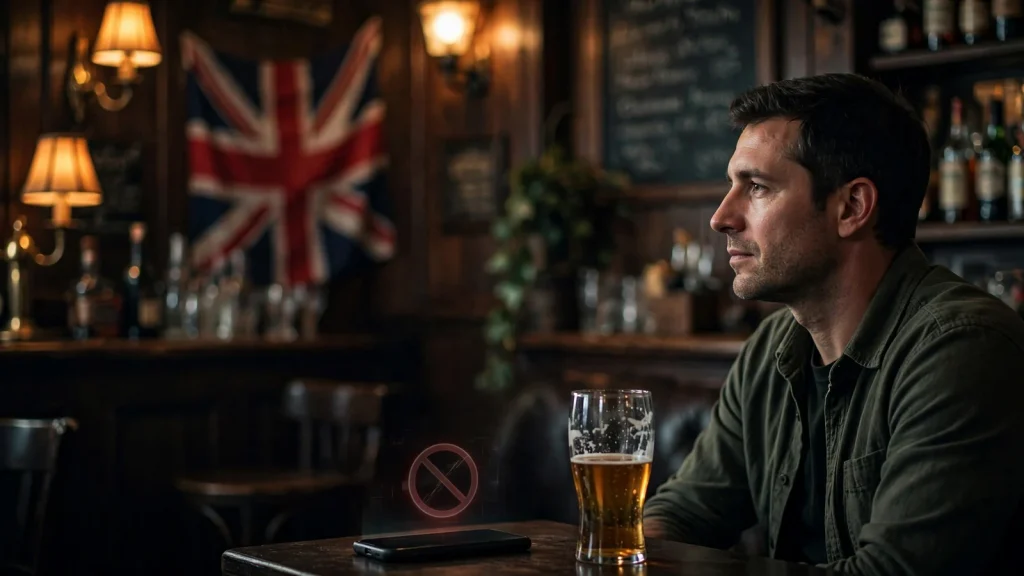
A casino’s availability outside a blocking tool does not establish its safety, authorisation, or whether other forms of self-exclusion apply.
Table of Contents
- What “not on Gamban” means in the UK
- How UK casino self-exclusion works in 2026
- Where Gamban and GAMSTOP leave different gaps
- A casino without Gamban is not a way around an exclusion
- What to do instead of searching for Gamban-free sites
- “Best” non-Gamban casinos are not a safer shortlist
- Non-Gamban slots still come with UK rules
- What “casinos outside Gamban” can mean for your exclusion
- “Not part of Gamban” does not mean your exclusion is over
- No-Gamban slots and the limits of a removal request
What “not on Gamban” means in the UK
When people talk about casinos “not on Gamban”, they usually mean they are looking for somewhere they can reach without a particular blocking tool stopping access. That wording can sound like a category of casinos with a clear, official membership list. It is not. A site being described as outside Gamban does not, by itself, tell you whether it is suitable, safe, or even properly authorised to serve people in Britain.
I have learned to be wary of labels that sound like a recommendation but only describe one feature. “Gamban-free” is not a quality mark. It does not tell you what protections a casino has, what rules apply to it, or whether it is a good choice for you. Nor does it establish that a site is absent from every other form of self-exclusion. The phrase is about access in relation to a blocking tool, not a checked shortlist.
That distinction matters because people use several versions of the same wording: casino sites that are not on Gamban, non-Gamban online casinos, or even slots and apps outside Gamban. Those expressions may point to a wish to reach gambling content, but they do not identify a verified group of operators or games. A casino website and its app may also be treated as parts of the same gambling business, rather than as separate assurances about what is accessible.
Gamban is not a casino directory
Gamban is a blocking tool; “not on Gamban” is not a regulator’s approval or a certification. I would not read it as meaning that a casino has passed a safety check, offers a particular level of protection, or is suitable for someone who is trying to control their gambling. The wording alone cannot support any of those conclusions.
That also applies to searches for the “best” casinos or slots outside Gamban. “Best” suggests a comparison based on evidence, but the phrase itself supplies none. A list built around whether a tool blocks access would not, for that reason alone, establish which operators are better or safer. A casino app being reachable is no more of a recommendation than its website being reachable.
Trusted casinos not on GamStop UK: what to check
It is easy to let a narrow technical description become a broader promise in your head. I have done that with gambling labels before: seen one appealing phrase and filled in the rest myself. Better to keep the meaning literal. It says something about access and a blocking tool, not a casino’s overall standing.
The separate role of GAMSTOP
GAMSTOP has a different role. It is Great Britain’s national online self-exclusion scheme, and it operates across multiple gambling businesses rather than applying only to one casino. A player can use it to exclude themselves from gambling with UK-licensed online casinos. The scheme covers participating licensed online gambling websites and apps.
That national scope is why it is worth distinguishing GAMSTOP from a tool that blocks access on a device. They are not interchangeable labels. GAMSTOP is a multi-operator self-exclusion scheme; its coverage is across participating licensed online gambling sites and apps. The important point here is not which casino appears in a ranking, but that GAMSTOP is intended to apply across multiple participating operators.
“Participating” matters. GAMSTOP’s coverage is described in relation to licensed online gambling websites and apps that take part in the scheme. It should not be turned into a claim that every website anywhere is included, or that the phrase “not on Gamban” tells you whether a business falls within GAMSTOP. Those are different questions.
This is also why a list of non-Gamban sites would not answer the question many readers may really have. It would not show whether those sites are covered by GAMSTOP, nor prove that they are appropriate places to gamble. The label alone does not settle either matter. No magic shortlist.
I would keep the two ideas separate: Gamban relates to blocking access through a tool; GAMSTOP is the national online self-exclusion scheme for Great Britain, covering participating licensed sites and apps. If a casino is said to be outside Gamban, that does not tell you whether it is part of the GAMSTOP network or whether it is a sound choice. Treating one label as proof of the other is where the wording gets misleading.
Attention: A "Gamban-free" label is not a quality mark and does not prove that a casino is safe, authorized, or absent from other self-exclusion lists.
So when you come across descriptions of non-Gamban casino sites, read them narrowly. They are not a verified directory, a safety rating, or evidence that an operator is suitable for a particular person. The phrase tells you what someone is claiming about access relative to Gamban. GAMSTOP remains a separate, multi-operator route for online self-exclusion across participating licensed gambling businesses in Great Britain.
How UK casino self-exclusion works in 2026
Self-exclusion is a formal way to ask a gambling business, or a scheme covering multiple businesses, to stop you gambling with it for a chosen period. The practical steps are straightforward: decide which sites or venues you want to exclude, register, provide personal details so your identity can be confirmed, select a duration and wait for confirmation.
That sounds simple on paper. The part I would slow down for is deciding what needs to be covered. A request to one casino is not the same as a request through GAMSTOP, and it is easy to assume a single step covers more than it does.
Start by identifying what you want to exclude
For online gambling, you can contact one casino directly or register with GAMSTOP. The first option is limited to the business you contact. The scheme is designed to cover online operators across the UK, so one registration is used instead of approaching each participating operator separately.
Before registering, think about the accounts and places where you are likely to gamble. If you use more than one online site, make sure you understand whether you are dealing with a single-site request or a multi-operator one. That distinction matters more than the wording on a sign-up page.
Non-GamStop Curaçao Casino Sites: What to Check
Self-exclusion is also available for land-based venues. You can ask a casino to exclude you there, rather than treating an online registration as a request to cover a physical venue. Choose the places you want included, then follow the process those businesses or schemes provide.
What happens when you register
You will be asked to provide personal information so the service can confirm who you are. This is part of making the exclusion apply to you, rather than just to a name or an account label. Complete the registration with information that can be matched to your gambling accounts; if identity details do not line up, the request may not be applied as intended.
Next, select the period of exclusion offered by the service. GAMSTOP registrations block access to UKGC-licensed gambling platforms for a fixed period, with options including six months, one year or five years. Choose carefully. This is not a casual account setting to switch on and off when it suits you.
Once you have completed the process, look out for confirmation and keep it. I would not treat a half-finished form or an unconfirmed request as proof that the exclusion is active. If anything about the registration is unclear, contact the scheme or the casino directly rather than guessing.
GAMSTOP or one casino?
GAMSTOP is the multi-operator route for online gambling. Its self-exclusion prevents access to current gambling accounts and the creation of new ones with online operators across the UK, and it is free to use. That makes it different from asking an individual casino to close or restrict your account: the latter request is made to that business, not to every online operator.
Do
- Use GAMSTOP for multi-operator online exclusion
- Contact a casino directly for a single-site request
- Exclude yourself from land-based venues separately
Don’t
- Assume one casino request covers all UK sites
- Treat a GAMSTOP request as a land-based exclusion
- Rely on a single step to cover different gambling types
A direct request can still be the relevant choice if you want to exclude yourself from one particular casino. The business can guide you through its own registration process. But do not assume that contacting one site automatically registers you with GAMSTOP, or that a GAMSTOP request is a substitute for an exclusion at a land-based venue. Check the scope before you submit anything.
If you are unsure which route matches your situation, take a moment to write down the sites or venues you want excluded. Then check whether each is covered by the request you are making. It is a small bit of admin, but it beats relying on an assumption.
Give the decision room
The duration is the point where I would avoid clicking through on autopilot. A period that feels manageable in the moment may not be what you want once the urge to gamble has passed. Read the options, choose the one you mean, and keep the confirmation somewhere you can find it.
You do not need to find a casino described as being outside a blocking tool to understand this process. Gamban and self-exclusion are not interchangeable labels for one agreement. What matters here is the coverage of the self-exclusion you register: whether it is through GAMSTOP for online operators or directly with a particular casino.
If you have already decided to exclude yourself, make the request carefully and confirm what it covers. One request can cover a wider set of online operators than another, but the scope is not something to infer from a casino’s advertising or from a device setting.
Non-GamStop European Casinos: UK Rules Explained
The short version: identify the places, choose the right route, complete identity checks, select a duration and keep the confirmation. No shortcuts.
Where Gamban and GAMSTOP leave different gaps
The names are easy to muddle because both come up when someone is trying to put distance between themselves and gambling. But they do not describe the same kind of boundary. Gamban is a blocking tool; GAMSTOP is the national self-exclusion scheme for online gambling in Great Britain. One is about blocking access through a tool, while the other records a formal exclusion with participating gambling businesses.
That distinction matters more than trying to decide which one is “stronger”. A site not blocked by Gamban is not automatically outside a self-exclusion agreement. Nor does a site being hard to reach through a device mean that the gambling business has formally excluded you. Those are separate questions.
For UK-licensed online operators, there is a clear national requirement. The Gambling Commission made participation in GAMSTOP compulsory for online operators from 31 March 2020. In practice, that means regulated online casinos must use the scheme to identify customers who have self-excluded and prevent them from gambling with them. A player who has excluded themselves from a particular website or venue should be refused service there.
That is the important gap between a technical block and an operator’s responsibility. A blocking tool works at the level of access; a self-exclusion agreement applies to the businesses covered by that agreement. I would not treat one as proof of the other. A page loading, or failing to load, cannot tell you by itself whether a casino is covered by your active exclusion.
Since 31 March 2020, the Gambling Commission has made participation in GAMSTOP compulsory for all licensed online operators in Great Britain.
The phrase “casinos not affected by Gamban” can sound as if it identifies a safe category. It does not. It may simply describe a difference in whether a blocking tool is active or effective in a particular situation. It says nothing reliable about whether a gambling operator is part of the regulated system or whether you have excluded yourself from it. That distinction is easy to miss when you are looking for a clean answer. It is not a clean answer.
GAMSTOP is designed to apply across participating licensed online gambling websites and apps, rather than only one account or brand. Since the requirement took effect, UK-licensed online operators have been required to block self-excluded players. So an active GAMSTOP exclusion is not something a casino can set aside because a player’s device-blocking software does not cover it. The operator’s obligations are separate.
I used to read a technical distinction as a loophole. That was the mistake: it made a tool’s limits sound like permission. A casino not blocked by Gamban is not, on that basis, a casino where a self-excluded customer should be served. The relevant question is whether the business is covered by the exclusion, not whether a particular blocking tool stops the page from opening.
There are limits to what the labels tell you. “Not blocked” describes access, not suitability, safety or the status of your self-exclusion. Likewise, seeing a casino mentioned alongside Gamban does not tell you whether it has been formally excluded from your accounts. Keep those meanings apart. They are not interchangeable.
A casino without Gamban is not a way around an exclusion
“Without Gamban” describes whether a blocking tool stops access to a site. It does not change a self-exclusion agreement. I used to treat a technical barrier as if it were the whole issue: if a site still opened, I assumed the choice was mine to make. That was the wrong way to look at it.
Non-UK-Registered Casinos: What UK Players Should Know
Self-exclusion is a formal commitment not to gamble with the business you have excluded yourself from for an agreed period. It is not just a setting on your phone or a message asking a casino to leave you alone. Once you have made that agreement, you are responsible for sticking to it. A site being outside a blocking tool does not erase that commitment or give you permission to ignore its terms.
The same goes for opening another account elsewhere. Don’t create a new account as a workaround for an active exclusion. You may be tempted to think that a different website means a fresh start, but that does not make your existing agreement disappear. Playing somewhere else could breach the terms you agreed to, and the fact that the site is accessible does not settle whether gambling there is compatible with your exclusion.
There are two separate questions here: does a tool block access to a site, and have you agreed not to gamble with a particular business? They can overlap, but they are not interchangeable. A block is a technical obstacle; self-exclusion is an agreement with a gambling business. Confusing the two is an easy way to talk yourself into a decision you had already tried to prevent.
The business also has responsibilities. It is expected to take reasonable measures to stop someone who has excluded themselves from gambling with it. That does not turn the agreement into a loophole to test, or make it sensible to search for another route in. The purpose is to keep gambling off the table during the period you chose.
Breach of Exclusion
Creating new accounts or using sites outside a blocking tool to bypass an active self-exclusion is a breach of the formal commitment you made.
I know how persuasive the little exception can sound: “This one doesn’t have Gamban, so it doesn’t count.” But access and permission are not the same thing. If you have an active exclusion, don’t try to get around it by changing devices, accounts or sites. It may feel like a technical distinction. It isn’t a clean slate.
What to do instead of searching for Gamban-free sites
When I was tempted to look for a casino that a blocking tool might not cover, I was looking for another place to play, not a way to deal with the urge. That distinction matters. A different site does not solve the problem that made you want a block in the first place.
If you want to stop gambling with one online business, start with its Responsible Gambling or Safer Gambling page. Follow the self-exclusion instructions there. If you cannot find them, contact customer services and ask how to make a formal self-exclusion request. You can ask one gambling business to exclude you without making a request to every other business at the same time.
There is no need to dress it up as a complicated conversation. Say plainly that you want to self-exclude, and keep any confirmation the business gives you. Gambling businesses must offer self-exclusion by law; it is not a favour you have to persuade them to provide.
Cover every place you might be tempted
Before you submit anything, make a practical list of the places where you could end up gambling: online accounts, apps, and physical venues you visit. Excluding yourself from one company does not automatically cover every other place. If you know you might switch to another site or venue, include that in your plan and make a separate request where needed.
Anjouan Casino Licence UK: Legal Status and Limits
This is the part I used to skip. I would focus on the account in front of me and treat the rest as someone else’s problem. It was not. Be honest with yourself about where you might go when the next urge hits, then contact those businesses too. Close the gaps. No clever detours.
Self-exclusion is a formal agreement, so take care to complete the business’s instructions rather than assuming that deleting an app or leaving an account unused has the same effect. If the process is unclear, ask customer services to explain how to make the request.
What the business must do
Once a self-exclusion agreement is in place, the gambling business must close your account, return any funds held in it, and remove your details from its marketing databases. It must also take reasonable steps to stop you gambling with it. Those are concrete actions, not just a message asking you to be careful.
Keep a record of the request and the confirmation, and check that the account is closed and marketing messages stop. If something appears to have been missed, contact the business and raise it through its complaints process. The point is to make the exclusion cover the places where you could be drawn back in—not to find a site that sits outside the block you were trying to avoid.
“Best” non-Gamban casinos are not a safer shortlist
If you’re looking at non-GamBan casinos in the UK in 2026, check the available information carefully before choosing. The listed payout time is one practical detail to consider, but it does not by itself confirm a casino’s status or suitability for you.
1. x3bet
Payout speed: 1-3 business days x3bet lists a payout speed of 1–3 business days. You can use that as a point of reference when considering withdrawals.
2. EvoSpin
Payout speed: 1-3 business days EvoSpin lists a payout speed of 1–3 business days. If withdrawal timing matters to you, this is the stated timeframe to keep in mind.
3. BeOnBet
Payout speed: 1-3 business days BeOnBet lists a payout speed of 1–3 business days. That gives you a stated timeframe to consider when reviewing payout information.
4. NightLuck
Payout speed: 1-3 business days NightLuck lists a payout speed of 1–3 business days. You may want to consider this stated timing as part of your own checks.
5. Revery Play
Payout speed: 1-3 business days Revery Play lists a payout speed of 1–3 business days. This is the available payout detail to factor into your review.
6. Chanze
Payout speed: 1-3 business days Chanze lists a payout speed of 1–3 business days. If you’re assessing withdrawal timing, this is the stated estimate available here.
7. Britsino
Payout speed: 1-3 business days Britsino lists a payout speed of 1–3 business days. You can take this stated timeframe into account when reviewing the operator.
8. SpinFormula
Payout speed: 1-3 business days SpinFormula lists a payout speed of 1–3 business days. This provides a specific withdrawal-timing detail for your assessment.
9. SlotoSport
Payout speed: 1-3 business days SlotoSport lists a payout speed of 1–3 business days. You have this stated timeframe to consider when looking at payout information.
10. WinBeast
Payout speed: 1-3 business days WinBeast lists a payout speed of 1–3 business days. Treat this as the available timing detail when reviewing its withdrawals.
A list of casinos described as the best places to play without Gamban might look like a useful shortcut. I’d be wary of the promise. A ranking can tell you how a site is presented; it cannot show that gambling there is safe for you, or that it fits with an exclusion you have agreed to follow. There is no reliable shortlist to offer here.
The label “best” is doing a lot of work. It can make a casino sound like a solution when it is still a place to gamble. And a site being outside a blocking tool does not, by itself, tell you whether your self-exclusion applies there. A formal self-exclusion is an agreement not to gamble, and you are responsible for sticking to it. A new name on a list does not change that.
I know how easy it is to treat a fresh option as a fresh start. It isn’t one. If you have excluded yourself and feel pulled towards a casino, don’t use a ranking to find somewhere else to play. Look at the commitment you made and keep to it. No clever workaround.
No Safe Shortlist
No ranked list of "best" non-Gamban casinos can guarantee the site is safe for you or compatible with your self-exclusion.
For someone who is not self-excluded and is deciding whether to gamble, a list still cannot make the choice risk-free. A casino’s marketing or a favourable review is not a measure of whether you can afford to play, or whether gambling is causing problems for you. Online casinos serving customers in Great Britain must hold a UK Gambling Commission licence, but that regulatory status is not a personal safety guarantee.
There are practical controls on a licensed remote account. Operators must prompt new customers to set a financial limit before their first deposit, and make account-level limit controls accessible. These controls let you set boundaries on your own account; they do not turn a casino into a safe choice for everyone. If you already know you need to stop, a limit is not a substitute for self-exclusion.
Gambling businesses must offer self-exclusion, and UK-licensed casinos must provide responsible-gambling tools. If you are looking for a “safer” shortlist because you want to avoid gambling, use those protections rather than seeking another casino. Exclude yourself from every place where you may be tempted to gamble, not just the site you happened to start with.
That is less exciting than a ranked table. It is also more honest. A list cannot decide what is safe for you.
Non-Gamban slots still come with UK rules
A slot does not become unregulated because a blocking tool does not stop you reaching it. In Britain, the rules apply to online slots offered by UK-licensed gambling businesses, whether or not a particular app or website is covered by Gamban. The software and the gambling rules are separate things.
There are limits on how an online slot can play. Autoplay is banned, so a game cannot keep starting spins for you automatically. Each spin must last at least 2.5 seconds. That can feel like a small detail when you are tapping through a game, but it is part of the rules for online slots in Britain, not a feature a casino can choose to ignore.
I used to treat these settings as background noise. They are not a promise that a game is safe for you, or that you will stop when you mean to. They set boundaries for how the game is run. Your own limits still matter.
UK Slot Rules
In Britain, licensed online slots must ban autoplay and ensure each spin lasts at least 2.5 seconds. Stake limits are capped at £5 for adults aged 25+ and £2 for those aged 18–24.
The stake limit also depends on age: the maximum for an online slot is £5 per game cycle for adults aged 25 and over, and £2 for players aged 18 to 24. The £5 limit for all adults took effect in April 2025. These are maximums, not recommended amounts. A permitted stake can still be more than you can afford to lose.
A UK-licensed remote operator must verify your age before letting you deposit into a gambling account. It must also prompt new customers to set a financial limit before their first deposit and make account-level limit controls accessible. UK-licensed casinos cannot accept credit-card payments for gambling, including credit-card funding routed through a money service business; they also cannot accept wallet payments where the wallet allows credit-card funds to be used for gambling.
There is another rule worth keeping in view: gambling businesses must offer self-exclusion. If you decide you need to stop using one site or app, look for its Responsible Gambling or Safer Gambling page and follow the instructions. If you cannot find them, contact customer services. That does not make a slot harmless, but it gives you a formal way to ask that business to keep you out.
No magic setting.
If a slot is pulling you back in, a slower spin or a capped stake may not be enough. The rules govern the operator; they cannot make the decision for you, or undo money already spent. The Gambling Commission cannot provide refunds for gambling losses. A site outside a blocking tool is not an exception to these rules, and “different” does not mean safer.
Malta MGA Licence for UK Online Casinos Explained
What “casinos outside Gamban” can mean for your exclusion
A casino that a blocking tool does not stop you reaching is not automatically outside a self-exclusion agreement. Those are different things: one is about access through a tool; the other is an agreement with a gambling business not to gamble there.
The practical detail is the scope of your agreement. If you excluded yourself from a particular website or venue, that business should refuse to serve you. Gambling businesses must also take reasonable steps to prevent self-excluded customers from gambling with them. That does not mean every separate business is automatically covered by an agreement made with one operator.
That distinction is easy to turn into a loophole in your head. I know how tempting that reasoning can be: “This site still opens, so it must be fine.” It isn’t a reliable test. A site being accessible through a blocking tool tells you nothing, by itself, about whether gambling there fits the terms of an exclusion you have made elsewhere.
If you try to gamble at a different casino while an exclusion is active, you could breach the terms you agreed to, depending on the scope of that agreement. And if the business you excluded from lets you back in, that does not make the exclusion meaningless: it may have failed to take reasonable steps, while your own agreement still matters. Don’t treat a technical gap as permission.
The useful check is not whether a site appears beyond the reach of a blocker. It is which businesses your exclusion covers and what you agreed to when you entered it. If you are unsure, ask the relevant gambling business or scheme for clarification before acting. A working login is not confirmation that gambling is allowed.
Warning: A working login or a page that loads does not confirm that gambling is allowed or that your self-exclusion agreement is void.
I would not open an account elsewhere to test the boundary. That can turn uncertainty into a real breach of your commitment, and it does nothing to resolve the reason you chose self-exclusion in the first place. The screen may load. The agreement may still stand.
“Not part of Gamban” does not mean your exclusion is over
A different casino website or app does not change an active GAMSTOP exclusion. Whether a site is blocked by Gamban is a separate question from whether your self-exclusion is still in force. I used to treat a different route as if it meant a different set of rules. It doesn’t.
If you have registered with GAMSTOP, switching devices or looking for a casino that is not part of Gamban will not remove that status. The exclusion remains active until you contact GAMSTOP directly and request removal. A site’s availability through a blocking tool is not confirmation that your exclusion has ended.
There is no fast-track route. GAMSTOP starts its cooling-off period after it has verified your identity, and your exclusion stays active throughout that period. Every removal request has the same 24-hour cooling-off period; you cannot pay for, or ask for, an expedited decision.
That distinction matters when you are tempted to treat “not blocked” as “allowed”. They are not the same thing. A technical barrier and a formal self-exclusion agreement do different jobs, and the status of one does not cancel the other.
If you want to end your GAMSTOP exclusion, deal with the scheme itself and wait for the process to run its course. Don’t rely on a casino’s login page, an app listing or the fact that a site opens on your phone as proof that you are free to gamble. Those things cannot confirm that your GAMSTOP record has changed.
I know the urge is to find the quickest door. But there isn’t an expedited removal option, and trying another route won’t make the exclusion disappear. Keep it simple: contact GAMSTOP, complete its identity checks and respect the cooling-off period while the exclusion remains active.
Safe Online Casino UK: Licence, Payments and Checks
No-Gamban slots and the limits of a removal request
Looking for slots that Gamban does not block can make it seem as though a different route is all you need. It isn’t. Gamban’s blocking coverage and a GAMSTOP exclusion are not the same thing, and searching for a slot outside one tool does not change your GAMSTOP status.
If you have asked GAMSTOP to remove your exclusion, access does not return as soon as you submit the request. Once your identity has been verified, a 24-hour cooling-off period begins, and your exclusion stays active throughout it. There is no shortcut through a different casino or app.
I know how easy it is to treat a delay as a problem to solve. But this pause gives you room to reconsider. If you decide you want to remain excluded, contact GAMSTOP during the cooling-off period and ask to cancel the removal request. Your self-exclusion will then stay in place.
Even after GAMSTOP processes a removal, operators may need another 24 to 48 hours to update their systems. So a processed request does not mean every account will immediately reflect the change. Trying another site while the status is being updated is not a reliable way to get access—and it does not make an active exclusion disappear.
That distinction matters when the thing you want is a particular slot. A game being available through a site that Gamban does not block does not tell you whether your GAMSTOP exclusion has ended or whether an operator has updated your status. Don’t treat the absence of a block as confirmation.
If you’re unsure where your request stands, check directly with GAMSTOP rather than testing access by attempting to play. And if you chose removal in a moment of urgency, you can still ask to keep your exclusion during the cooling-off period. No immediate route.
How does self-exclusion work?
You can exclude yourself through GAMSTOP for participating online operators, or contact an individual gambling business to exclude yourself there. You provide details to confirm your identity, choose a period and receive confirmation; the business must close your account, return any funds and remove you from its marketing lists.
How do I return from self-exclusion?
For GAMSTOP, contact the scheme directly to request removal. A 24-hour cooling-off period applies, during which you can cancel the request and keep your exclusion; after removal, operators may take another 24 to 48 hours to update your status.
How does GAMSTOP benefit me?
GAMSTOP lets you block access to your existing accounts and prevent new accounts with participating UK online gambling operators through one free registration. This means you do not have to contact each operator separately.
How long does it take for GAMSTOP to become active after sign-up?
The 24-hour cooling-off period begins after your identity has been verified, and your exclusion remains active during that period.
Safety

Anjouan Casino Licence UK: Legal Status and Limits
Anjouan licensing does not authorise service in Great Britain; operators serving that market need permission...

Foreign Casinos for UK Players: Rules and Risks
A practical guide to offshore licensing, account checks, bonus conditions and withdrawals for players in...

International Casinos for UK Players: Rules and Risks
A practical guide to UKGC status, player protections, bonus terms, crypto value and payment risks...

Offshore Casino Sites for UK Players: What to Know
A practical look at licensing, payment trade-offs, bonuses and identity checks, without treating a casino...

Offshore casinos for UK players: what to check
A practical look at licence status, bonus conditions, crypto value changes and the steps between...

British Casinos Not on GamStop: What to Know
The guide distinguishes GamStop coverage from trustworthiness and examines licensing, safeguards, bonus terms and withdrawal...

Casino sites not registered with GamStop: what to know
The guide distinguishes non-participation in GamStop from UKGC oversight and examines the limits of licensing,...

Casino Without a Swedish Licence: UK Rules Explained
A practical explanation of UKGC oversight, foreign licences, self-exclusion, bonus terms and the risks of...

Casinos That Bypass GamStop: What UK Players Should Know
GamStop participation, UK Gambling Commission oversight and offshore access are separate issues, so the label...

Curaçao Casino Licence UK: What the Label Means
A Curaçao label identifies a claimed licensing jurisdiction, not UK Gambling Commission regulation or identical...

Gibraltar Casino Licence: UK Rules Explained
A Gibraltar licence may describe an operator’s base, but it does not show that the...

Merkur Casino Online UK: Rules and Demo Play
A practical look at UK availability, demo play, stakes, domains and the terms attached to...

Most Trustworthy Online Casinos in the UK: What to Check
A practical way to assess licensing, safer-play safeguards, payment labels and bonus terms without treating...

Non-GamStop Curaçao Casino Sites: What to Check
A Curaçao label alone does not identify the operator, confirm an active licence or show...

Non-GamStop European Casinos: UK Rules Explained
A casino’s European base does not establish that it can legally serve customers in Britain;...

Non-UK Licence Casinos: What the Licence Means
A licence links an operator to a regulator’s rules, but an overseas licence does not...

Non-UK-Registered Casinos: What UK Players Should Know
A foreign licence does not mean the UK Gambling Commission oversees a casino, and GamStop...

Non-UK-Regulated Casinos: Rules for UK Players
Understand how UKGC oversight differs from overseas licensing and what that distinction means for players...

Non-UKGC Licensed Casinos: What UK Players Should Know
This guide distinguishes UKGC authorisation from other licences and explains what offshore status means for...

Malta MGA Licence for UK Online Casinos Explained
A Malta address or MGA licence does not settle whether a casino can serve Great...

Online slots not on GamStop: what it means
GamStop applies to participating gambling establishments, not individual game titles, so a provider name or...

Safe Online Casino UK: Licence, Payments and Checks
A practical way to assess licensing, bonus terms, payment routes, withdrawals and affordability checks before...

Trusted casinos not on GamStop UK: what to check
A practical look at licensing, payouts, bonuses and the limits of reputation claims at casinos...

Trusted UK Casino: Check the Licence and Terms
A practical guide to licensing, account checks, bonus terms, apps, crypto payments and withdrawal conditions...

USA Casinos for UK Players: Licensing and Safety
The label does not prove US ownership or UK approval; licensing, deposits, bonuses and withdrawals...

VPN-Friendly Casinos in the UK: What to Check
A casino may accept VPN connections while still applying its own terms, identity checks and...