Trusted casinos not on GamStop UK: what to check
 Available in GB

A practical look at licensing, payouts, bonuses and the limits of reputation claims at casinos outside UK rules.
Table of Contents
- What “trusted” means when a casino sits outside UK rules
- GamStop and non-UK casinos: the boundary that matters
- Slots, table games and bonus wagering are not weighted alike
- Check the licence before you trust a casino site
- UK players need to look beyond the “trusted” label
- Crypto casinos do not switch off the GamStop risk
- Crypto payouts can move fast—and lose value just as fast
- Read casino reviews as evidence, not reassurance
- Cashback is only as good as its terms
- Real-money withdrawals: sort KYC before you cash out
What “trusted” means when a casino sits outside UK rules
“Trusted” is one of those words that looks reassuring until you ask what it actually promises. A site can use it to describe its reputation, its customer service or the way it presents itself. But if it is a casino not on GamStop, the word does not mean that the site offers the protections attached to a UK Gambling Commission (UKGC) licence.
That distinction is where I start. A polished website, confident claims and a smooth sign-up process can all create a sense of trust. None of those things, by themselves, put a casino under UKGC oversight. The useful question is not simply whether an online casino looks trustworthy. It is what protections you can rely on if something goes wrong.
I learned not to treat a reassuring label as evidence. “Trusted” is a claim, not a guarantee.
Trust has more than one meaning
People use the word to mean different things. They may be asking whether a casino pays out, whether its games work as described, whether support answers, or whether their money and personal information are handled responsibly. Those concerns matter, but the label alone cannot settle them.
If you’re considering casinos not on GamStop in the UK, use this list as a starting point and check the terms and safeguards carefully before choosing. The only operator-specific detail available here is the stated payout speed.
1. x3bet
Payout speed: 1-3 business days x3bet lists a payout speed of 1–3 business days. This is the available detail to consider when reviewing it.
2. EvoSpin
Payout speed: 1-3 business days EvoSpin lists a payout speed of 1–3 business days. This is the available detail to consider when reviewing it.
3. BeOnBet
Payout speed: 1-3 business days BeOnBet lists a payout speed of 1–3 business days. This is the available detail to consider when reviewing it.
4. NightLuck
Payout speed: 1-3 business days NightLuck lists a payout speed of 1–3 business days. This is the available detail to consider when reviewing it.
5. Revery Play
Payout speed: 1-3 business days Revery Play lists a payout speed of 1–3 business days. This is the available detail to consider when reviewing it.
6. Chanze
Payout speed: 1-3 business days Chanze lists a payout speed of 1–3 business days. This is the available detail to consider when reviewing it.
7. Britsino
Payout speed: 1-3 business days Britsino lists a payout speed of 1–3 business days. This is the available detail to consider when reviewing it.
8. SpinFormula
Payout speed: 1-3 business days SpinFormula lists a payout speed of 1–3 business days. This is the available detail to consider when reviewing it.
9. SlotoSport
Payout speed: 1-3 business days SlotoSport lists a payout speed of 1–3 business days. This is the available detail to consider when reviewing it.
10. WinBeast
Payout speed: 1-3 business days WinBeast lists a payout speed of 1–3 business days. This is the available detail to consider when reviewing it.
For a UK player, there is a larger question behind all of them: is the operator working within the system that regulates online gambling in Great Britain? Remote gambling operators serving the British market must hold a UKGC licence. A site operating outside that framework does not provide the consumer protections associated with one.
That does not prove that every individual interaction with such a site will go badly. It does mean you should not assume that a positive review, a professional-looking page or a promise in promotional copy gives you the same protections as a UK-licensed operator. Those are different things.
The gap is not just technical wording. It changes what “trusted” can reasonably mean. A site may have customers who report good experiences, but that is not the same as having UKGC-backed oversight. Treating the two as interchangeable is an easy mistake to make, especially when the advertising is written to sound certain.
Separate the player’s position from the operator’s
There is an important legal distinction here. Playing on a non-GamStop site is not a criminal offence for the player. But an operator offering online gambling to people in Great Britain without the required UKGC licence is acting unlawfully.
I would not flatten those two points into “it’s legal” or “it’s illegal” and leave it there. The player and the operator are not in the same position. The fact that a player is not committing a criminal offence does not turn an unlicensed site into a UK-regulated casino, or bring the protections of a UKGC licence with it.
Non-GamStop Curaçao Casino Sites: What to Check
That distinction matters when you see confident language about being a trusted casino online. A claim about reputation is not a substitute for the legal framework governing operators that serve British customers. Nor does the lack of criminal liability for a player mean that every other concern disappears. It simply describes the player’s legal position; it does not certify the site.
What I mean by a cautious assessment
When I see a claim that an online casino is trusted, I try to separate what is being asserted from what is actually established. Is the claim about user experience, or about regulation? Is it backed by something that can be checked, or is it just a line designed to lower your guard? Those questions do not turn an outside-UKGC site into a safer choice. They help stop a marketing word from doing more work than it should.
I also avoid treating “trusted casinos” as one consistent category. The phrase can cover sites with very different arrangements, and the shared label tells you little about the protection available to a UK player. A casino may be described positively while still operating outside the UKGC framework. That is the point I keep in view, rather than trying to infer protection from presentation.
A non-GamStop casino may look established, but that does not give it the consumer protections associated with a UKGC licence. If a problem arises, a reassuring word on the homepage is not a safeguard.
There is no clever wording that closes this gap. A non-GamStop casino may look established, and a player may have had a satisfactory experience, but neither fact gives it the consumer protections associated with a UKGC licence. If a problem arises, the reassuring word on the homepage is not itself a safeguard.
So when I think about a trusted online casino in the UK, I do not begin with how convincing the site looks. I begin by asking what “trusted” is meant to cover, and whether that meaning includes UKGC oversight. If it does not, the claim needs to be kept in proportion. Not a small detail.
GamStop and non-UK casinos: the boundary that matters
GamStop is tied to the UK Gambling Commission’s system. When you register with the service, it blocks you from gambling with participating establishments licensed by the Commission. That boundary matters: a casino being described as “not on GamStop” does not mean it has found a way to cancel your exclusion. It means the operator is outside the system GamStop controls.
I used to treat labels as if they explained more than they did. “Available to UK players” sounded reassuring; “not on GamStop” sounded like a feature. Neither phrase tells you what protections apply or whether the operator is entitled to serve people in Britain. Those are separate questions, and mixing them up is where the confusion starts.
Non-Gamban Casinos in the UK: What the Label Means
What GamStop can and cannot cover
GamStop’s exclusion applies at UK Gambling Commission-licensed gambling establishments. A UKGC-licensed casino must participate, so a registered person should not be able to gamble there during the selected exclusion period. The service does not, however, control every gambling website on the internet.
Casinos licensed outside Great Britain operate beyond the UKGC’s regulatory reach. They are not required to take part in GamStop, and they do not share exclusion data with it or apply its restrictions. So a GamStop registration is not a universal block across every site that might accept a UK customer.
That distinction is factual, not a suggestion. If you have self-excluded because gambling has become difficult to control, a site’s lack of connection to GamStop is not a safe alternative. It means the exclusion may not be recognised there. I would not read that gap as permission to gamble; it is a limit of the service, and a serious one.
A selected GamStop exclusion cannot be shortened or cancelled before its period ends. Looking for a site beyond the scheme does not change the restriction you chose or remove the reason you set it. If you are feeling pulled towards gambling while excluded, pause and seek support rather than using the boundary between licensing systems to get around your decision.
The player and the operator are not in the same position
There is an important legal difference between an individual player and a gambling business. A UK player using a casino licensed outside Great Britain is not committing a criminal offence simply by playing there. That does not make the operator’s position lawful.
Illegal Operation
Remote gambling operators offering services to people in Great Britain without a UK Gambling Commission licence are acting unlawfully, regardless of where the business is based.
Remote gambling operators offering services to people in Great Britain must hold the relevant UK Gambling Commission licence, regardless of where the business is based. An operator that serves UK residents without that licence is acting illegally. A foreign licence does not replace the UKGC licence required to operate in this market.
That can sound like a contradiction: a player may gamble on a non-UK-licensed site, while the operator may be breaking the rules by offering its service to UK residents. It is not a contradiction. The legal obligations fall differently on the customer and the business. “Players can access it” is not proof that the casino is authorised to serve them.
This is why I separate claims about access from claims about legitimacy. A site may load, accept an account application or display a foreign licence, but none of those things establishes that it is permitted to operate for customers in Britain. And if it is outside UKGC oversight, GamStop will not supply the missing protection.
What “trusted” can’t mean here
When people look for a trusted non-GamStop casino, they may mean a site that pays out or has a licence somewhere. But neither reputation language nor a licence from another jurisdiction changes the central boundary: it is not part of the UKGC system, and it does not enforce GamStop’s exclusion.
I learned to be wary of one word doing too much work. “Trusted” can describe a reviewer’s opinion; it cannot turn a foreign operator into a UKGC-licensed one. Nor can it make GamStop data appear where the operator does not share it. Keep those facts separate when assessing any claim about a casino.
Casino Without a Swedish Licence: UK Rules Explained
If you are registered with GamStop, the practical point is blunt: its block applies to participating UKGC-licensed operators, not to every casino that may be reachable from the UK. A non-GamStop label tells you about the exclusion boundary, not that the site is a suitable or safer place to play. And for operators, serving British customers without the required UKGC licence remains unlawful.
Slots, table games and bonus wagering are not weighted alike
A bonus can look generous on the headline and turn out to be much less useful once you see how play counts towards its wagering requirement. The key detail is not simply which games a casino offers. It is how much each game contributes to the amount you must wager before bonus-related winnings can be withdrawn.
That distinction can change the value of an offer. Slots may count towards wagering in full, while table games may count at a lower rate or not count at all. The exact treatment depends on the bonus terms, so there is no safe assumption that a game contributes just because it appears in the casino’s lobby.
What “contribution” means
Contribution is the share of your stake that counts towards the bonus requirement. If a game contributes less than another, playing it moves you towards completing the requirement more slowly. If it is excluded, the play may make no progress at all.
Contribution
Contribution is the share of your stake that counts towards the bonus requirement; if a game contributes less than another, you move towards completing the requirement more slowly.
That is easy to miss when the promotional wording focuses on the bonus amount. I’ve learned to treat the banner as the sales pitch and the game-weighting table as the part that tells me what I’m actually agreeing to. A familiar table game can feel like the obvious choice, but that does not mean it is eligible on the same terms as slots.
The gap matters because your balance and your progress are not necessarily the same thing. You may be able to place a wager while the counter barely moves, or does not move. If you keep playing without checking, it can feel as though the casino has changed the rules halfway through. Often, the relevant condition was there all along—just not where the headline drew your eye.
Read the game rules before accepting
Before accepting a bonus, look for wording that explains which game categories qualify and whether their contributions differ. Check the bonus terms themselves, rather than relying on a short promotional description or a general claim that an offer is “flexible”. That word can cover a lot.
If the terms do not make the weighting clear, do not fill in the blank with what seems fair. A site’s interface may let you open a game, but that alone does not tell you whether it counts towards wagering. Nor does a game being popular or prominently displayed establish its contribution.
It is also worth separating two questions: whether a game is available, and whether it helps satisfy the bonus condition. They are not interchangeable. The first is about the casino’s catalogue; the second is about the rules attached to a particular offer. I have seen how quickly those get blurred when I’m focused on the advertised amount. Bad habit.
A “trusted” label does not answer this either. It is not a promise that every game contributes equally, or that the bonus will suit the way you want to play. With casinos not on GamStop, the operator sits outside the UK Gambling Commission’s regulatory framework and may not provide responsible-gambling tools required of UKGC-licensed operators. The bonus wording does not close that wider protection gap.
If the terms are unclear
Treat uncertainty as a reason to pause, not as permission to assume the most favourable interpretation. You can check the offer’s terms for a game-by-game or category-by-category explanation. If the wording leaves you unsure whether table games count, or how much they count, the practical value of the bonus is uncertain too.
And if you are registered with GamStop, do not use a bonus or a casino outside the scheme as a way around your exclusion. A promotion cannot make that risk disappear.
The useful comparison is not just “large bonus versus small bonus”. It is what the rules allow you to play, how those games count, and whether the conditions are clear enough for you to understand before committing. Slots may contribute more than table games; table games may contribute less or nothing. That is the point to verify—not a promise that one kind of play is automatically better.
Do
- Check the bonus terms for game-by-game weighting
- Verify which categories qualify for wagering
Don’t
- Rely on short promotional descriptions
- Assume all available games contribute equally
Check the licence before you trust a casino site
A licence badge is easy to put in a footer. What matters is whether the details behind it match the site you are looking at—and what that licence actually lets the operator do. I used to treat a regulator’s logo as a shortcut for trust. It isn’t. A licence from another jurisdiction is not the same as oversight by the UK Gambling Commission (UKGC).
A casino may say it is licensed in Malta, Gibraltar or Curacao. That tells you which authority it claims to answer to; it does not mean the UKGC supervises it or that UK rules apply. Casinos licensed outside the UK are not required to join GamStop. The protections associated with a UKGC licence may therefore be absent. Different badge, different framework.
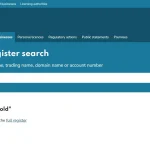
When I check a site’s claims, I look for the legal name of the operator, the jurisdiction and the licence details—not just a graphic or a line saying “fully trusted”. Then I compare those details with the relevant regulator’s official register. The operator named on the register should correspond to the company running the casino, and the site should not be relying on a licence belonging to some unrelated business. If the details are missing, vague or inconsistent, that is a reason to stop and investigate, not fill in the blanks with optimism.
Even a genuine foreign licence has limits for a UK player. It may show that an authority in another jurisdiction has authorised the operator there, but it does not establish that the casino is approved to serve customers in Britain. Under the UK’s rules, a remote gambling operator offering services to people in Great Britain needs the relevant UKGC licence, regardless of where the company is based. A site cannot turn a foreign licence into a UK one by displaying it prominently.
That distinction matters when a page calls itself a trusted casino site UK. The phrase is a claim, not evidence of UK regulation. A foreign licence might be relevant to the operator’s status where it was issued, but it cannot promise the same routes for complaints or consumer protections as UKGC oversight. Nor does a polished site, a familiar payment option or a cashback banner prove that its licensing claim is sound. Marketing can make a lot of noise. The register is more useful.
There is also a legal distinction worth keeping clear. Playing on a casino not on GamStop is not, by itself, a criminal offence for a player. But that does not make the operator’s position lawful: a casino offering real-money gambling to UK customers without the required UKGC licence is acting outside the rules for serving this market. Those are separate questions, and blending them can make a risky site look more legitimate than it is.
So when a site advertises a licence, read it as a starting point for checking, not a stamp of approval for every claim on the page. If the licence cannot be matched to the operator through an official record, “trusted” is just a word. I learned that the hard way. A badge proves very little.
Verify Casino Licence
- Find the legal name of the operator
- Identify the licensing jurisdiction
- Compare details with the regulator’s official register
- Ensure the operator name matches the company running the site
UK players need to look beyond the “trusted” label
“Trusted” can sound like a promise of backup. In practice, it is a label, not a safety net. A casino operating outside the UK Gambling Commission’s framework does not have to provide the protections required of a UK-licensed operator. That matters most when something goes wrong: a limit is ignored, an account is closed, or you need help and cannot get a useful response.
I learned not to confuse a menu of responsible-gambling tools with protection you can rely on. Some non-UK sites may offer deposit or loss limits, session timers, reality checks, reminders, or self-exclusion. A specialist review has reported these features at some sites, but they are voluntary rather than a legal requirement. Their presence, availability and operation can vary. A button on a settings page is not the same as an enforceable safeguard.
If you are considering a site, look at what the tools actually let you do. Can you set a limit before depositing? Is the limit easy to find and change? Does the site explain when a change takes effect? If you cannot find clear answers in the account settings and terms, do not assume the feature works as you expect. I have made that assumption before. It did not help.
The gap is not just about settings. A UK-licensed operator has obligations under the UK framework; a site outside it may not be required to provide the same measures. So even where a non-UK casino offers limits or reminders voluntarily, you cannot treat that as equivalent to UKGC oversight. “Responsible” in a banner proves very little.
Non-GamStop European Casinos: UK Rules Explained
Support is another practical issue. Someone playing at a site outside the UK system may not have access to UK-based gambling support through that operator, and the site may not offer an equivalent service. Before opening an account, check what support it provides, how to contact it and whether it can point you to help if gambling stops feeling manageable. Do not wait until you are already in trouble to find out.
If you have registered with GamStop, do not use another site as a way around that decision. The tools on a non-GamStop casino are not a substitute for your exclusion. GamStop restrictions cannot be shortened or cancelled before the period you chose ends; if you are struggling with the urge to gamble, step away and contact a UK support service rather than trying to find a different account.
A “trusted international casino for UK players” may be described as careful or player-focused, but neither phrase tells you what happens when you ask to close your account or need help. I now treat the label as a claim to test, not a reason to deposit. That is the useful distinction: features can be present, but the protection behind them may not be guaranteed. Mark the gap.
Crypto casinos do not switch off the GamStop risk
Crypto can make a casino feel separate from the usual sign-up process, but it does not make the GamStop risk disappear. A report by neconnected.co.uk describes some cryptocurrency gambling services as allowing play without registration or checks of client data. That is a report about some services, not a rule you can safely assume applies across the market.
Cryptocurrency transfers are irreversible; if you send funds to the wrong wallet address, the mistake may mean a permanent loss.
The apparent convenience is also the problem. If a service asks for little identifying information, you may have fewer checks around who is using the account and less reassurance about how it handles disputes or exclusion requests. A crypto payment does not prove that a site is legitimate, careful with customers or suitable for someone who has self-excluded.
I would not treat a search for the “most trusted crypto casino” as a way to find a safe route around a restriction. A confident label is not evidence of UK Gambling Commission oversight. Casinos not on GamStop operate outside the UKGC framework, and they may lack protections that UK-licensed operators must provide. A service’s willingness to accept cryptocurrency does not change that boundary.
There is another risk that is specific to the transaction itself. Cryptocurrency transfers are irreversible: if you send funds to the wrong wallet address, the mistake may mean a permanent loss. That is not a minor detail to skim past when a payment screen makes the process look simple. Pause and check the address before confirming anything.
If you are registered with GamStop, using a crypto service to keep gambling is not a harmless technical workaround. The point of self-exclusion is to create distance from gambling, and a site that does not cooperate with GamStop cannot enforce that restriction for you. Less friction can make it easier to act on an urge before you have time to reconsider.
I have learned not to confuse a quick route with a good one. “No registration” sounds like convenience; in this context, it can also mean fewer safeguards and less accountability. If gambling feels hard to control, do not look for another payment method or casino. Step away from the transaction and seek support instead.
Crypto payouts can move fast—and lose value just as fast
A crypto withdrawal can arrive quickly, but “fast” describes the transfer, not the value you keep. The amount credited to a wallet is worth whatever the cryptocurrency can be exchanged for at that moment. If its price falls while you are waiting to convert it, winnings that looked substantial on screen can be worth less in pounds by the time you cash out.
I used to treat a completed transfer as the end of the story. It isn’t. There are two separate things to track: whether the coins reached your wallet, and what those coins are worth when you sell or spend them. A specialist review notes this trade-off for crypto casino withdrawals: speed may come with exposure to price swings. That is a risk, not a perk.
Before accepting crypto winnings, check which currency the site pays in and whether you can convert it through a service you are comfortable using. Think about the value in pounds, rather than relying on a balance displayed in coins. A changing exchange rate can make that balance misleading, even when the withdrawal itself has gone through without a delay.
Crypto Withdrawal Risks
Speed of transfer may come with exposure to price swings, as the amount credited is worth whatever the cryptocurrency can be exchanged for at that moment. Additionally, incorrect wallet addresses or networks lead to permanent loss of funds.
There is another transaction risk that is easy to overlook when you are focused on getting paid. Cryptocurrency transfers are irreversible. If you enter the wrong wallet address, or choose the wrong network, the funds may be permanently lost; there is no ordinary card payment dispute to undo the mistake. Check every character and the network details before confirming. No second chance.
That does not make a crypto casino “trusted”. Casinos not on GamStop operate outside the UKGC framework and may lack responsible-gambling tools that UK-licensed operators must provide. A crypto payment does not add those protections, and UK-based support services may not be available if something goes wrong. A quick payout is one narrow part of the experience, not evidence that the operator is safe or that your money is protected.
If you are comparing a trusted crypto casino with a conventional payment option, include volatility and irreversible transfers in the comparison—not just the time it takes for a withdrawal to arrive. And if you have self-excluded, do not use crypto to get around that decision.
Read casino reviews as evidence, not reassurance
I used to treat a confident review as if someone had done the hard thinking for me. “Trusted” looked like a verdict; often, it was just a label beside a bonus pitch. Now I read casino reviews as claims to test, not permission to deposit.
Start by separating description from promotion. A review may explain how its writer assessed a site, or it may mainly repeat the operator’s selling points. Look for clear disclosure of affiliate links or other commercial relationships. That does not automatically make every detail false, but it gives you context for why a site is being featured and what the review might leave out.
Then ask what the review actually demonstrates. Does it give specific, checkable information, or rely on words such as “safe”, “reliable” and “trusted” without showing how those conclusions were reached? A string of glowing user comments is not the same as independent evidence. Nor does a polished layout turn advertising into an impartial assessment.
I also separate casino reviews from game reviews. A favourable account of a particular game tells you little about how a casino handles complaints or what protections apply to you. Bingo reviews have the same limit: they can describe the experience, but they cannot establish that a site is a sound choice for every player.
Most importantly, no trusted casino review can remove the regulatory gap. Playing on a non-GamStop site is not itself a criminal offence for a UK player, but these sites do not provide the consumer protections associated with a UK Gambling Commission licence. A review can point out that distinction; it cannot replace those protections. That is the bit I used to skim. Bad habit.
When reading reviews, I look for the basis of each claim, whether promotional material is labelled, and whether the drawbacks receive as much attention as the selling points. If the page offers only praise, treat it as promotion rather than independent guidance. And if the word “trusted” appears repeatedly but the reasoning stays vague, it has not earned much trust from me. A review is useful when it helps you judge evidence—not when it makes the decision feel settled.
Reading Casino Reviews
- Separate objective description from promotional selling points
- Look for disclosure of affiliate links or commercial relationships
- Check if conclusions are backed by specific, checkable information
- Remember that a positive review cannot replace UKGC consumer protections
Cashback is only as good as its terms
Cashback sounds like a small safety net: lose, get some back. I’ve learned not to treat that wording as money already in my account. The offer may be conditional, and the terms decide whether the returned amount can be withdrawn, must be wagered first, or is subject to a cap. A “trusted casino cashback” claim tells you nothing about those details.
A specialist gambling review cites wagering requirements of 30x to 40x as an industry benchmark, and describes requirements above 50x as generally predatory. Treat that as a reference point, not a guarantee that an offer near the benchmark is fair. Check what amount the multiplier applies to, and whether the cashback is cash or bonus funds with further conditions attached.
Then read the full terms before opting in. A bonus may set a maximum bet while wagering is underway, a deadline to complete the requirements, and a cap on withdrawals from bonus winnings. Those conditions can change the practical value of an offer sharply. If the wording is hard to find, unclear, or inconsistent between the promotion and its terms, I’d leave it alone.
Free spins deserve the same scepticism. The headline number is not the useful part if winnings are restricted by wagering rules or a withdrawal cap. Compare the conditions, not just the promotional label.
None of this makes a casino trustworthy. A generous-looking cashback offer is still marketing, and it does not replace the protections of a UK Gambling Commission licence. Casinos not on GamStop operate outside that framework and may lack mandatory responsible-gambling tools. Don’t accept a bonus because you feel you need to win back a loss. That’s how “cashback” becomes another reason to keep playing.
Casinos That Bypass GamStop: What UK Players Should Know
Real-money withdrawals: sort KYC before you cash out
The point at which a “trusted” real-money casino matters most is often the withdrawal screen, not the welcome page. I’ve learned to check the cash-out rules before depositing: how to request a withdrawal, what verification is required, and whether the payment method has to match the one used to fund the account. If those details are hard to find, that is a reason to pause.
A specialist review reports that e-wallet withdrawals can be faster than card withdrawals, while casino processing may take up to 24 hours. That processing window is only one part of the journey; the payment provider may add time after the casino releases the funds. Don’t treat a fast-payment badge as a promise about when money will reach you.
KYC is the other step I would not leave until a win is sitting in the account. A specialist review advises completing identity checks early to help prevent withdrawal delays. Follow the operator’s instructions and make sure the information you submit is accurate. If anything is unclear, ask before depositing rather than discovering a verification problem when you try to cash out. Boring, but useful.
None of that turns a casino not on GamStop into a UK-regulated site. These operators sit outside the UK Gambling Commission framework and may not provide the protections or responsible-gambling tools required of UK-licensed casinos. A smooth withdrawal process is not proof of broader reliability, and “most trusted” is just a label unless the claims behind it can be checked.
For a real-money withdrawal, the practical order is simple: read the cashier terms, complete KYC early, then keep a record of your request and any messages about it. If the operator changes its requirements or gives conflicting answers, don’t send more money to try to unlock a payout. Stop and reassess.
Are casinos that bypass GamStop illegal for UK players to use?
No, playing at a non-GamStop casino is not a criminal offence for you. However, an operator offering online gambling to people in Great Britain without a UK Gambling Commission licence is acting unlawfully, and the site does not provide UKGC-backed protections.
What are casinos not on GamStop?
They are gambling sites outside GamStop’s system, which covers participating UK Gambling Commission-licensed operators. Sites licensed outside Great Britain are not required to enforce GamStop exclusions.
What exactly does GamStop block?
GamStop blocks registered users from gambling at participating establishments licensed by the UK Gambling Commission. It does not control every gambling site on the internet.
Can I reverse a self-exclusion from GamStop early?
No, a GamStop self-exclusion cannot be shortened or cancelled before the period you selected ends.
What’s the fastest way to get my winnings out?
E-wallet withdrawals are generally faster than card withdrawals, and casino processing can take up to 24 hours. Completing KYC verification early can help prevent delays.
Safety

Anjouan Casino Licence UK: Legal Status and Limits
Anjouan licensing does not authorise service in Great Britain; operators serving that market need permission...

Foreign Casinos for UK Players: Rules and Risks
A practical guide to offshore licensing, account checks, bonus conditions and withdrawals for players in...

International Casinos for UK Players: Rules and Risks
A practical guide to UKGC status, player protections, bonus terms, crypto value and payment risks...

Offshore Casino Sites for UK Players: What to Know
A practical look at licensing, payment trade-offs, bonuses and identity checks, without treating a casino...

Offshore casinos for UK players: what to check
A practical look at licence status, bonus conditions, crypto value changes and the steps between...

British Casinos Not on GamStop: What to Know
The guide distinguishes GamStop coverage from trustworthiness and examines licensing, safeguards, bonus terms and withdrawal...

Casino sites not registered with GamStop: what to know
The guide distinguishes non-participation in GamStop from UKGC oversight and examines the limits of licensing,...

Casino Without a Swedish Licence: UK Rules Explained
A practical explanation of UKGC oversight, foreign licences, self-exclusion, bonus terms and the risks of...

Casinos That Bypass GamStop: What UK Players Should Know
GamStop participation, UK Gambling Commission oversight and offshore access are separate issues, so the label...

Curaçao Casino Licence UK: What the Label Means
A Curaçao label identifies a claimed licensing jurisdiction, not UK Gambling Commission regulation or identical...

Gibraltar Casino Licence: UK Rules Explained
A Gibraltar licence may describe an operator’s base, but it does not show that the...

Merkur Casino Online UK: Rules and Demo Play
A practical look at UK availability, demo play, stakes, domains and the terms attached to...

Most Trustworthy Online Casinos in the UK: What to Check
A practical way to assess licensing, safer-play safeguards, payment labels and bonus terms without treating...

Non-Gamban Casinos in the UK: What the Label Means
A casino’s availability outside a blocking tool does not establish its safety, authorisation, or whether...

Non-GamStop Curaçao Casino Sites: What to Check
A Curaçao label alone does not identify the operator, confirm an active licence or show...

Non-GamStop European Casinos: UK Rules Explained
A casino’s European base does not establish that it can legally serve customers in Britain;...

Non-UK Licence Casinos: What the Licence Means
A licence links an operator to a regulator’s rules, but an overseas licence does not...

Non-UK-Registered Casinos: What UK Players Should Know
A foreign licence does not mean the UK Gambling Commission oversees a casino, and GamStop...

Non-UK-Regulated Casinos: Rules for UK Players
Understand how UKGC oversight differs from overseas licensing and what that distinction means for players...

Non-UKGC Licensed Casinos: What UK Players Should Know
This guide distinguishes UKGC authorisation from other licences and explains what offshore status means for...

Malta MGA Licence for UK Online Casinos Explained
A Malta address or MGA licence does not settle whether a casino can serve Great...

Online slots not on GamStop: what it means
GamStop applies to participating gambling establishments, not individual game titles, so a provider name or...

Safe Online Casino UK: Licence, Payments and Checks
A practical way to assess licensing, bonus terms, payment routes, withdrawals and affordability checks before...

Trusted UK Casino: Check the Licence and Terms
A practical guide to licensing, account checks, bonus terms, apps, crypto payments and withdrawal conditions...

USA Casinos for UK Players: Licensing and Safety
The label does not prove US ownership or UK approval; licensing, deposits, bonuses and withdrawals...

VPN-Friendly Casinos in the UK: What to Check
A casino may accept VPN connections while still applying its own terms, identity checks and...